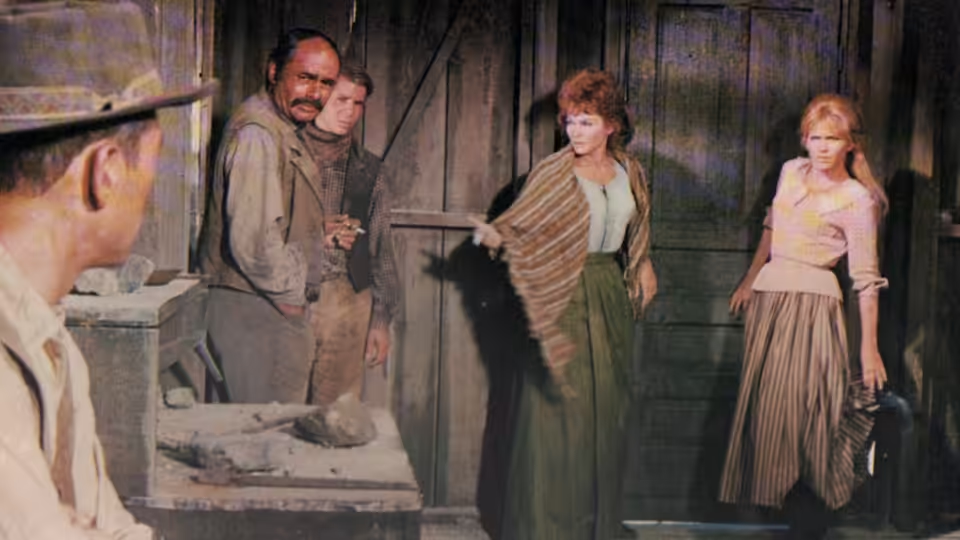
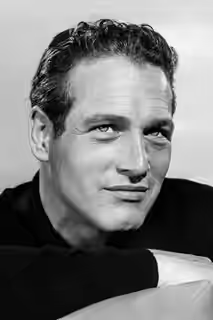
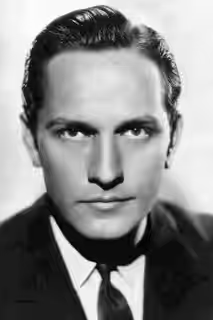
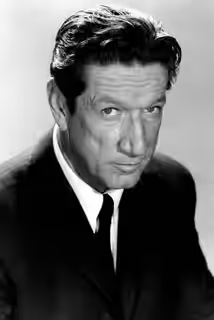
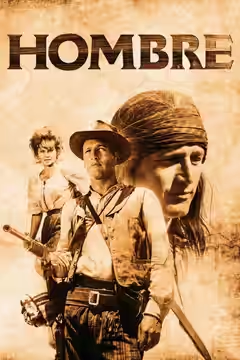
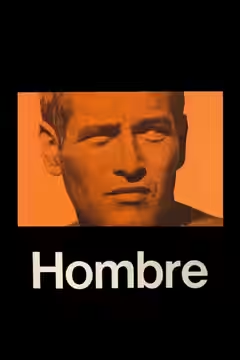
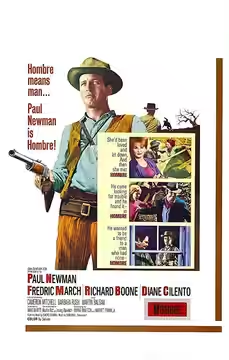
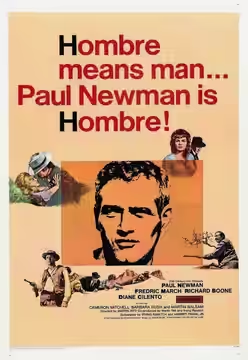
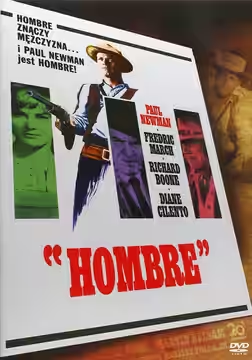
Martin Ritt’s Hombre is a good, stern Western, carried by Paul Newman, Fredric March and Richard Boone. The writing presses its moral points too hard, but the performances make the arguments worth hearing.
Hombre works best when Martin Ritt lets the actors make us uncomfortable without explaining why we ought to be. This is a good Western with a sombre manner and a tendency to underline what we have already understood. Its interest in how people judge one another gives it more to do than arrange a contest of nerve. That interest also gets in the way when the script turns the characters into spokesmen.
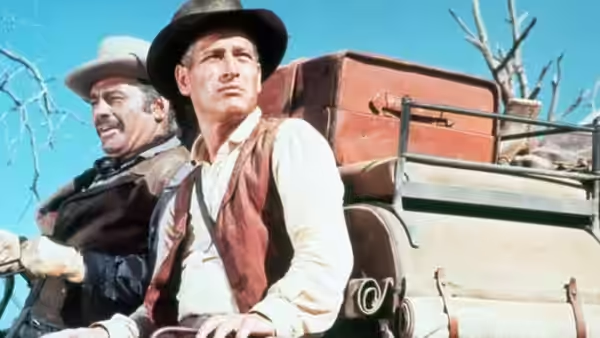
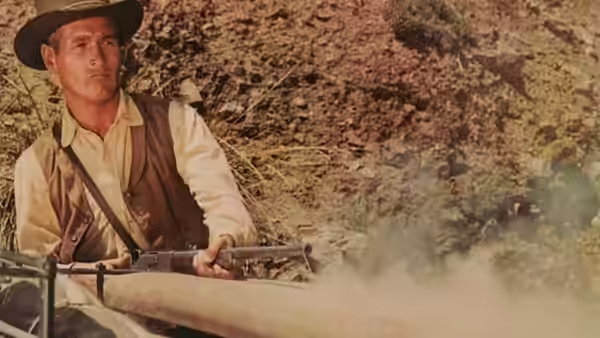
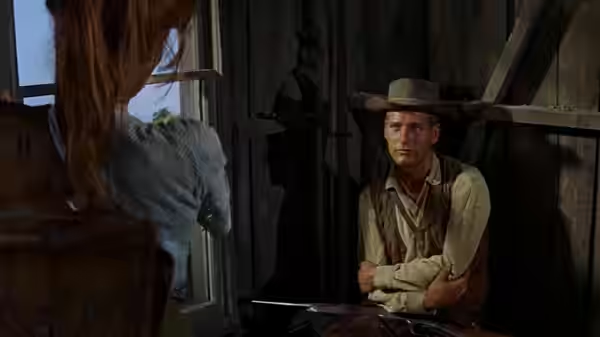
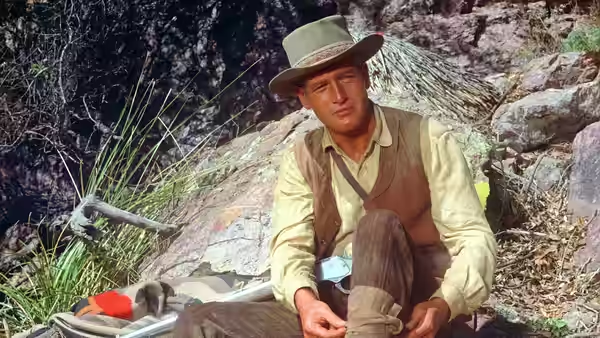
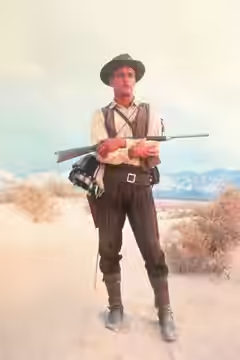
Paul Newman gives John Russell a reserve that can initially look like a shortage of expression. The small variations matter, especially beside the more expansive acting around him. Russell is a white man raised Apache, and Newman makes his reluctance to offer easy companionship feel reasonable. There is a risk that such restraint will leave a leading performance remote, but here the distance is useful: we have to watch him rather than wait for a speech.
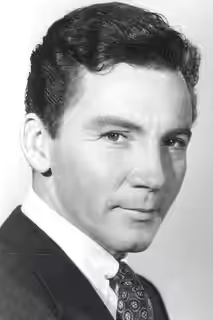
Fredric March’s Dr. Alex Favor is more immediately legible, and March makes good use of his character’s self-assurance. We felt an immediate dislike of Favor, because March gives him such an untroubled sense of his own importance. Richard Boone’s Cicero Grimes supplies a rougher, more openly intimidating presence, without needing to compete with March for our attention. The distinction between their performances keeps the film from reducing every disagreeable man to the same collection of habits.
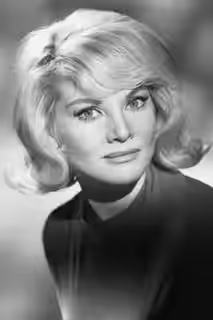
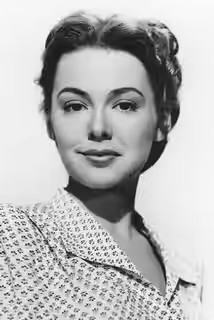
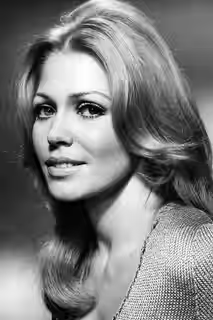
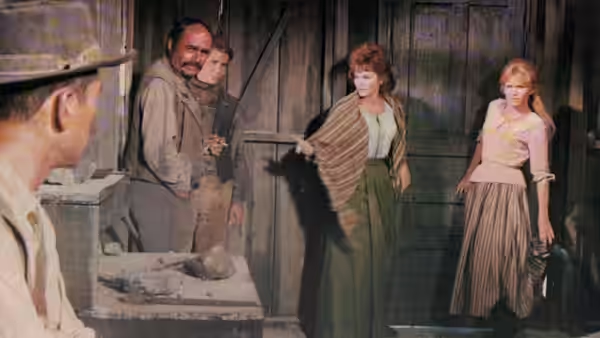
Diane Cilento’s Jessie is less comfortably placed. Cilento sometimes seems to be working to give her lines a natural ease that the writing has not supplied, and the effort shows beside Newman’s reticence. Martin Balsam, as Henry Mendez, is more at home with the film’s measured pace. The supporting performances help, but they cannot quite disguise how often Ritt asks a character to explain a position we can already recognise.
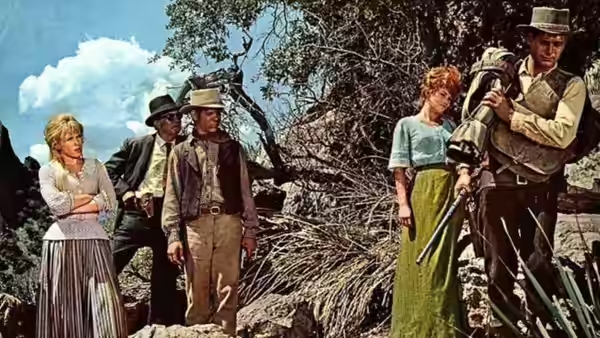
James Wong Howe’s cinematography gives the actors prominence without allowing every forceful performance to dominate the image. The compositions feel firm and spare, and Newman’s stillness remains readable within them. We can look from one face to another without the photography dictating a response quite as heavily as the writing does. That visual discipline is a considerable virtue in a film already inclined to tell us what people represent.
Frank Bracht’s editing gives the exchanges time to settle, a sound choice when so much depends on differences in temperament. The pauses are less productive when the dialogue has already made its point, and the pace occasionally becomes dutiful. David Rose’s music adds gravity, sometimes more than these performances need. The film is sufficiently serious without every department having to confirm it, though its consistency of tone does help the quieter acting hold our attention.
Irving Ravetch and Harriet Frank Jr., adapting Elmore Leonard’s novel, give the actors substantial parts but too often make their meanings explicit. Against the Western’s capacity to establish character through a few economical actions, this can feel laborious. Newman, March and Boone nevertheless give us enough to watch during the slower passages, and their different ways of occupying a scene remain absorbing. Choose it for the actors, and allow for a few speeches that could have ended sooner.