Film review

The Ox-Bow Incident

1943 · Directed by William A. Wellman · 1h 16m · MPA NR

In a sentenceA whole town rides out to hang somebody and the worst part is how polite they are about it

Western

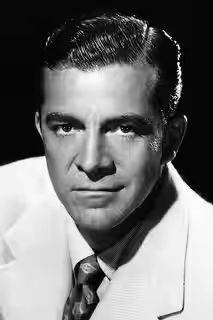
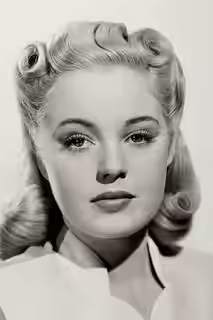
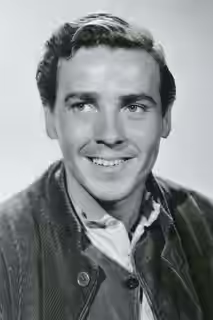
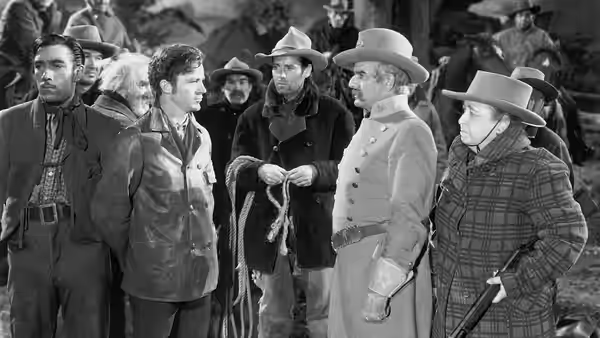
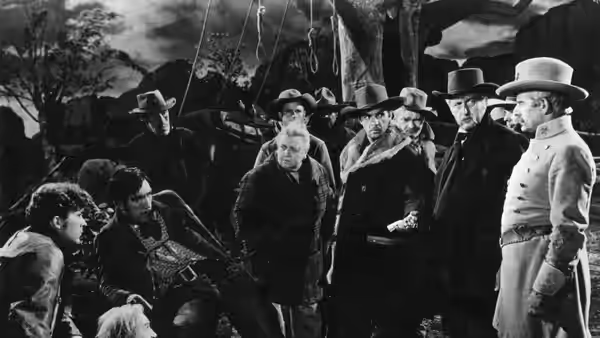
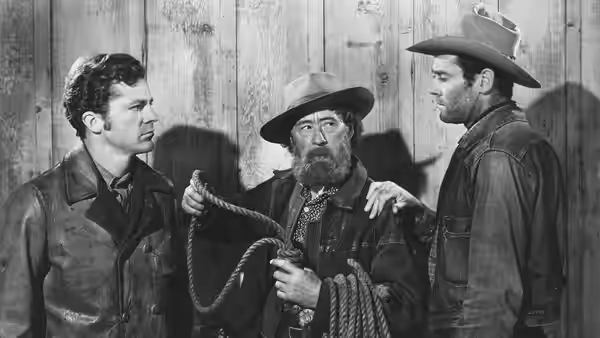
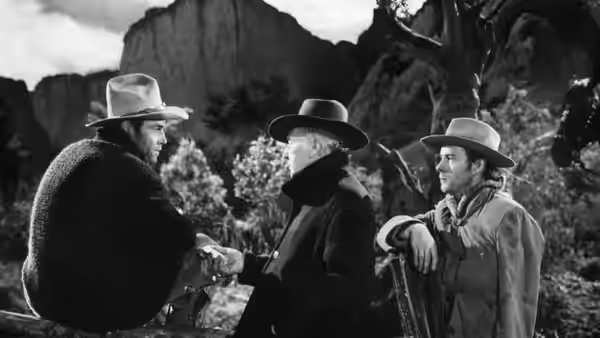
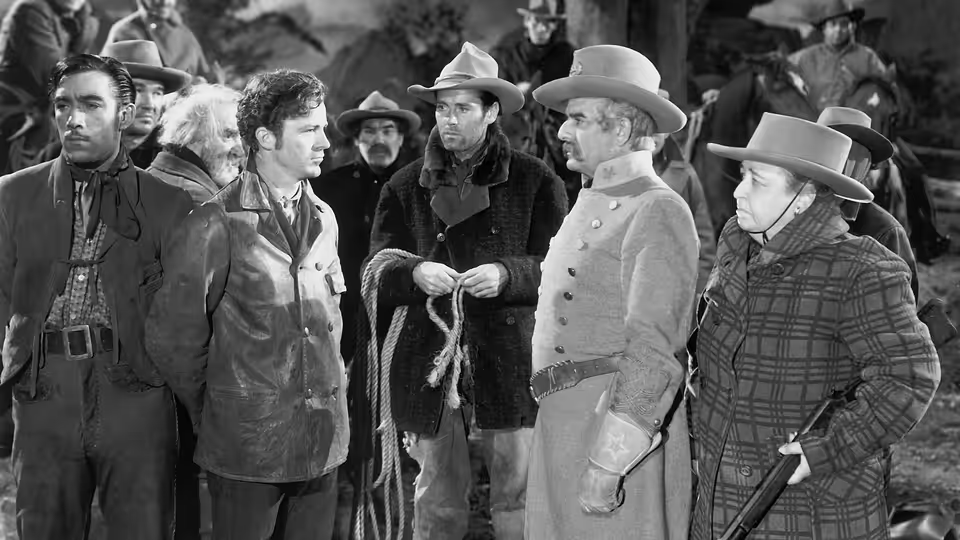
Bridger’s Wells, Nevada, 1885. Two cowhands, Gil Carter (Henry Fonda) and Art Croft (Harry Morgan), ride into town and find the saloon quiet and the woman Gil came back for, Rose Mapen (Mary Beth Hughes), gone. Then a rider brings news: a rancher has been shot and his cattle driven off. With the sheriff away, the town forms a posse. Shopkeeper Arthur Davies (Harry Davenport) and Judge Daniel Tyler (Matt Briggs) argue for waiting and the law; Major Tetley (Frank Conroy) and the dead man’s friend Jeff Farnley (Marc Lawrence) want a hanging by morning. Gil and Art ride along, and in a valley called the Ox-Bow the posse finds three strangers asleep beside a herd, among them Donald Martin (Dana Andrews).

Fi1m review

William A. Wellman’s western about a lynch mob is short, dark and still frightening, because everyone in it sounds reasonable. The sets are plainly sets and the ending is over-written, but Henry Fonda and Dana Andrews carry it.

William A. Wellman made westerns before this one and after it, and The Ox-Bow Incident is barely a western at all. A rancher is reported shot, and the film turns into 76 minutes of men deciding whether to hang three strangers. Lamar Trotti, who produced it and wrote the script from Walter Van Tilburg Clark’s novel, throws out nearly everything that is not that decision. It is a fine, hard, short film that still frightens. Most people should see it.

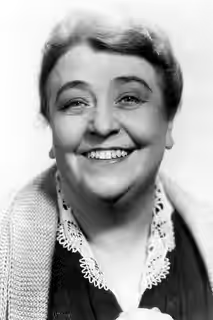
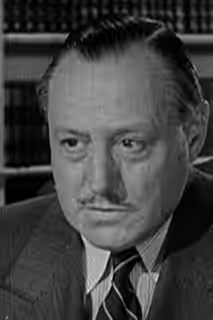
What Wellman is after is a lynching with no villain. Nobody in Bridger’s Wells is a monster. Major Tetley (Frank Conroy) wants to be obeyed; Jeff Farnley (Marc Lawrence) wants somebody to pay for his friend; Ma Grier (Jane Darwell) wants a night out; most of the rest are there because staying behind would look like cowardice. Arthur Davies (Harry Davenport) and Judge Tyler (Matt Briggs) say the right things about the law and are beaten not by better arguments but by the hour. It is late, it is cold, the sheriff is away. Trotti’s dialogue is best here, because the sensible men lose for sensible reasons.

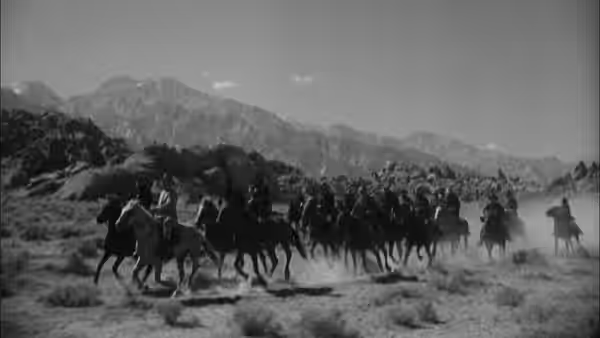
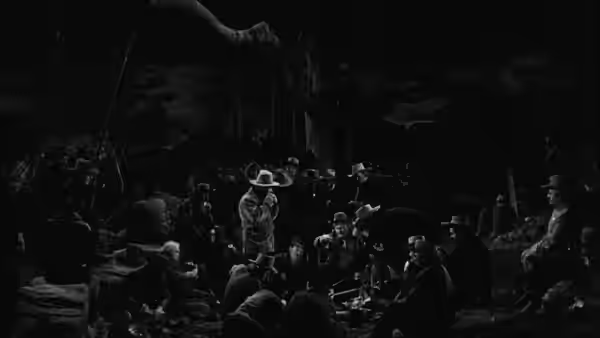
Arthur Charles Miller shot nearly all of it at night, indoors, with the mountains painted on cloth behind the riders and the valley’s one tree lit like a stage. The sets look like sets. That bothered us for ten minutes and then stopped, because there is no landscape here to ride off into, only faces in lantern light and dark all round them. Allen McNeil cuts the long argument in the valley slowly, resting on the men who are not talking. Cyril J. Mockridge’s music is kept mostly to the beginning and the end; the middle hour plays to wind, hooves and boots on frozen ground. Earl Luick and Sam Benson put Tetley in an old officer’s coat and Ma Grier in a man’s trousers, and each tells you what its wearer has decided to be tonight.

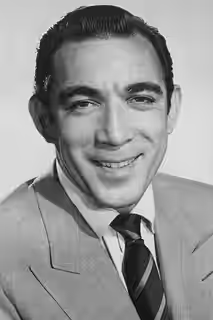
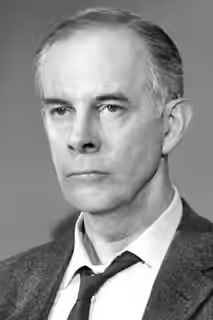
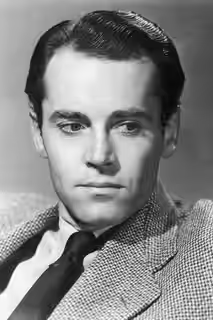
Henry Fonda plays Gil as the man who knows it is wrong and cannot make himself say so loudly enough. He spends the film about to speak, and the film is largely about why he does not. Dana Andrews, as Donald Martin, is the one who got to us. Martin has a wife, two children and a bill of sale he cannot prove, and Andrews plays him angry first, then reasonable when anger fails, then pleading, and lets you see him despise himself for the pleading. There is a moment when he asks for a little time and half the posse looks away, embarrassed, as though he were being rude. We were horrified, and not by the rope. It was the embarrassment. Anthony Quinn, as the Mexican among the three, plays a man who has been in this position before and has settled on contempt as the last thing they cannot take from him.

The flaws are real. Mary Beth Hughes turns up as Rose Mapen for one scene on the road, newly married, so Gil can be wretched about her, and it stops the film dead. William Eythe, as Tetley’s son Gerald, is written as the conscience the film does not need and plays every line as if it had been underlined for him. And Trotti hands a character a piece of writing near the end that is more thoughtful and better spelled than the man who is meant to have written it could have managed; we will say no more about it.

Set beside the westerns around it, this is an oddity: no chase, no shoot-out, and a running time most studio pictures would have padded. Set beside films about crowds, it holds up better than nearly all of them, because it never lets the crowd be stupid. It came out in 1943, when the world had recent evidence of what men will do once enough of them are standing together in the dark, and the film does not mention that and does not need to.

Watch it with somebody you argue with. Then see how long it takes one of you to start talking about the posse as if it were people you know.
Critical consensus AI synthesised

74
Positive
5
Mixed
0
Negative
1

Most critics take this as a sober, deliberately made Western about mob rule, and admire its nerve. The praise gathers around Wellman’s direction: the pacing is called economical, the studio-bound town closed-in and grim, and several reviews note how much of the tension comes from the shadowy photography and the faces in the crowd. Henry Fonda’s performance is mentioned approvingly more than once, and Dana Andrews is singled out by the earliest notices.

The reservations are about weight and balance. Time Out finds the liberal argument a little simple, and Radio Times thinks a late letter read aloud is too literate for the man supposed to have written it. Variety stands alone in the negative, complaining that the film leans too hard on its hanging theme and offers too little else. The spread is otherwise narrow, with reviews from 1943 and from this century landing in much the same place.

Radio Times
★★★★★ · Allen Eyles
100

This celebrated indictment of lynching remains a brave and unorthodox piece of film-making based on the novel and pushed through by Wellman as a personal project. The lynch mob mentality is tellingly explored but the letter read out by Fonda is far too literate and philosophical to be the last testament of a humble cowboy.

Read the full review →
The New York Times
10 May 1943 · Bosley Crowther
90*

The film is an ugly study in mob violence that points a moral about the horror of mob rule with uncompromising truth. William Wellman directs with sharp realism and the cast, especially Dana Andrews, delivers a profoundly distressing tragedy.

Read the full review →
The New Yorker
8 May 1943 · David Lardner
70*

The movie matches the novel faithfully enough and is a rather good piece of work overall. The Western town is a masterpiece of dismalness and the climax is pretty stark.

Read the full review →
Time Out
10 September 2012 · GA
70*

A sombre, somewhat simplistically liberal Western in which three drifters are lynched as rustlers on flimsy evidence and posthumously proven innocent by Fonda. The movie is impressively taut thanks to Wellman's economic pacing and the claustrophobic tension from its studio-bound production, with an affinity to film noir evident in its shadowy photography and gallery of grotesques.

Read the full review →
Variety
31 December 1942 · ** · Variety Staff
30*

The screen version depends too much on the hanging theme, developing it into a brutal closeup of a necktie party with not enough other action. Fonda measures up as one of the few level-headed cowhands.

Read the full review →
Collider
30 July 2022 · Nick Laskin
85*

The critic praises this lean, efficient 1943 Western as one of the great American films about mob mentality and the abuse of power, calling it a solemn masterpiece that feels strikingly modern and cautionary today. They single out its exploration of tribalistic behavior, the futility of vigilante justice, and Henry Fonda's performance as highlights.

Read the full review →

Cast

Awards

Academy Awards, 1944

Nominated
Best Picture

National Board of Review Award for Best Film, 1943

Won
National Board of Review Award for Best Film

National Board of Review: Top Ten Films, 1943

Won
National Board of Review: Top Ten Films

If you liked this, try…

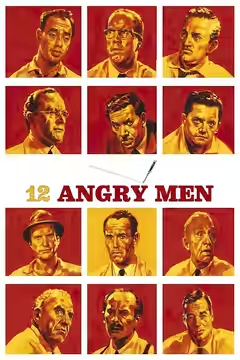
12 Angry Men poster91

12 Angry Men

1957 · Fonda again, in a locked room, arguing with eleven men who want to go home.

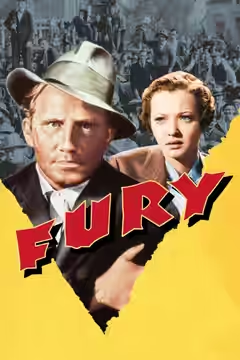
Fury poster

Fury

1936 · Fritz Lang’s first American film: a small town burns down its jail with a man inside.

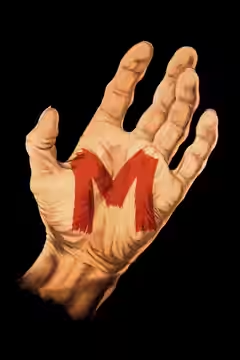
M poster94

M

1931 · Berlin’s criminals catch a child killer and hold their own trial; Lang lets nobody off.

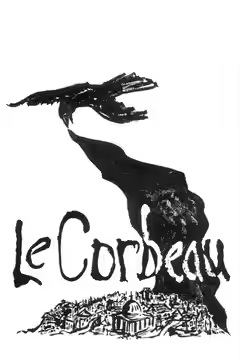
Le Corbeau poster

Le Corbeau

1943 · A French town poisoned by anonymous letters, made under the Occupation and sour about everyone.

Dogville poster74

Dogville

2003 · Lars von Trier’s chalk-lined town takes in a stranger and slowly decides what she owes them.