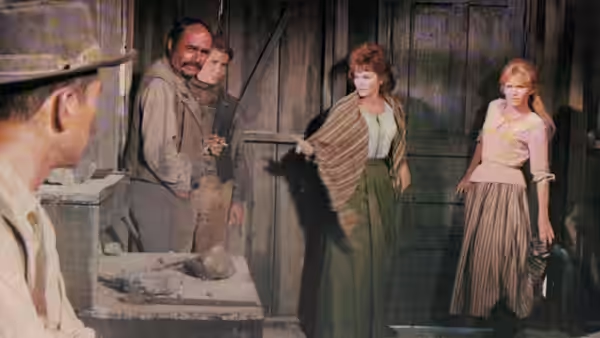
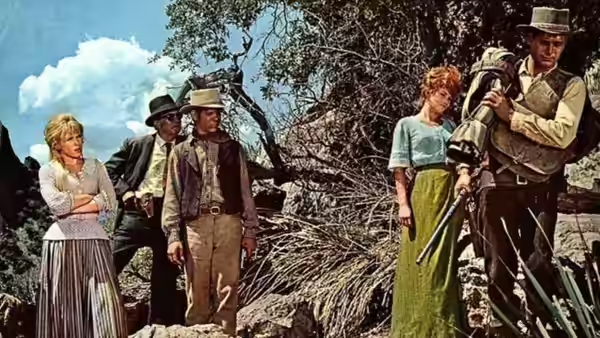
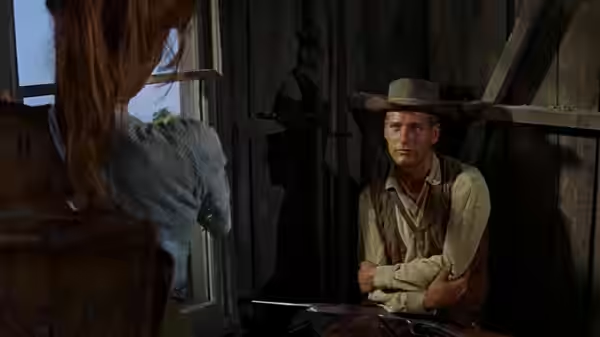
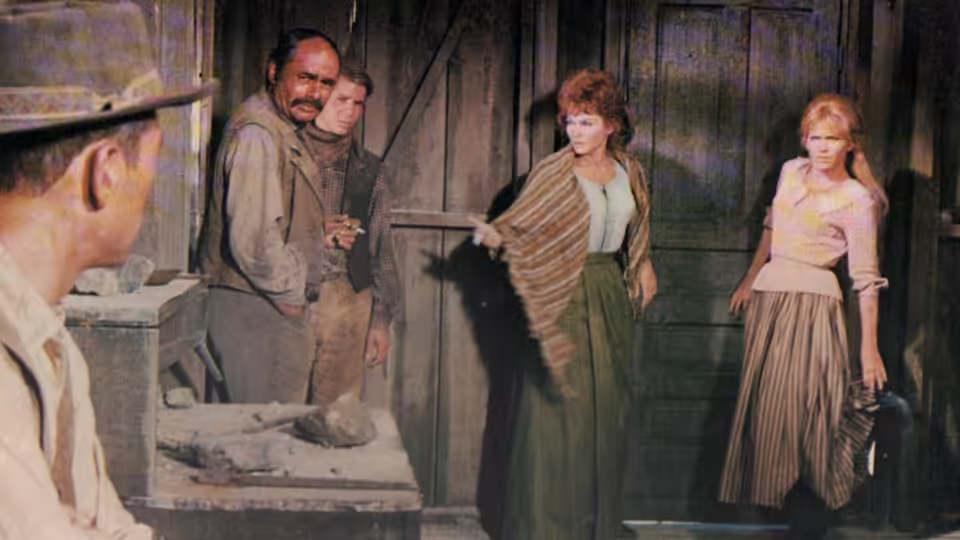
A group of travelers gathers inside a dim wooden building
Film review

Hombre

1967 · Directed by Martin Ritt · 1h 51m · Kijkwijzer 6

In a sentencePaul Newman makes a persuasive case for letting everyone else finish talking

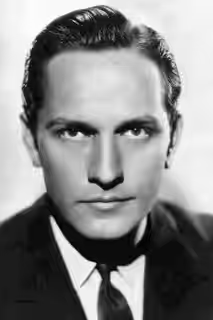
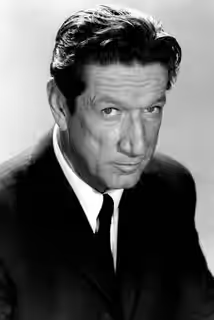
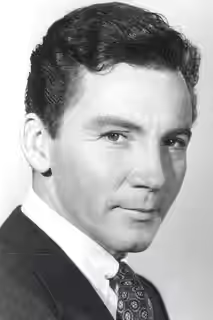
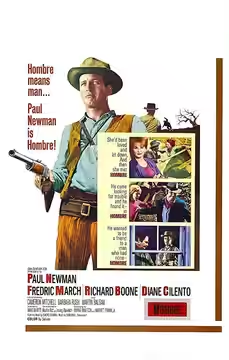
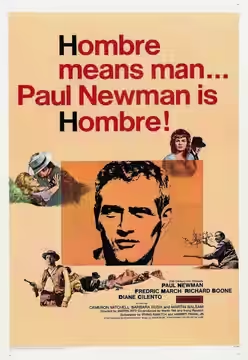
John Russell (Paul Newman) is a white man raised Apache. The people around him include Dr. Alex Favor (Fredric March), Cicero Grimes (Richard Boone), Jessie (Diane Cilento) and Henry Mendez (Martin Balsam). Audra Favor (Barbara Rush), Frank Braden (Cameron Mitchell), Billy Lee Blake (Peter Lazer) and Doris Blake (Maggie Blye) also figure in the story. Russell stands between the community that raised him and people who identify him as white. His place among them is the central question of this Western, adapted from Elmore Leonard’s novel.

Fi1m review

Martin Ritt’s Hombre is a good, stern Western, carried by Paul Newman, Fredric March and Richard Boone. The writing presses its moral points too hard, but the performances make the arguments worth hearing.

Hombre works best when Martin Ritt lets the actors make us uncomfortable without explaining why we ought to be. This is a good Western with a sombre manner and a tendency to underline what we have already understood. Its interest in how people judge one another gives it more to do than arrange a contest of nerve. That interest also gets in the way when the script turns the characters into spokesmen.

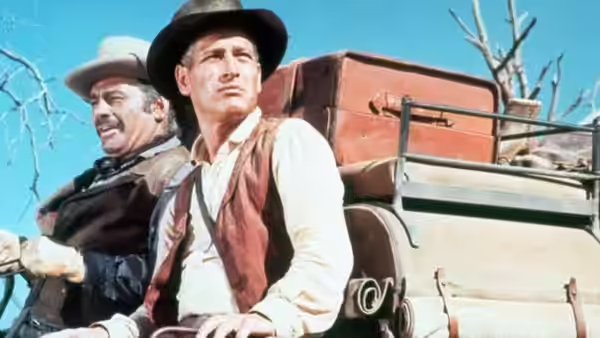
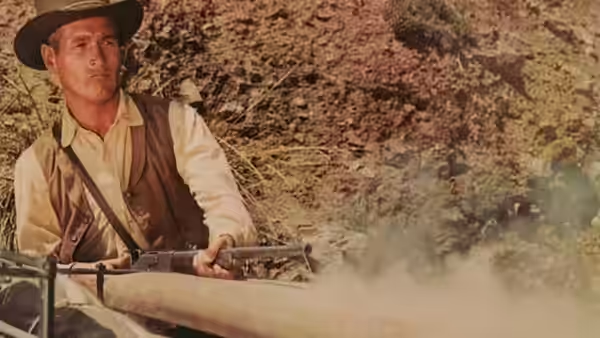
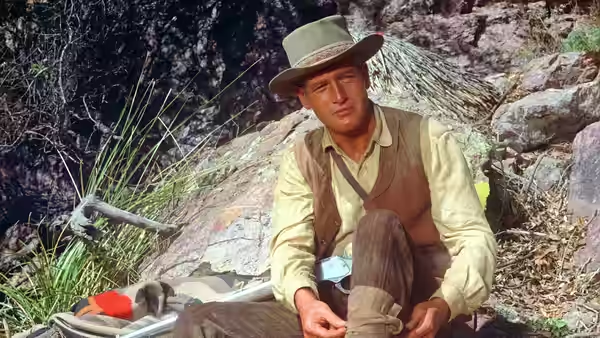
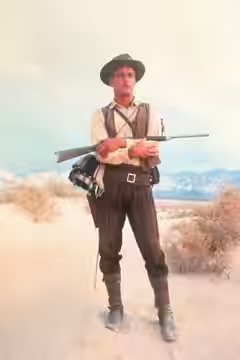
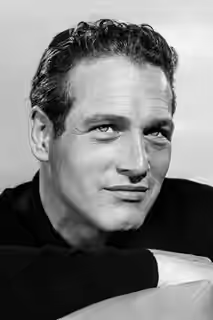
Paul Newman gives John Russell a reserve that can initially look like a shortage of expression. The small variations matter, especially beside the more expansive acting around him. Russell is a white man raised Apache, and Newman makes his reluctance to offer easy companionship feel reasonable. There is a risk that such restraint will leave a leading performance remote, but here the distance is useful: we have to watch him rather than wait for a speech.

Fredric March’s Dr. Alex Favor is more immediately legible, and March makes good use of his character’s self-assurance. We felt an immediate dislike of Favor, because March gives him such an untroubled sense of his own importance. Richard Boone’s Cicero Grimes supplies a rougher, more openly intimidating presence, without needing to compete with March for our attention. The distinction between their performances keeps the film from reducing every disagreeable man to the same collection of habits.

Diane Cilento’s Jessie is less comfortably placed. Cilento sometimes seems to be working to give her lines a natural ease that the writing has not supplied, and the effort shows beside Newman’s reticence. Martin Balsam, as Henry Mendez, is more at home with the film’s measured pace. The supporting performances help, but they cannot quite disguise how often Ritt asks a character to explain a position we can already recognise.

James Wong Howe’s cinematography gives the actors prominence without allowing every forceful performance to dominate the image. The compositions feel firm and spare, and Newman’s stillness remains readable within them. We can look from one face to another without the photography dictating a response quite as heavily as the writing does. That visual discipline is a considerable virtue in a film already inclined to tell us what people represent.

Frank Bracht’s editing gives the exchanges time to settle, a sound choice when so much depends on differences in temperament. The pauses are less productive when the dialogue has already made its point, and the pace occasionally becomes dutiful. David Rose’s music adds gravity, sometimes more than these performances need. The film is sufficiently serious without every department having to confirm it, though its consistency of tone does help the quieter acting hold our attention.

Irving Ravetch and Harriet Frank Jr., adapting Elmore Leonard’s novel, give the actors substantial parts but too often make their meanings explicit. Against the Western’s capacity to establish character through a few economical actions, this can feel laborious. Newman, March and Boone nevertheless give us enough to watch during the slower passages, and their different ways of occupying a scene remain absorbing. Choose it for the actors, and allow for a few speeches that could have ended sooner.
Critical consensus AI synthesised

70
Positive
2
Mixed
2
Negative
0
Radio Times
★★★★ · Tony Sloman
80

The critic calls it a fine, grim western, though not quite as good as Newman’s other films Hud and The Hustler. The distinguished cast and James Wong Howe’s cinematography are singled out for praise, while Diane Cilento is said to seem ill-at-ease.

Read the full review →
The New York Times
22 March 1967
70*

The headline indicates a positive verdict, describing the Western as skillfully served. It singles out the film’s effective handling of a familiar Western recipe.

Read the full review →
Variety
31 December 1966 · Variety Staff
65*

The review is measured but favorable, finding the film’s themes sometimes overdone. It singles out Paul Newman, Fredric March and Richard Boone for strong performances.

Read the full review →
Time Out
15 March 2012
64*

The available page metadata does not reveal the critic’s verdict. It describes the film as a lesser-known Western about a white man raised Apache.

Read the full review →

Straight answers AI written, from our review

Is Hombre worth watching?
Hombre is worth watching for its performances and its serious interest in prejudice; we score it 77. We recommend it to Western viewers who enjoy watching actors establish character at a measured pace, though the writing explains its moral points too often and some speeches outstay their usefulness.
How long is Hombre, and what is it rated?
Hombre runs 1h 51m and is rated 6 by the Kijkwijzer in the Netherlands. It is a western and drama film.
Where can I watch Hombre in the Netherlands?
Hombre is not on any streaming or rental service in the Netherlands at the moment. It is available in 10 other countries; change your country at the top of the page to see where. Availability is checked daily.
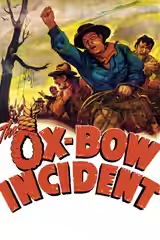
How does Hombre compare to The Ox-Bow Incident?
Hombre is the choice for Paul Newman’s restrained acting, while we recommend The Ox-Bow Incident for a sterner examination of prejudice and collective certainty. Both suffer from over-explicit writing, but the latter’s short, dark account of a lynch mob is more frightening; Hombre gives its contrasting performances more time to settle.
Is Hombre based on a true story or a book?
Hombre is adapted from Elmore Leonard’s novel, rather than presented as a true story, with a screenplay by Irving Ravetch and Harriet Frank Jr. We find the adaptation too eager to spell out its moral points, but no familiarity with the book is needed to follow John Russell’s uneasy position as a white man raised Apache.

Cast

If you liked this, try…

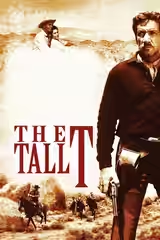
  1. The Tall T (1957) · not on Fi1m yetAnother Western where captivity exposes character, with Richard Boone making menace uncomfortably personable.

  2. The Ox-Bow Incident (1943, Fi1m 84)A sterner examination of collective certainty, prejudice and the cost of joining in.

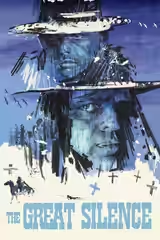
  3. The Great Silence (1968) · not on Fi1m yetFor another withdrawn Western protagonist, though this snowy Italian version is considerably bleaker.

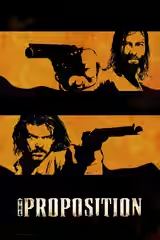
  4. The Proposition (2005) · not on Fi1m yetAn Australian Western equally suspicious of respectable authority, with much more explicit violence.

  5. Sweet Country (2017) · not on Fi1m yetRacial injustice shapes an Australian pursuit Western that gives its silences proper weight.