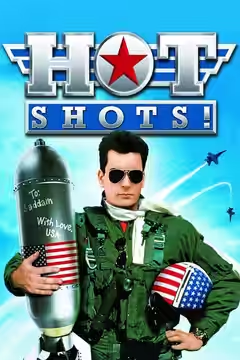
Charlie Sheen’s solemn stupidity gives Jim Abrahams’s military spoof its best laughs. The jokes are uneven and the film lacks much warmth, but its 85 minutes pass pleasantly enough.
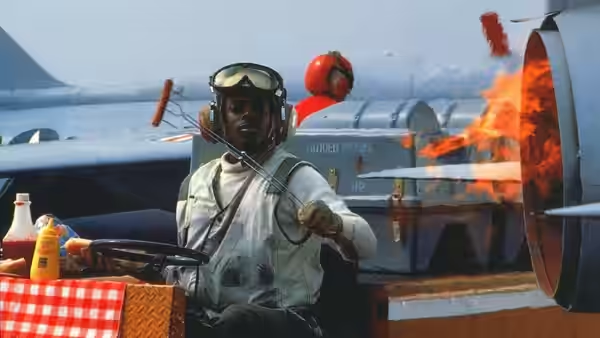
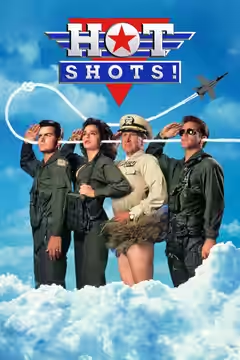
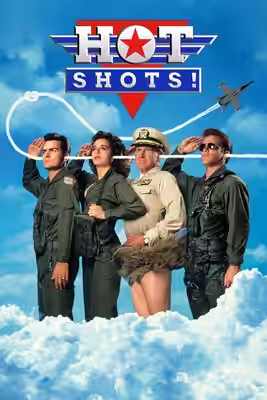
Hot Shots is a good choice when we want a military spoof that gets on with being foolish and does not ask for much in return. Jim Abrahams directs with a useful understanding of how seriously actors must take this sort of nonsense, and Charlie Sheen supplies the required gravity. The jokes are uneven, sometimes feeble, but enough land to justify the 85 minutes. Its pleasures are fairly simple: a handsome leading man, a secret bombing mission and plenty of opportunities for him to look foolish.
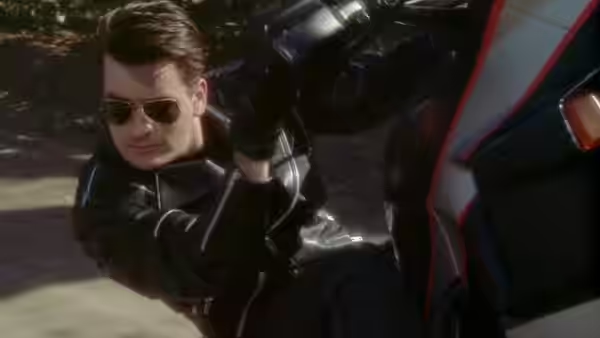
Charlie Sheen plays Topper Harley as though admitting how silly any of this is would constitute a professional failure. We laughed at his grave expression; he gives stupidity the concentration usually reserved for a difficult task. The time it takes to register quite how dim he is often provides more amusement than the joke itself. A performer eager to advertise his comic gifts could make this exhausting, but he lets us notice the foolishness without pointing it out.
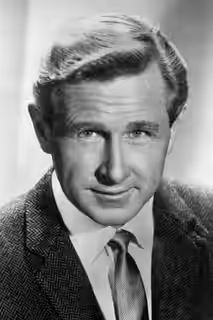
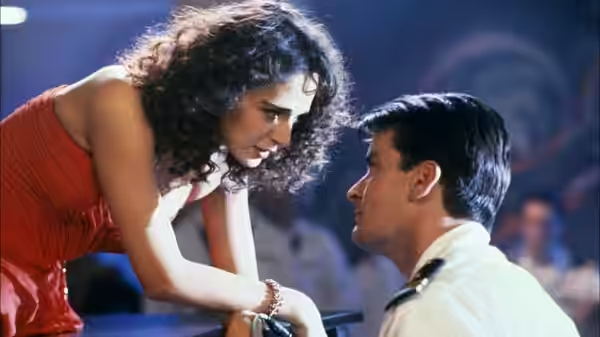
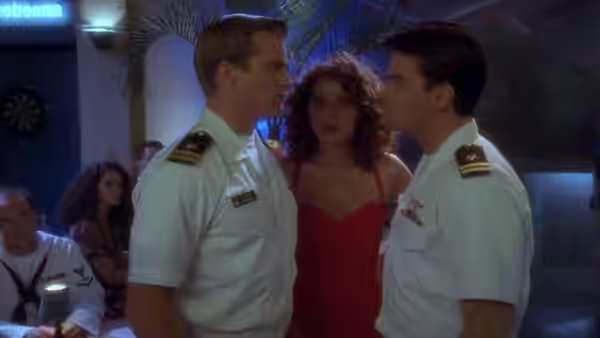
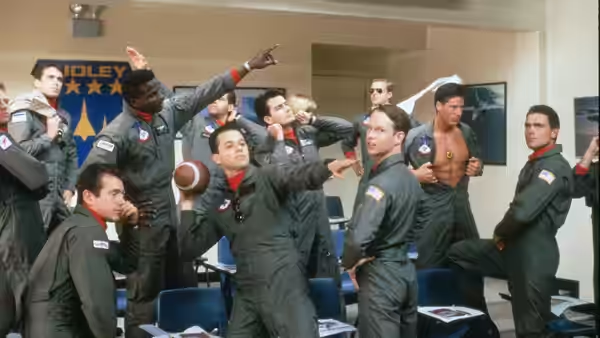
Cary Elwes, as Kent Gregory, is a useful presence beside him, matching his apparent conviction rather than competing for attention. Valeria Golino gives Ramada Thompson enough composure to belong in the same straight-faced company, while Lloyd Bridges has more room to be broadly ridiculous as Admiral Benson. The performances make the military ranks and character names funnier than they look on a cast list. They also give us people to enjoy watching when the writing produces a joke that merely occupies a space.
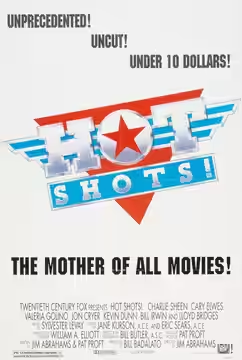
Bill Butler’s cinematography is most effective when it grants the leading man the visual assurance of a conventional action hero. The confident presentation helps us appreciate just how little sense he possesses. William A. Elliott’s production design supports that approach, giving the military surroundings enough credibility for the actors to treat them as ordinary. Sylvester Levay’s music takes the proceedings seriously enough to help the joke, although its insistence can feel like extra encouragement when a gag ought to work without it.
The script by Jim Abrahams and Pat Proft is less reliable than the casting. Its willingness to move beyond Top Gun gives the parody some variety, but recognising a film is not always enough to make the reference funny. Some gags feel finished as soon as their target becomes apparent, leaving us to wait for the next one. There is also little affection to carry the weaker passages: when the joke fails, the film rarely offers a character moment worth staying with for its own sake.
Editors Jane Kurson and Eric Sears help by keeping the material moving, though speed cannot make every joke worth keeping. The film is short, but its dull patches remain noticeable because the performers have already shown how easily the better material can play. Within the spoof genre, it handles the straight-faced acting more reliably than the succession of jokes. The rhythm becomes predictable when a thin reference is followed by another thin reference.
The performers are the reason to choose it, particularly Charlie Sheen, whose seriousness remains amusing even when the gag around him is not. There is enough cheerful bad taste here to suit an undemanding comedy evening, provided a few stretches without a laugh will not spoil it. Try it for the deadpan acting; anyone hoping for a spoof with much warmth should look elsewhere.