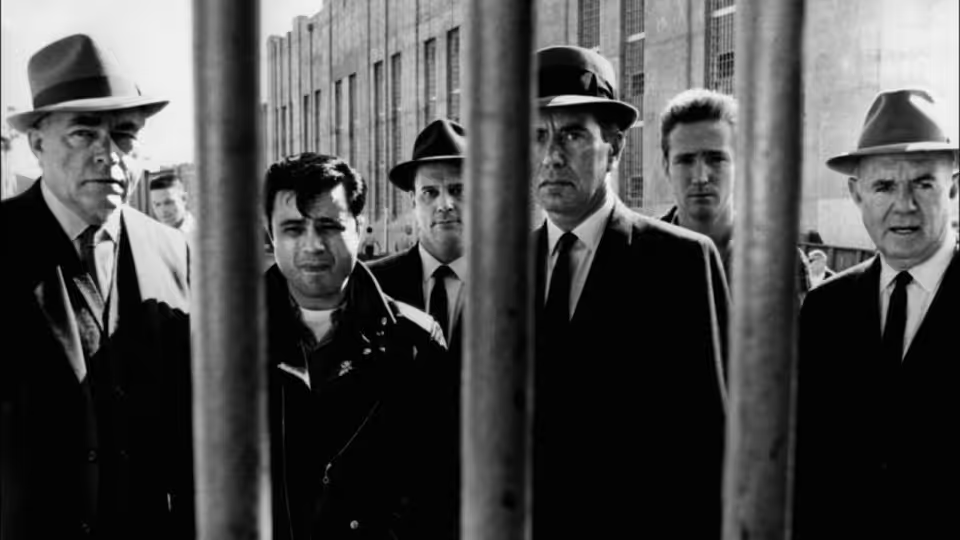
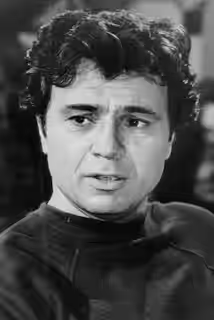
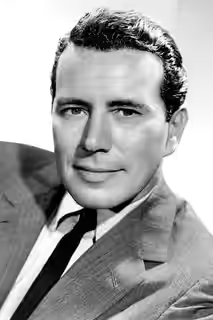
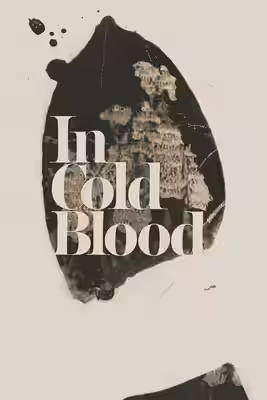
Richard Brooks’s crime film is chilling because Robert Blake and Scott Wilson make its killers so ordinary. Conrad Hall’s black-and-white photography is exact and expressive; the attempts to explain the violence are less convincing.
In Cold Blood is a chilling crime film, made more disturbing by the care it takes over apparently ordinary people. Adapting Truman Capote’s book, Richard Brooks attends to the killers without asking us to forget those they threaten. The close attention to behaviour is persuasive enough to make the passages of psychological explanation feel unnecessary. We recommend it, with a reservation about a screenplay that sometimes seems too certain it can account for the violence.
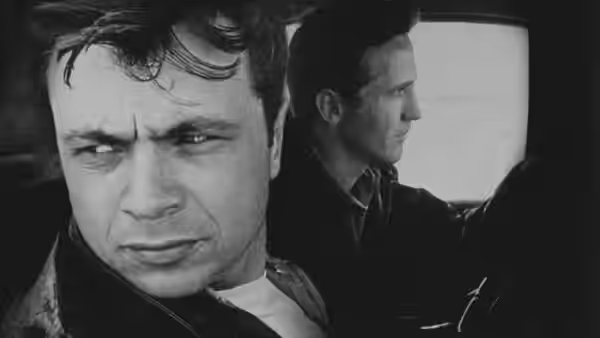
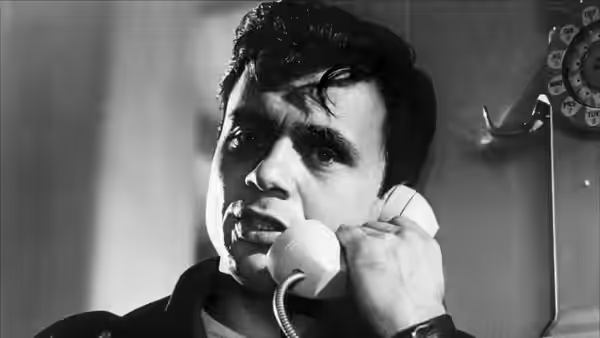
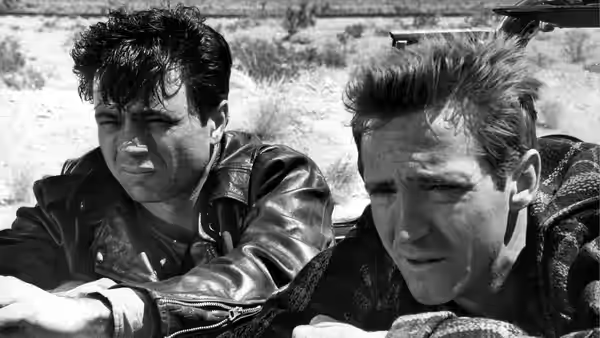
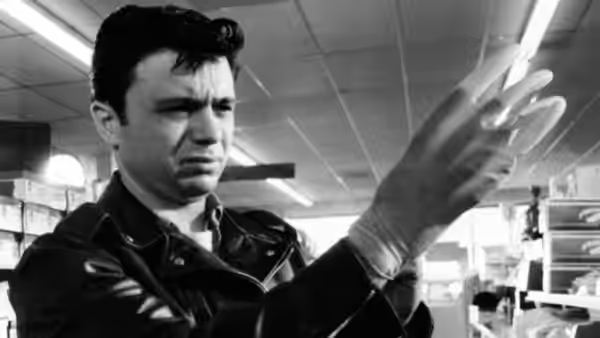
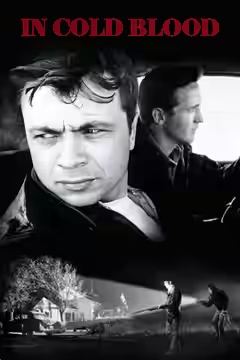
Robert Blake’s Perry Smith and Scott Wilson’s Richard ‘Dick’ Hickcock are central to what works. Neither performance depends on making a killer instantly recognisable as one, and their naturalness makes prolonged attention uncomfortable. We were chilled by the pleasure the men take in talking about violence. Their conversation lacks the solemnity with which crime films usually announce something terrible. The actors make that pleasure seem possible in people we might otherwise pass without a second glance.
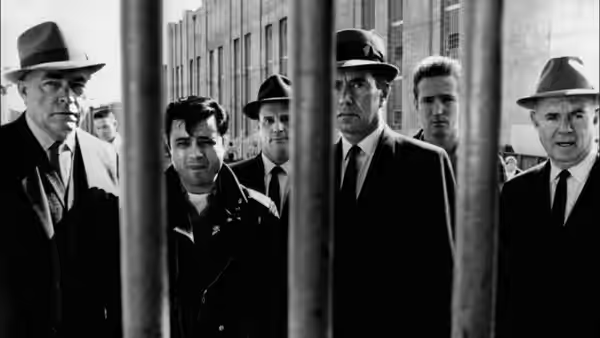
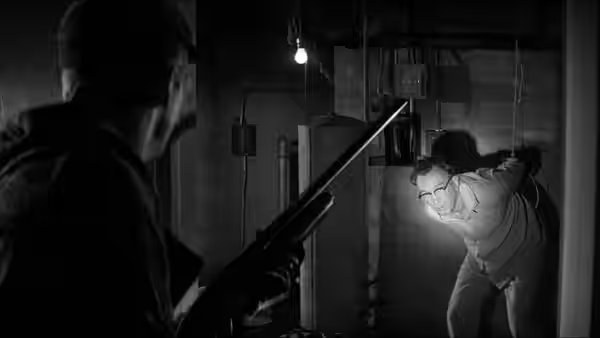
Conrad Hall’s black-and-white cinematography gives the film much of its force. The sharp contrasts supply a noir menace, but the location shooting keeps the surroundings recognisable. The people seem ordinary, yet the images keep us alert to danger, and the photography’s severity prevents its considerable beauty from becoming reassuring. The style works because it remains tied to the behaviour of the actors, with faces and surroundings deserving the same close attention.
Quincy Jones’s jazz score is less restrained, and usefully so. Its agitated sound puts us on edge before we can settle into the film’s patient observation of its characters. Occasionally the music and the heightened visual style make the danger too emphatic, a qualification to the supposed documentary plainness. Even then, the score supplies an unease that straightforwardly mournful music would have softened.
Peter Zinner’s editing leaves room for the performances, and the patient pace is often justified. At 134 minutes, however, it is not equally gripping throughout, and the explanatory passages make the length felt. The trouble lies chiefly in Richard Brooks’s screenplay, which grows less convincing when it tries to diagnose the men. Their behaviour has already disturbed us, and being told why they behave that way does not necessarily make it more comprehensible.
The psychological emphasis also risks directing too much concern towards the killers, simply because the film spends so much effort considering them. To its credit, it retains a sense of the people harmed and does not treat the Clutter family as an incidental cost of an interesting character study. That humane attention is one reason the realism matters. There is enough human pain here to prevent the photography becoming the only thing we remember.
This is a demanding choice for an evening’s viewing, even for those comfortable with crime films. Its interest in the men does not make their company pleasant, and the performances deny us much reassuring distance. Choose it when you have the patience for close observation and no particular wish to be cheered up.