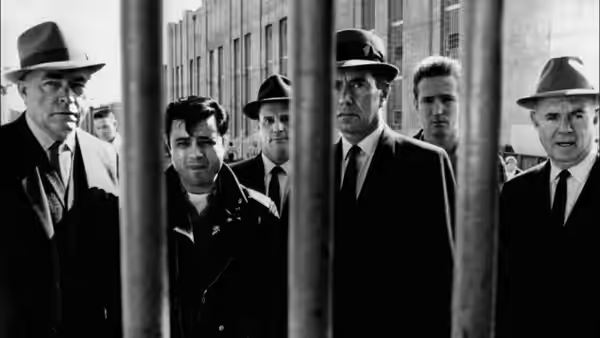
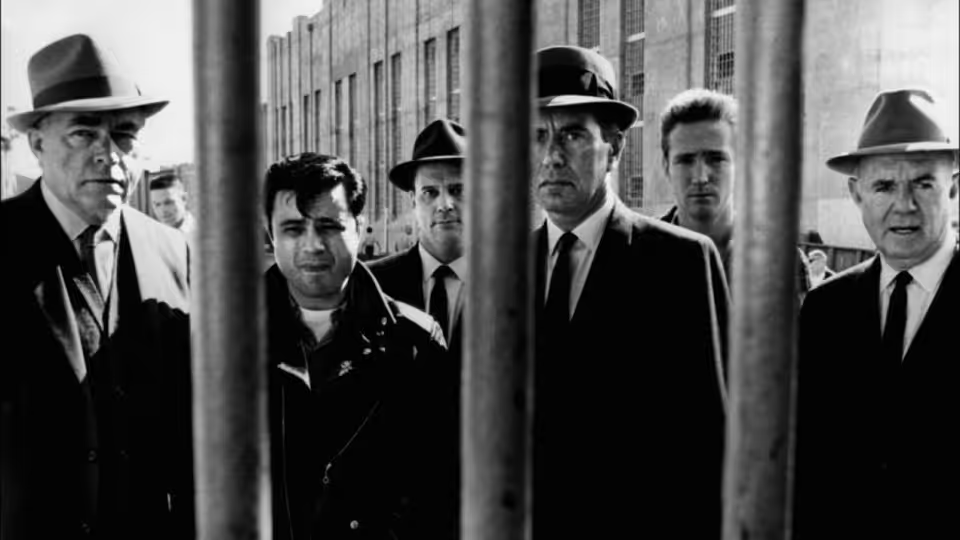
Several suited men stand behind vertical bars outside a large institutional building
Film review

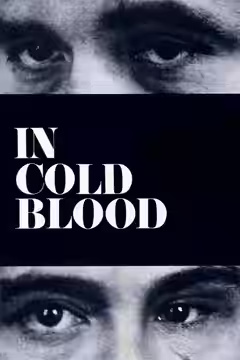
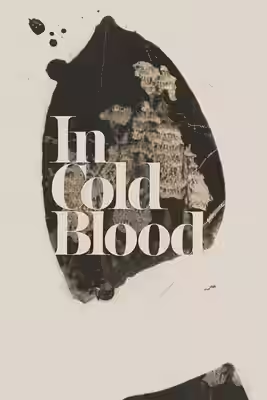
In Cold Blood

1967 · Directed by Richard Brooks · 2h 14m · Eirin PG12

In a sentenceTwo men talk about violence with the enthusiasm most people reserve for a day off

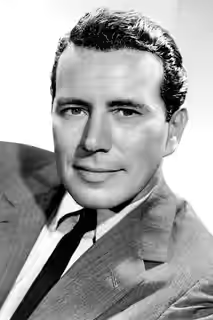
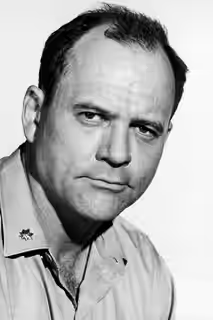
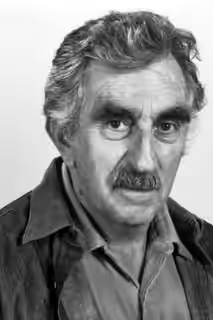
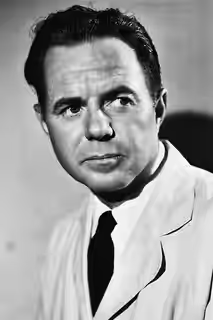
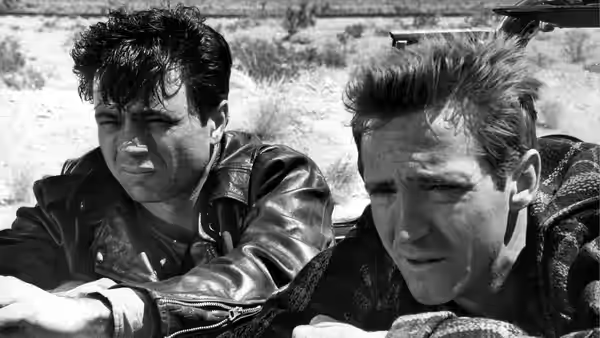
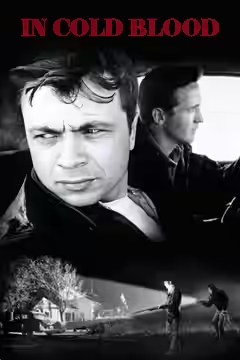
Perry Smith (Robert Blake) and Richard ‘Dick’ Hickcock (Scott Wilson) are preparing to commit a crime against the Clutter family. Herbert Clutter (John McLiam) and Bonnie Clutter (Ruth Storey) are among those in danger as the men talk about violence with eager familiarity. Their preparations bring them towards the family, while the film also follows the family’s ordinary life. Richard Brooks adapts Truman Capote’s book, following the two men and the people they threaten as the prospect of violence draws closer.

Fi1m review

Richard Brooks’s crime film is chilling because Robert Blake and Scott Wilson make its killers so ordinary. Conrad Hall’s black-and-white photography is exact and expressive; the attempts to explain the violence are less convincing.

In Cold Blood is a chilling crime film, made more disturbing by the care it takes over apparently ordinary people. Adapting Truman Capote’s book, Richard Brooks attends to the killers without asking us to forget those they threaten. The close attention to behaviour is persuasive enough to make the passages of psychological explanation feel unnecessary. We recommend it, with a reservation about a screenplay that sometimes seems too certain it can account for the violence.

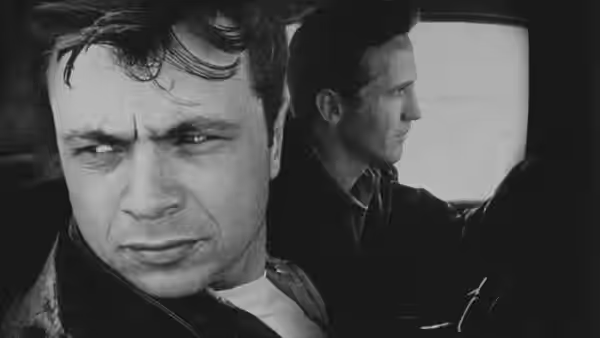
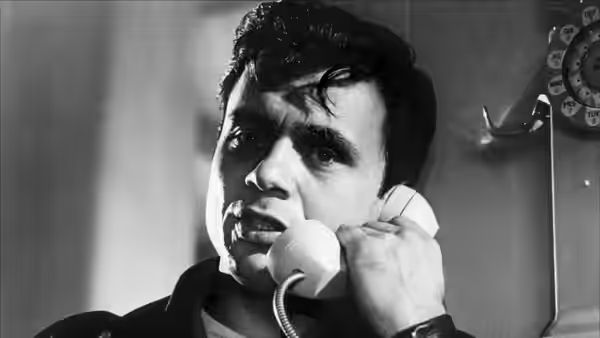
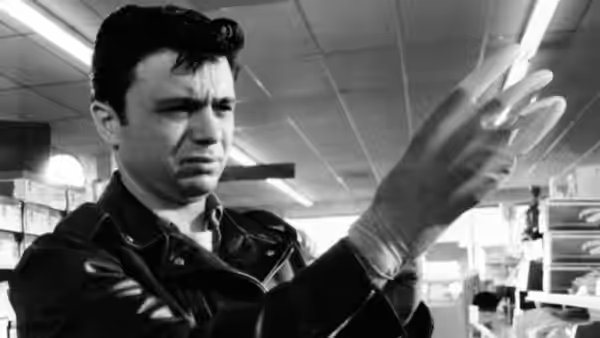
Robert Blake’s Perry Smith and Scott Wilson’s Richard ‘Dick’ Hickcock are central to what works. Neither performance depends on making a killer instantly recognisable as one, and their naturalness makes prolonged attention uncomfortable. We were chilled by the pleasure the men take in talking about violence. Their conversation lacks the solemnity with which crime films usually announce something terrible. The actors make that pleasure seem possible in people we might otherwise pass without a second glance.

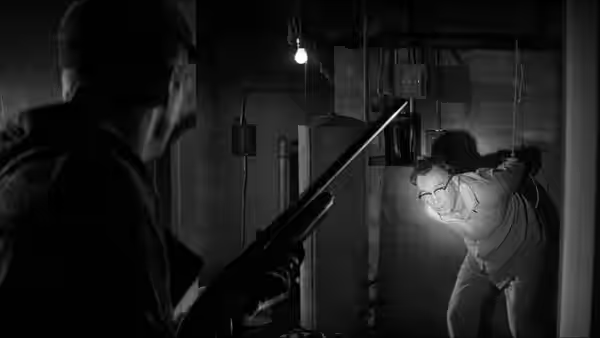
Conrad Hall’s black-and-white cinematography gives the film much of its force. The sharp contrasts supply a noir menace, but the location shooting keeps the surroundings recognisable. The people seem ordinary, yet the images keep us alert to danger, and the photography’s severity prevents its considerable beauty from becoming reassuring. The style works because it remains tied to the behaviour of the actors, with faces and surroundings deserving the same close attention.

Quincy Jones’s jazz score is less restrained, and usefully so. Its agitated sound puts us on edge before we can settle into the film’s patient observation of its characters. Occasionally the music and the heightened visual style make the danger too emphatic, a qualification to the supposed documentary plainness. Even then, the score supplies an unease that straightforwardly mournful music would have softened.

Peter Zinner’s editing leaves room for the performances, and the patient pace is often justified. At 134 minutes, however, it is not equally gripping throughout, and the explanatory passages make the length felt. The trouble lies chiefly in Richard Brooks’s screenplay, which grows less convincing when it tries to diagnose the men. Their behaviour has already disturbed us, and being told why they behave that way does not necessarily make it more comprehensible.

The psychological emphasis also risks directing too much concern towards the killers, simply because the film spends so much effort considering them. To its credit, it retains a sense of the people harmed and does not treat the Clutter family as an incidental cost of an interesting character study. That humane attention is one reason the realism matters. There is enough human pain here to prevent the photography becoming the only thing we remember.

This is a demanding choice for an evening’s viewing, even for those comfortable with crime films. Its interest in the men does not make their company pleasant, and the performances deny us much reassuring distance. Choose it when you have the patience for close observation and no particular wish to be cheered up.

Critical consensus AI synthesised

82
Positive
10
Mixed
2
Negative
0

Most critics respond strongly to In Cold Blood, with praise centring on its documentary realism and noir style. Conrad Hall’s black-and-white cinematography draws repeated admiration for its starkness, while Robert Blake and Scott Wilson’s natural performances support the film’s humane attention to disturbing behaviour. The reviews also value its suspense and sensitivity towards killers and victims. Quincy Jones’s nervy jazz score receives particular notice for making danger feel close.

The reservations concern how Brooks explains and presents the violence, rather than the strength of the filmmaking. Slant Magazine questions the psychological diagnosis despite its enthusiastic verdict; The Guardian finds the film chilling but sometimes reluctant to confront the horror directly. The Telegraph admires the documentary approach while finding the case against capital punishment unpersuasive. The spread runs from mixed to strongly positive, with no outright rejection: even the more reserved assessments acknowledge the film’s unsettling force.

RogerEbert.com
★★★★/4 · Roger Ebert
100

Ebert’s review is positive. It singles out the film’s stark, documentary-like realism.

Read the full review →
Slant Magazine
18 November 2015 · ★★★★★ · Clayton Dillard
100

Dillard praises Brooks’s film as an innovative and influential work, while noting reservations about its psychological diagnosis. He singles out the Criterion restoration’s exceptional image and sound, along with its extensive extras.

Read the full review →
The AV Club
18 November 2015 · A- · Noel Murray
90

Murray calls the film an uncommonly great, inspired blend of documentary realism and noir. He especially praises Conrad Hall’s stark cinematography and the way Brooks combines it with finely observed behavior and unsettling stylistic choices.

Read the full review →
Los Angeles Times
3 March 2006 · Kenneth Turan
85*

Turan celebrates the film as a classic, though he notes that Brooks’ emotional tone can feel heightened. He singles out Conrad Hall’s breathtaking black-and-white cinematography as the film’s great glory.

Read the full review →
Variety
31 December 1966 · Variety Staff
85*

Variety gives the film a strongly positive assessment, calling it probing, sensitive, balanced, and suspenseful. It especially praises the realistic look and sound achieved through location shooting and Brooks’s filmmaking.

Read the full review →
Little White Lies
11 September 2015 · 3/4/4 · Sophie Monks Kaufman
80

The critic finds the adaptation well worth revisiting, describing it as a composed and sorrowful character study. She praises Robert Blake and Scott Wilson’s natural performances and the film’s calm, humane approach to its killers and victims.

Read the full review →

Straight answers AI written, from our review

Is In Cold Blood worth watching?
In Cold Blood is worth watching for its unsettling performances and precise black-and-white photography, and we score it 84 out of 100. We recommend it to viewers who value patient, demanding crime drama, though its attempts to explain the killers psychologically are less persuasive than its close observation of their behaviour.
How long is In Cold Blood, and what is it rated?
In Cold Blood runs 2h 14m and is rated PG12 by the Eirin in Japan. It is a crime and drama film.
Where can I watch In Cold Blood in Japan?
In Cold Blood is not on any streaming or rental service in Japan at the moment. It is available in 1 other country; change your country at the top of the page to see where. Availability is checked daily.
How violent or frightening is In Cold Blood, and is it suitable for children?
In Cold Blood carries a US R certificate and is a disturbing adult crime drama we would not recommend for children. We find the killers’ ordinary manner and pleasure in discussing violence particularly chilling; the sustained unease and human pain also make it a demanding choice for sensitive viewers.
How does In Cold Blood compare to M?
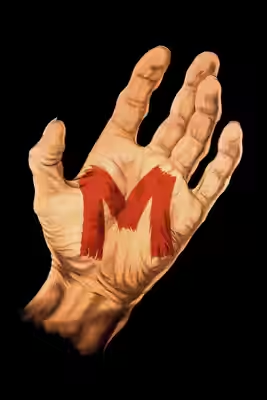
In Cold Blood is the more narrowly focused character study, while M follows a city hunting a killer and earns our stronger recommendation. We favour M for its frightening, humane treatment of both the murderer and the pursuit; In Cold Blood suits those drawn to prolonged observation, though its psychological explanations sometimes labour the point.
Is In Cold Blood based on a true story or a book?
In Cold Blood adapts Truman Capote’s book, with Richard Brooks following two men preparing a crime against the Clutter family alongside the family’s ordinary life. We find its attention to behaviour more convincing than its psychological explanations, and no familiarity with the book is needed to appreciate the performances or understand the threat.
What should I watch after In Cold Blood?
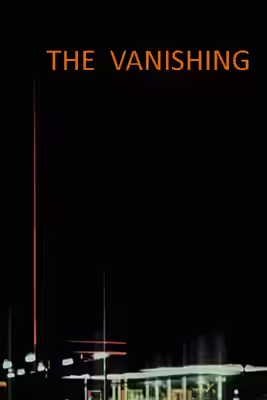
After In Cold Blood, try M (1931, Fi1m 94): A city hunts a killer, with little comfort in its own methods. Then High and Low (1963, Fi1m 90): A kidnapping investigation gives money, class and police procedure their proper weight; and The Vanishing (1988, Fi1m 88): Another patient study of ordinary behaviour that becomes difficult to bear.

Cast

Awards

Academy Awards, 1968

Nominated
Best Cinematography
Nominated
Best Director
Nominated
Best Original Score

If you liked this, try…

  1. M (1931, Fi1m 94)A city hunts a killer, with little comfort in its own methods.

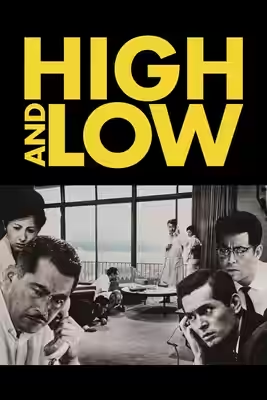
  2. High and Low (1963, Fi1m 90)A kidnapping investigation gives money, class and police procedure their proper weight.

  3. The Vanishing (1988, Fi1m 88)Another patient study of ordinary behaviour that becomes difficult to bear.

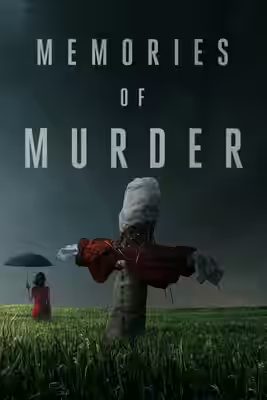
  4. Memories of Murder (2003, Fi1m 91)A murder investigation where procedural detail deepens the frustration rather than relieving it.

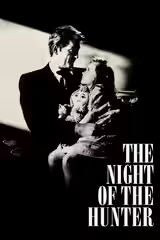
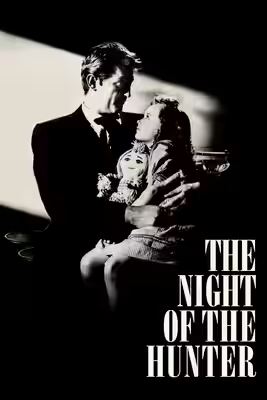
  5. The Night of the Hunter (1955, Fi1m 91)Black-and-white images make familiar places frightening, with room left for human kindness.

Free account

Know what to watch tonight

Two lists that know where things are streaming, collections you can share, your own score beside ours, and Discover that remembers what you have seen.

  • Want to see, sorted by what is streaming now
  • Seen, with your score out of ten
  • No adverts, ever