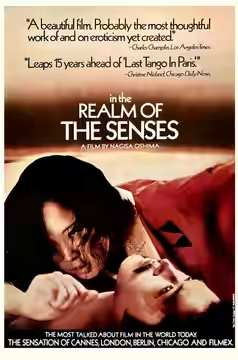
Nagisa Ōshima’s account of the Sada Abe case is explicit, patient and entirely serious, a film about two people who shut the door on 1936 and mean it. It tests the nerves and the attention span, and it is worth seeing once.
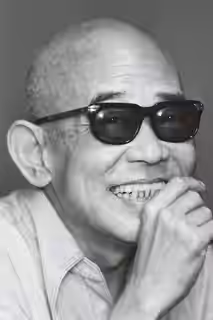
Nagisa Ōshima takes a real case from 1936, the maid and the innkeeper who left everyone they knew to stay in a rented room together, and films it with nothing simulated. That decision got In the Realm of the Senses banned, cut and argued over for years; it did not reach a British cinema until 3 May 1991. Watched now, the scandal has thinned and what is left is stranger and more serious than the fuss suggested. It is a film about two people who decide the world beyond a paper screen is not worth their time, made by a director who half agrees with them. It is not an easy 102 minutes. It is a considered one.
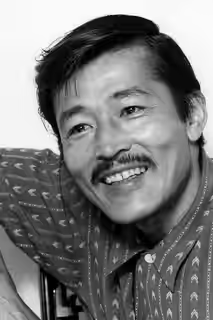
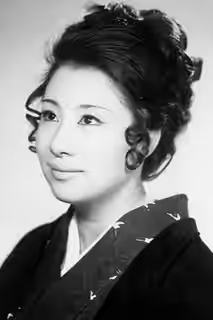
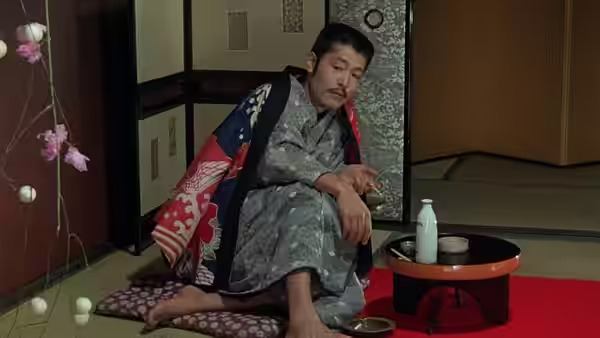
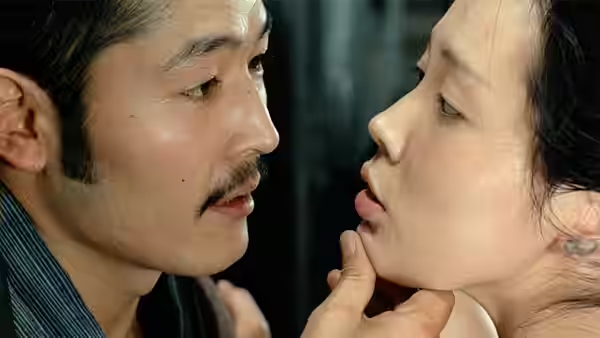
Eiko Matsuda plays Sada with a flat, fixed attention that never breaks into the softness the word romance promises. She wants him, then she wants him not to leave, then she wants him not to sleep, and Matsuda plays each stage as the same look held a little longer. Tatsuya Fuji is the surprise. His Kichizo is amused, indulgent and oddly restful, a man who lets himself be led and smiles about it, and the smile is what makes the later scenes hard to watch. He is having a lovely time right up until the point at which he is not sure he is.
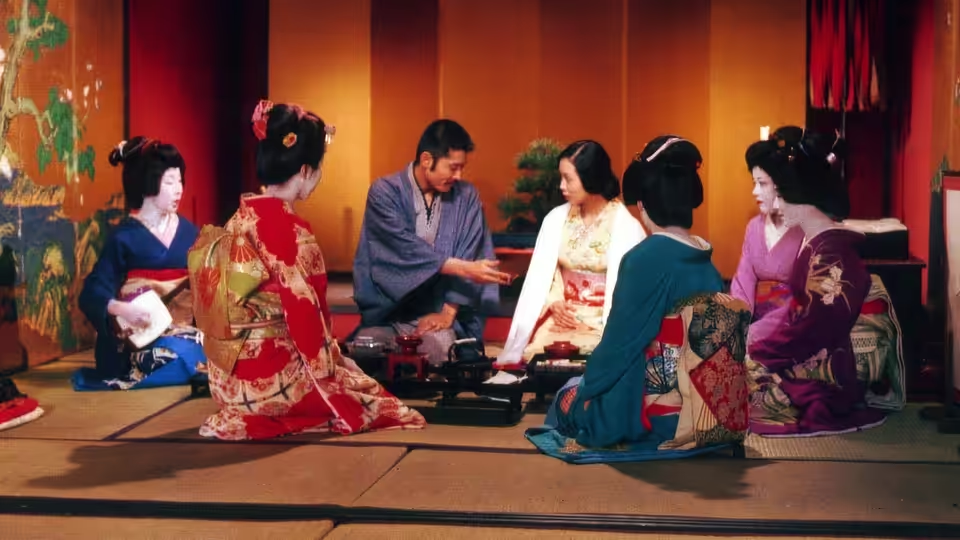
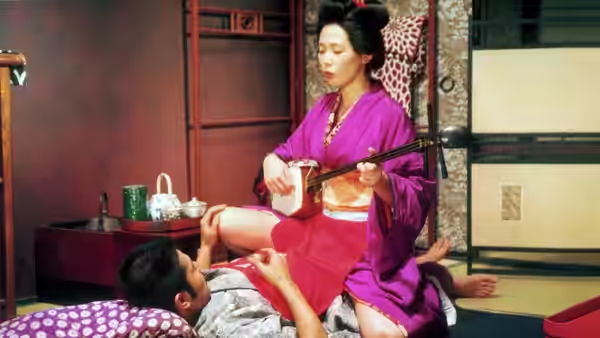
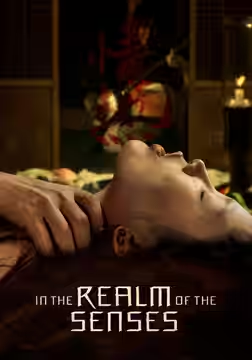
Hideo Itō shoots almost the whole film indoors and from the floor, in lantern light, so the rooms are gold, the bedding is red and the outside world is a grey square glimpsed past a sliding door. Shigemasa Toda, who did the production design and shared the costumes with Masahiro Katō, keeps the inns close to bare: a futon, a screen, a tray, a kimono that matches the quilt. There is nothing to look at but the two of them, which is the point, and it is a point Ōshima is content to make for an hour and three quarters.
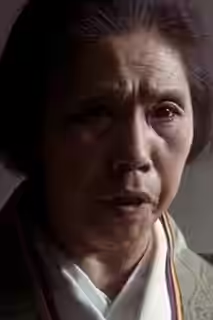
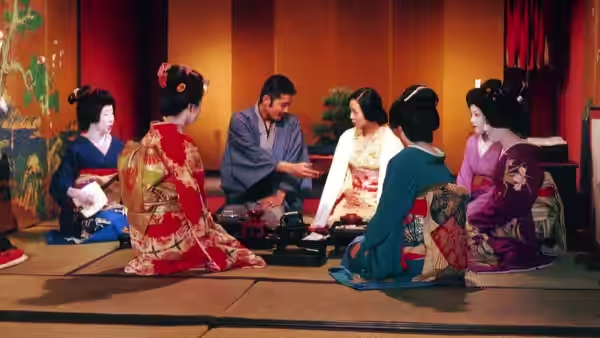
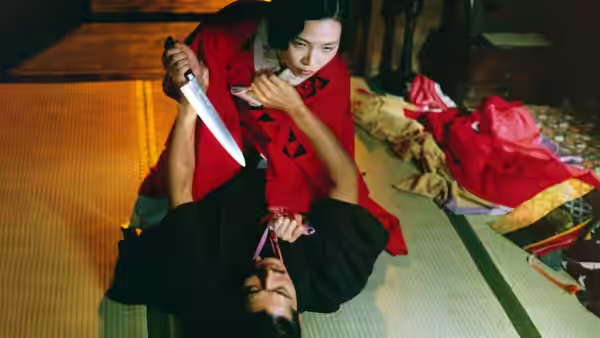
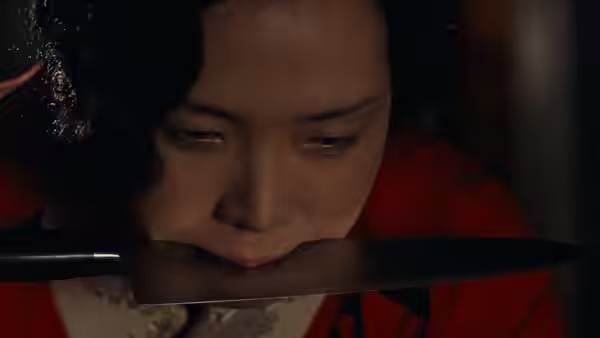
The sex scenes are many, and they do change. Ōshima builds them as a progression, each a step further from the ordinary: food and drink brought in, then other people, geisha and maids and, in one scene we will come back to, an old woman. Whether the progression holds your attention will decide the film for you. We will be honest: somewhere around the hour we were restless, and had stopped being surprised. Then came the scene with the old geisha Kikuryû (Kanae Kobayashi), and later one involving an egg, and we were horrified, and more to the point we were frightened for these two, which is not a feeling we expected a film this explicit to leave room for. The horror was in Matsuda’s face, which does not change at all.
One exterior shot carries the film’s argument. Kichizo walks down a street against a column of soldiers, children waving flags at the men marching past him, and he does not so much as glance at them. Japan is going to war and this man is going back to bed. It is a good shot and it is on its own; the rest of the time Ōshima trusts us to know what 1936 in Tokyo means, and a British viewer on a sofa may not, in which case the room is just a room.
Patrick Sauvion and Keiichi Uraoka cut slowly and hold on faces after the words have stopped. Minoru Miki’s score stays out of the way; most of the music is played in the rooms, a shamisen and a song from a geisha hired for the evening, which keeps the film in its period and in its building. The story moves towards an end that many readers will already know from the history books. We will not describe it. We will say that the film earns it, and that there is nothing in the last stretch that feels like a director enjoying himself.
Most critics land somewhere near where we do, admiring and a little worn down, and one found it tedious. We understand the complaint and think it mistakes the design for a failing: the repetition is what these two did with their lives, and the film would be dishonest if it were livelier. See it once, alone or with someone you do not need to explain yourself to afterwards. It is not a film for a first date, or a fortieth.