Roland Emmerich’s alien invasion film earns its size with patient menace and enormous destruction. The script is foolish, the patriotism overdone, but the cast makes the business of saving the world unusually cheerful.
Independence Day is good, foolish entertainment, and Roland Emmerich understands how much waiting an alien invasion needs before the destruction can begin. He wants the audience frightened enough to pay attention and comfortable enough to enjoy itself. We recommend it for the scale, the cast and the patient preparation, with a warning that the writing becomes much less convincing once the spectacle has to support a story. Its ambitions are straightforward, and for a substantial stretch it meets them.
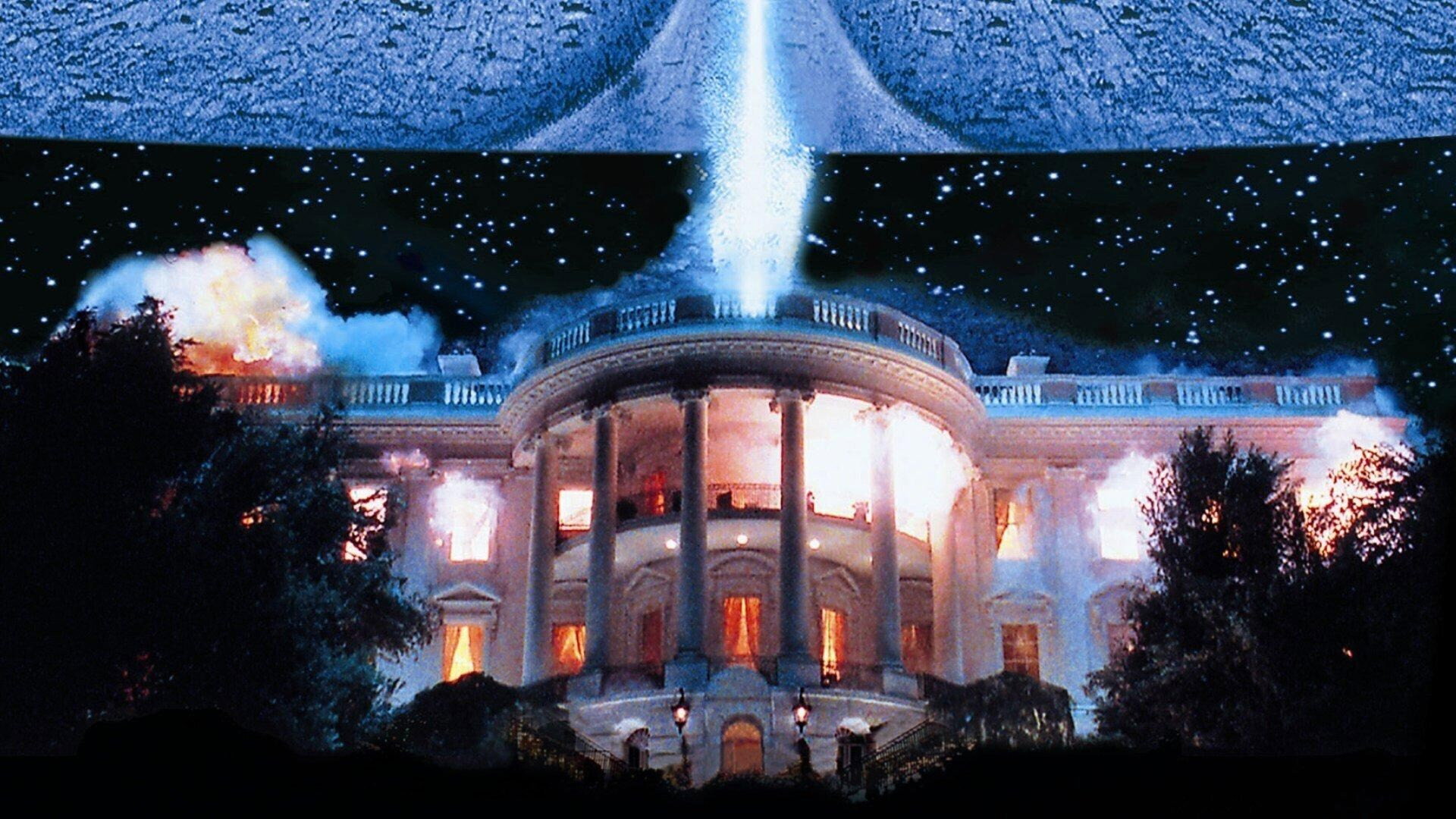
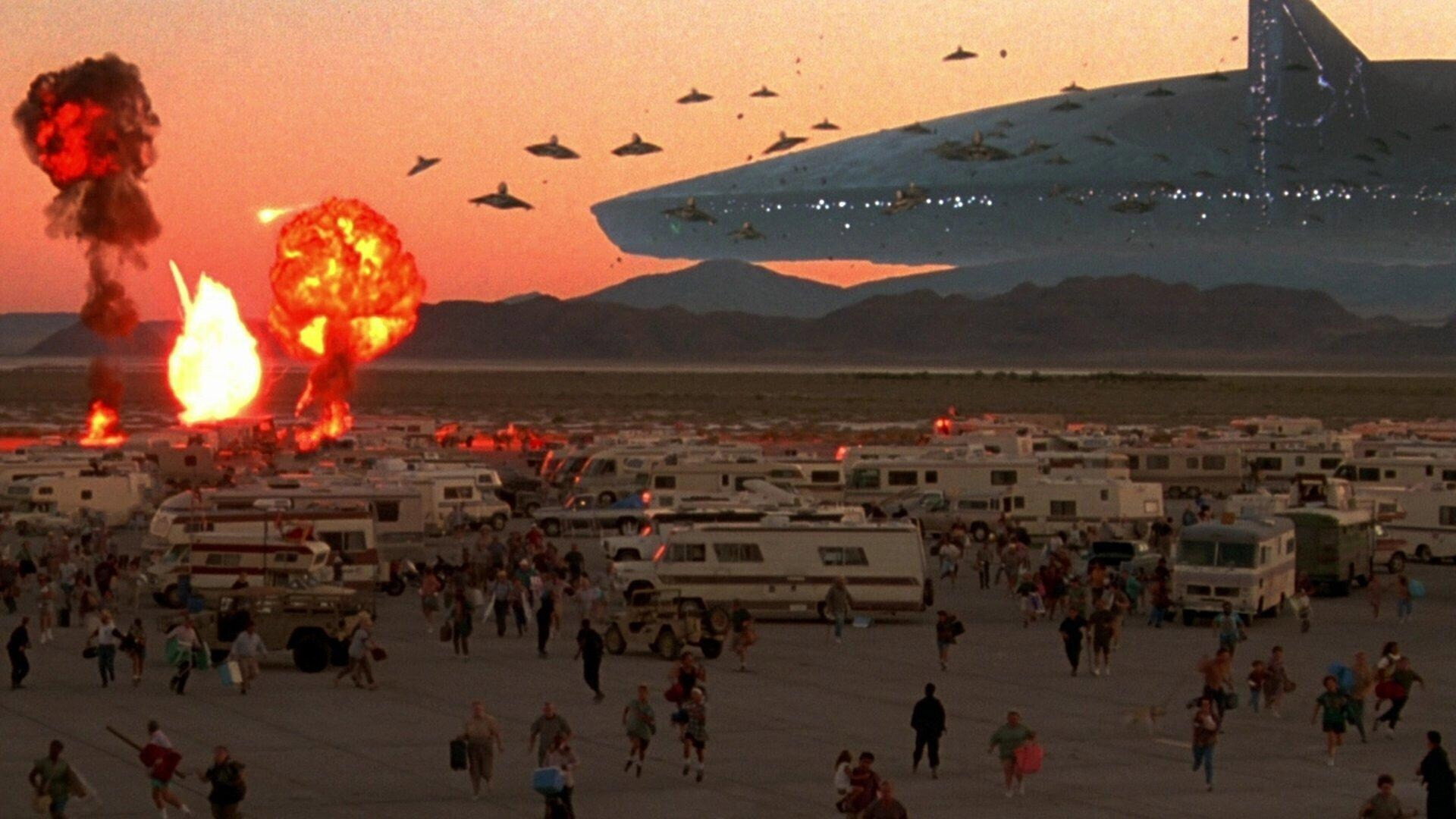
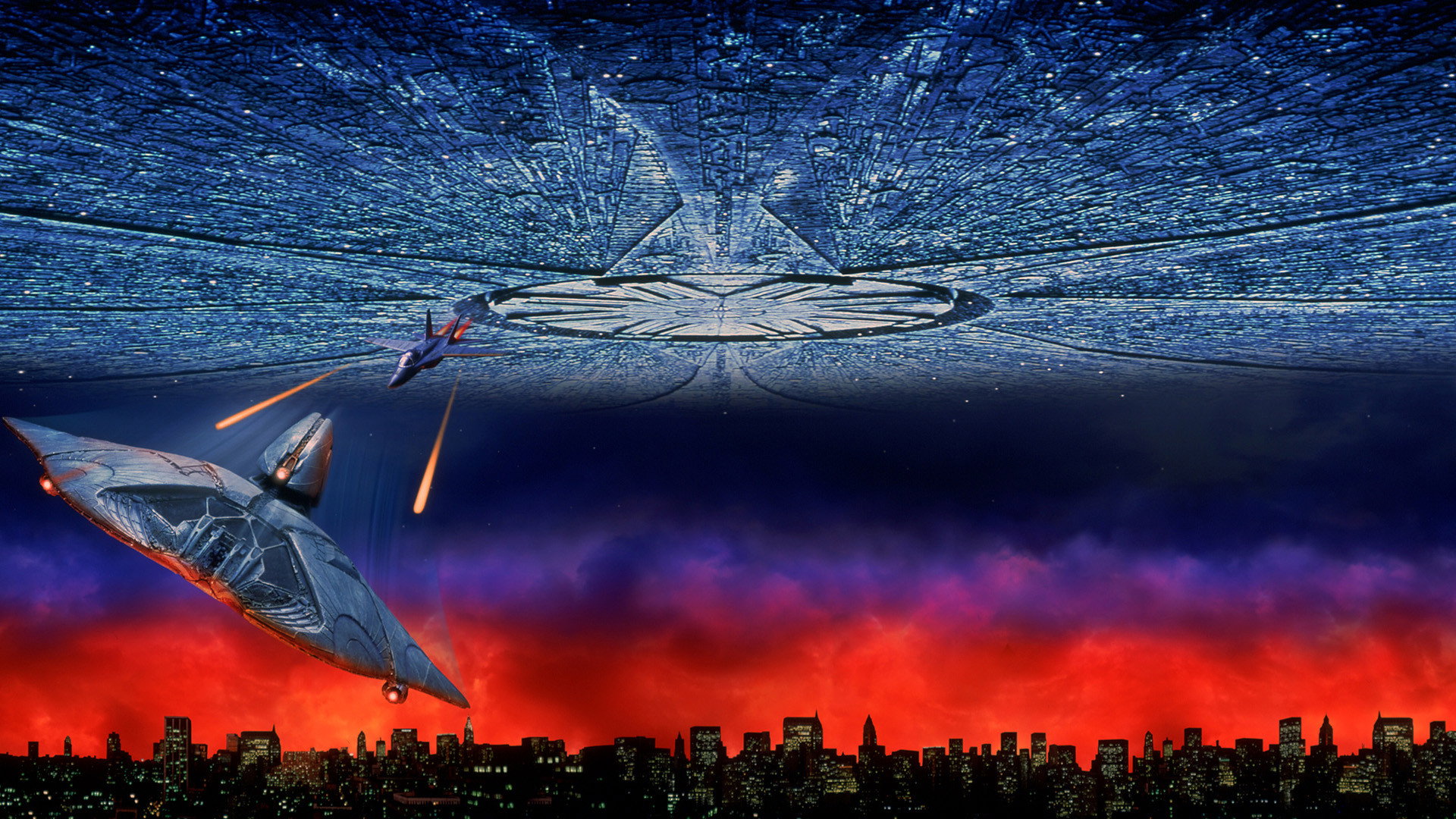
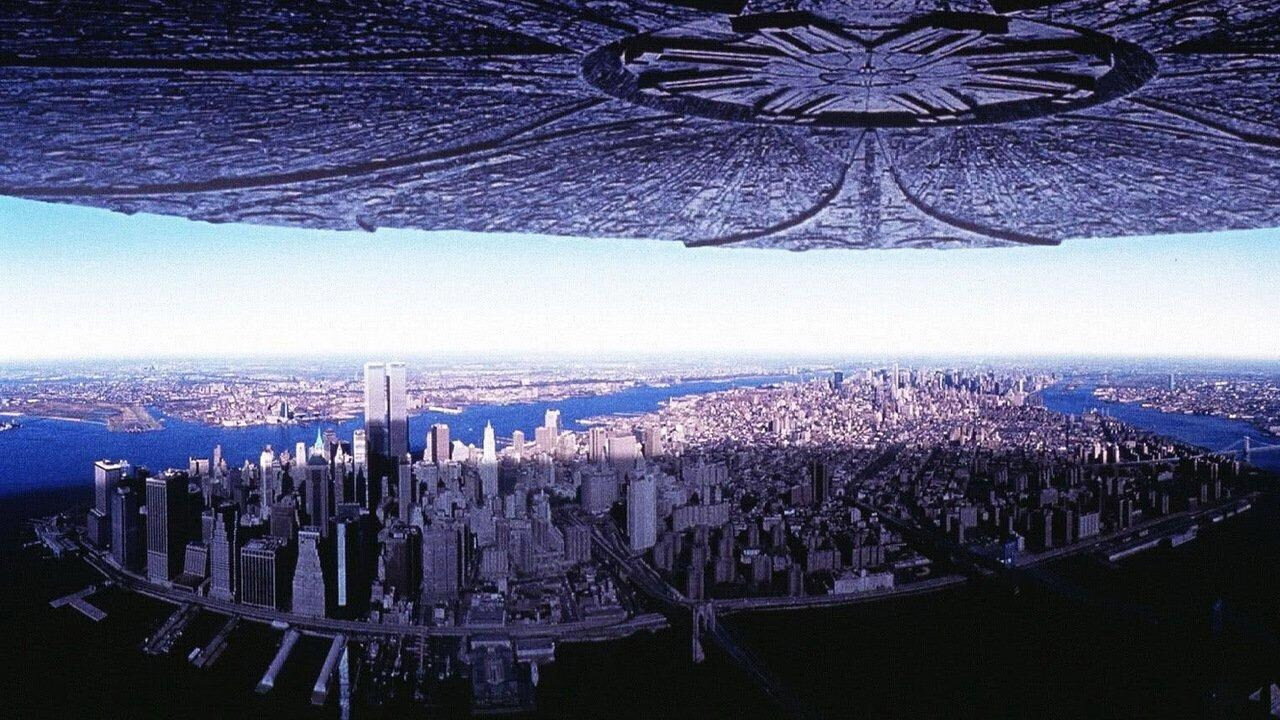
Karl Walter Lindenlaub’s cinematography makes the shadows do useful work: the threat is frightening before the damage has even started. We were unnerved by the way familiar places seemed suddenly defenceless under that darkness. There is time to look and to imagine what might follow. The effects give the invasion enough physical weight to sustain that feeling without requiring much explanation. This is the strongest part of the film, when the danger has arrived and nobody has a satisfactory response.
Production designers Patrick Tatopoulos and Oliver Scholl give the threatened world sufficient solidity to make its destruction count. Recognisable American landmarks supply a ready sense of scale, and Emmerich knows how readily an audience reads them. We do not need a lengthy account of what a building represents to understand the shock of seeing it threatened. The design and effects serve the same practical purpose, keeping the size of the danger clear.
Will Smith, as Captain Steven Hiller, gives the film an ease that all this grand machinery badly needs. Jeff Goldblum’s David Levinson is just as useful, bringing enough individual character to keep the dialogue from sounding entirely manufactured. Their appeal matters because the screenplay offers types more readily than people. Bill Pullman’s President Thomas J. Whitmore has the harder assignment, making official seriousness watchable amid such cheerful nonsense. The ensemble keeps us interested in who is facing the danger, even when the characters have been supplied with little depth.
The screenplay by Emmerich and Dean Devlin is much less reliable whenever excitement depends on believing what we are being told. Implausibility is part of the bargain with an alien invasion film, but it is still fair to expect the human behaviour to make sense. Here, thin characterisation and patriotic insistence too often substitute for persuasion. The generous mood helps, yet the insistence that American heroism should stand in for everybody’s experience grows tiresome, especially in a film that makes such broad claims on our sympathy.
David Brenner’s editing gives the first half enough pace to manage the large cast without making every introduction feel like an interruption. Later, the weak plotting becomes harder to ignore, however briskly the film moves. David Arnold’s music helps sustain the excitement, giving the spectacle some of the exuberance missing from the dialogue. We have less patience for Emmerich’s insistence on heroics; the danger is enough to hold our attention without so much reassurance about the people confronting it. At 145 minutes, there is also more of that reassurance than we need.
As an alien invasion picture, this is happier with mass destruction than with making the invaders themselves interesting. That limits the fear once the initial menace has passed, but the mixture of disaster, warfare and broad comedy remains companionable. There is pleasure in a large-scale action film that wants its people to be liked, even when it writes them badly. Choose it for an evening of expansive, undemanding spectacle, provided flag-waving does not spoil the fun.