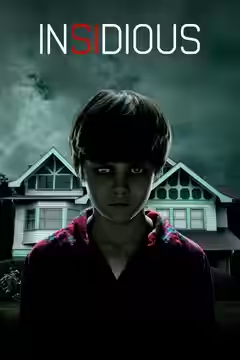
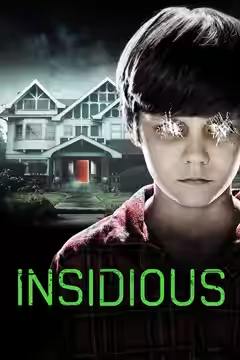
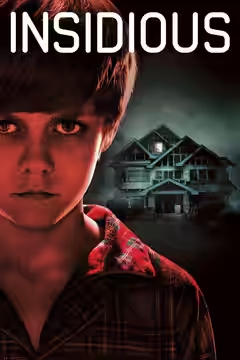
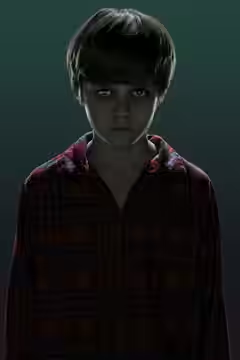
James Wan makes a familiar haunted-house story frightening through careful camera movement and well-timed shocks. The explanations slow it down, but there is enough here to reward anyone who comes chiefly to be scared.
Insidious is a good choice for an evening of uncomplicated fright, provided we accept that its explanations are less convincing than its scares. James Wan directs as though making us nervous about an ordinary house is a worthwhile ambition in itself, and we agree. With Leigh Whannell writing, he gives the familiar haunted-house story enough care and energy to make familiarity a small objection. The film starts to struggle when it asks us to take its supernatural rules seriously.
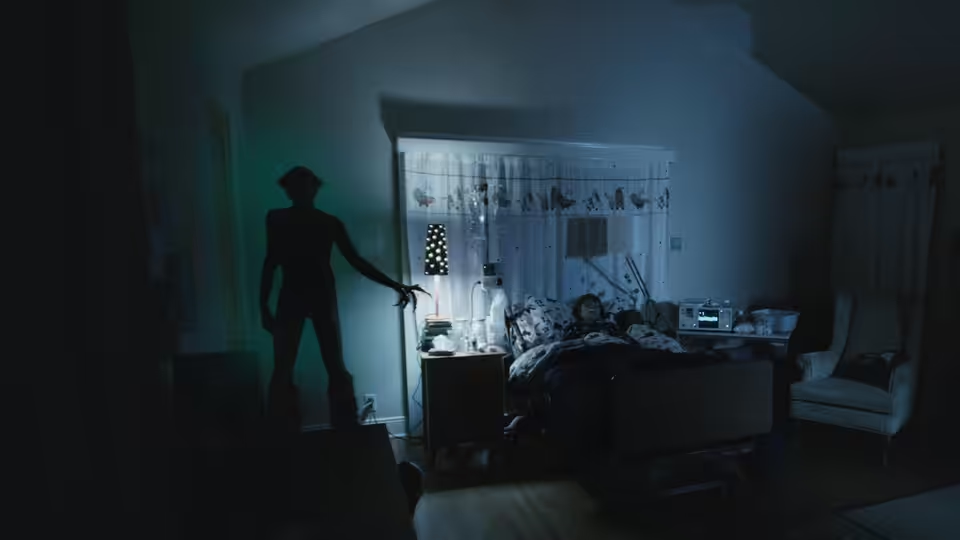
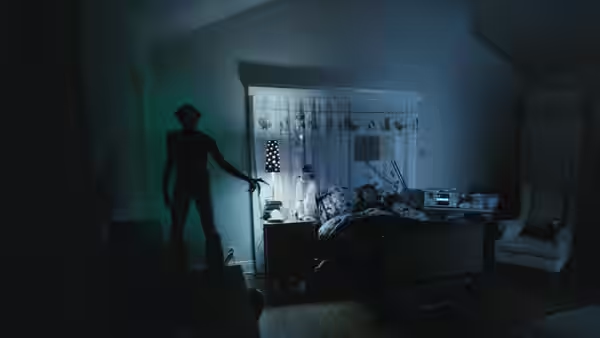
John R. Leonetti and David M. Brewer’s cinematography does much of the patient work, making the camera’s movement through the house feel intrusive even between the shocks. The suggestion that something might be outside our view is often enough to keep us watching closely. Aaron Sims’s production design helps by keeping the domestic setting recognisable, so the haunting has somewhere ordinary to interrupt. These scenes encourage us to search the picture, and that attention makes the eventual disturbance harder to shrug off.
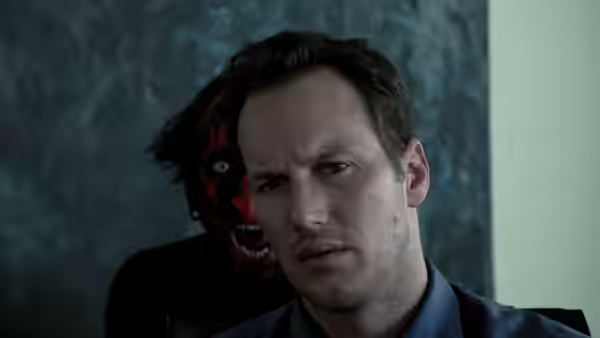
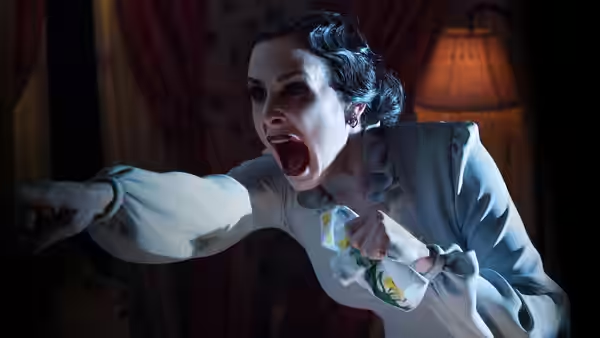
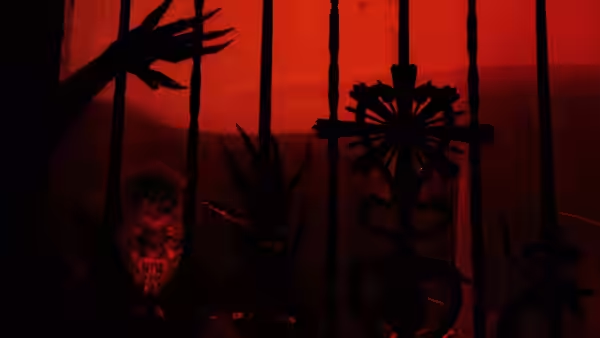
The editing by Kirk M. Morri and James Wan is alert to how long that attention can be held, and the shocks usually arrive before anticipation becomes impatience. We were frightened by the brief glimpses of ghostly figures, because their short appearances give us too little time to become accustomed to them. They give the early stretch a nastiness that survives the initial jolt. Joseph Bishara’s music contributes to the pressure, though the force of the musical cues sometimes makes the scare feel less earned.
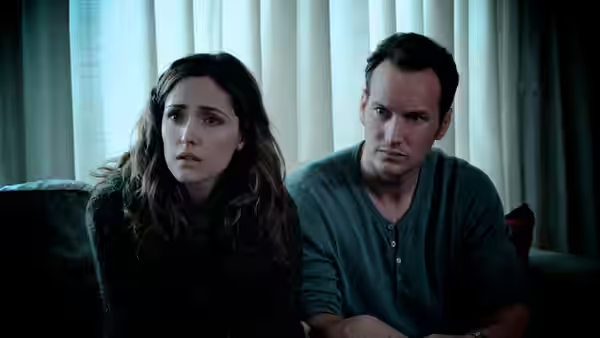
Patrick Wilson and Rose Byrne play Josh Lambert and Renai Lambert earnestly, which helps the early scenes. Their seriousness gives the danger some weight. The domestic drama remains fairly thin, however, and neither actor gets much beyond the immediate demands of fear. Lin Shaye, playing Elise Rainier, brings a useful firmness to material that could easily become ridiculous. She holds our attention even when the explanation itself is a strain, and the film benefits from having someone deliver this business without seeming apologetic about it.
The comedy is welcome, up to a point. Leigh Whannell and Angus Sampson, as Specs and Tucker, give the film a lighter stretch, and their double act offers some relief from all that watchfulness. James Wan is right to let us relax occasionally, although the shift in tone can make the earlier alarm seem rather easy to dismiss. The jokes become a difficulty when the film takes too long to get back to making us uneasy.
The larger problem is Leigh Whannell’s need to explain things. The second half spends too much effort establishing how its supernatural business operates, with rules that feel assembled to get the next scene under way. Exposition slows the film precisely when our curiosity ought to be helping it along, and the explanations leave plenty of room for objections. The dialogue keeps drawing our attention to questions that a brisker film might have let us forget, which is an unhelpful habit in a ghost story.
Measured against a haunted-house film’s basic obligations, though, Insidious does enough: it builds apprehension, varies its scares and makes settling down again difficult. We would have preferred less explanation, but the early control is not cancelled by the later fuss. Choose it for an evening when being properly frightened matters more than having every question answered, and resist the temptation to pause for a discussion of the rules.