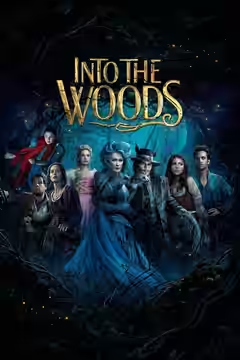
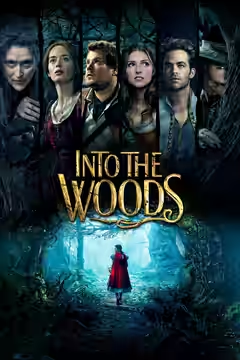
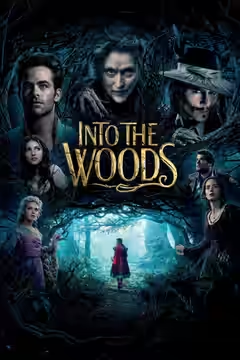
Into the Woods is well sung and often funny, with Emily Blunt supplying its most convincing feeling. Rob Marshall’s uneven handling of the darker material makes this a qualified choice for musical enthusiasts.
Rob Marshall’s Into the Woods has enough wit and good singing to keep musical devotees interested, but its storytelling grows tiring before its 125 minutes are up. Bringing familiar fairy-tale characters together is a promising starting point, allowing their wishes to complicate one another’s stories. James Lapine’s screenplay gives that mixture a comic bustle. The difficulty comes when the film asks those same characters to carry more sorrow than the telling has prepared us for.
Stephen Sondheim’s music is the chief reason to stay with it. The lyrics keep changing the emphasis of a thought, giving the singers something more demanding than a feeling to announce at volume. That verbal activity can be funny and moving, though the direction does not always give a complicated phrase enough dramatic space. We need to understand why a character changes their mind as clearly as we hear the words; too often, the film seems satisfied to have got through the number.
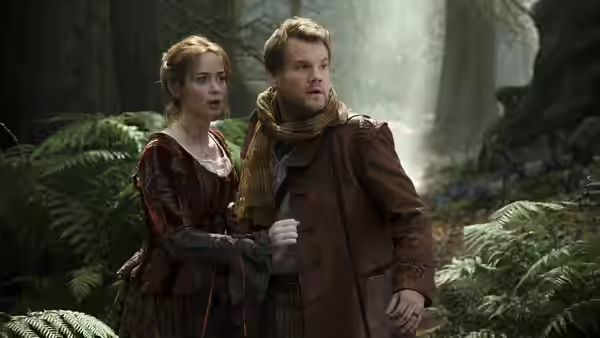
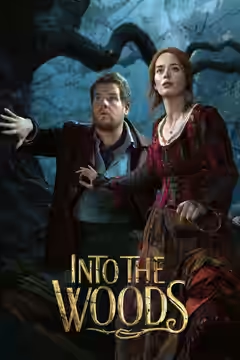
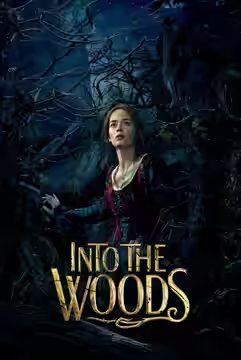
Emily Blunt makes the Baker’s Wife feel like a person thinking while she sings. Her comic timing is alert without making the character merely amusing, and she carries the more painful feelings without announcing a change of performance. James Corden’s Baker is less distinctive beside her, though the pairing supplies some welcome human scale. Among so many people already labelled by a fairy tale, her uncertainty gives us someone whose next thought seems worth listening to.
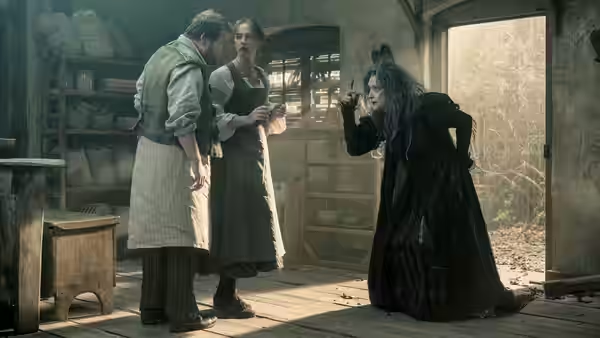
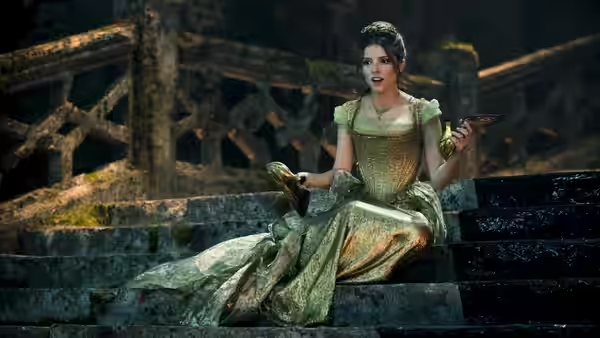
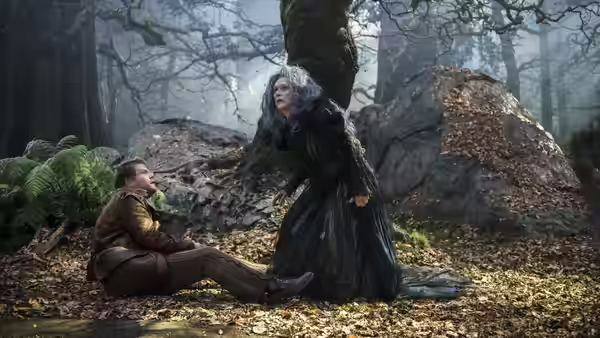
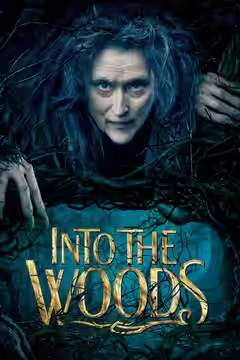
Meryl Streep gives the Witch a force the film can use, shaping the songs with enough bite to keep the role from becoming decorative. Anna Kendrick’s Cinderella brings welcome precision to the singing, while Chris Pine makes Cinderella’s Prince an enjoyable fool. We laughed at his comic duet because he treats princely dissatisfaction as a matter demanding everyone’s full attention. His performance understands how funny a fairy-tale hero can be when he has no suspicion that he is ridiculous.
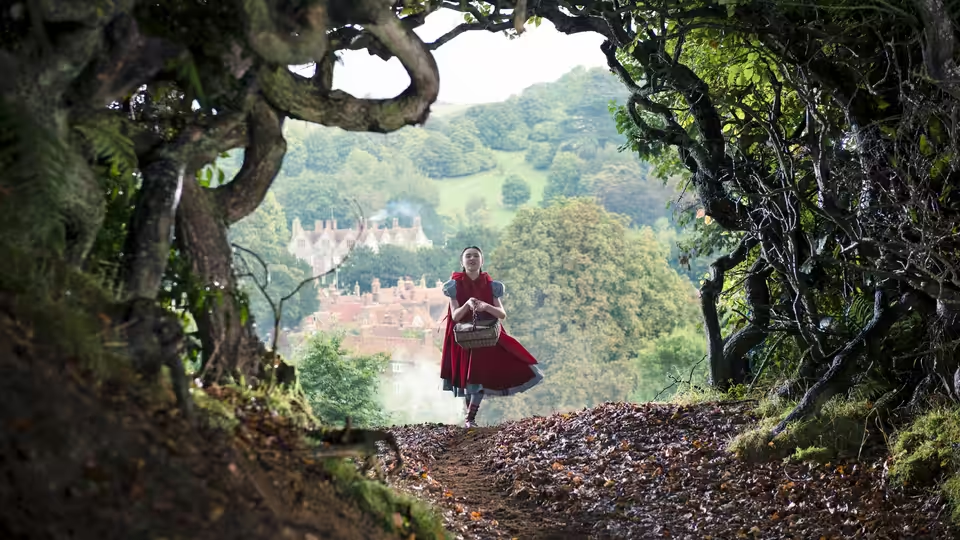
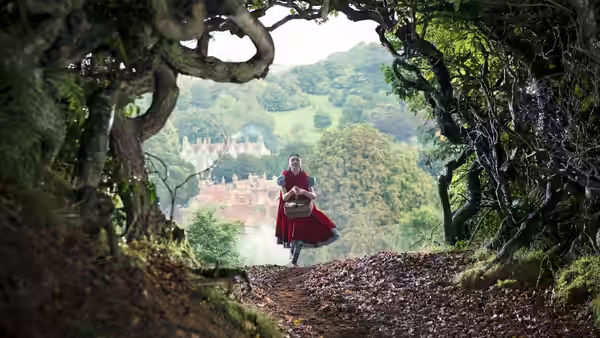
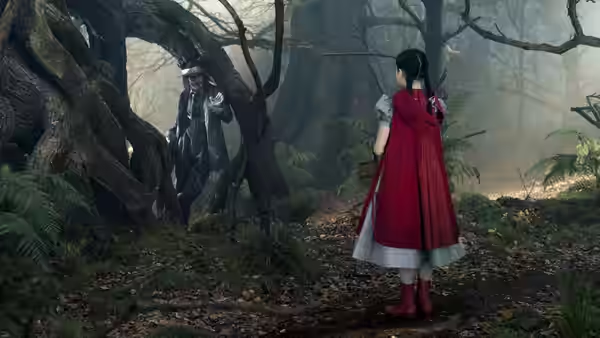
The visual work is less persuasive. Dion Beebe’s cinematography gives the performers room to register, yet does too little to make their shared world feel unpredictable. Dennis Gassner’s production design provides an appropriately theatrical setting, although it does little to make the darker material unsettling. Colleen Atwood’s costumes are enjoyable in themselves, but their appeal cannot supply the unease missing around them. A fantasy musical can reasonably be expected to offer more than well-dressed people delivering good songs.
Wyatt Smith’s editing cannot quite settle the changing pace. The comic business has momentum, then the heavier stretches seem to take longer without becoming more affecting. We do not object to a fairy tale becoming sombre; that is one of the genre’s useful freedoms. Here, the direction gives the change so little preparation that the film starts to feel laborious just when it needs us to care more.
As a screen musical, this is worth considering for the performers rather than for a new way of seeing the material. The singing has care and personality, and the film does preserve some awkward feelings beneath the familiar characters. That is enough for an interested audience, though the pleasures arrive unevenly. Choose it for Emily Blunt and the songs, and allow for an evening that takes longer to finish than it should.