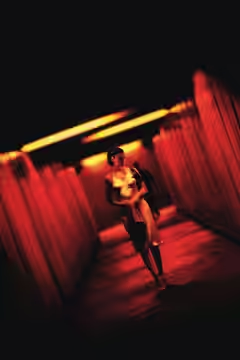
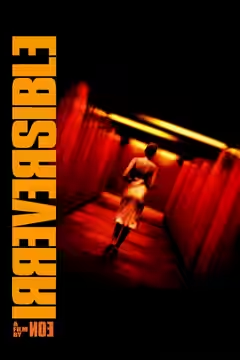
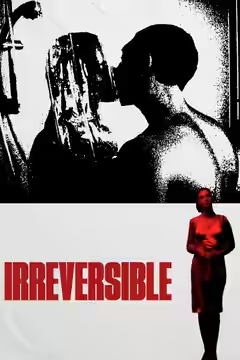
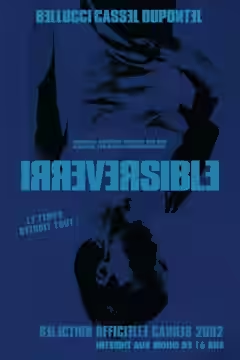
Gaspar Noé’s Irreversible is skilfully made and hard to defend. The reverse chronology gives its violence a disturbing weight, but the prolonged sexual assault overwhelms the people the film asks us to care about.
Gaspar Noé’s Irreversible is an accomplished film whose treatment of violence gives us more reason to object than to recommend it. Told in reverse, it asks us to reconsider what we have seen as it moves towards what came before. That gives a revenge thriller something worth exploring: our judgement can change as we discover more about the people involved. Noé is less convincing when he assumes that making the experience punishing will also make it profound.
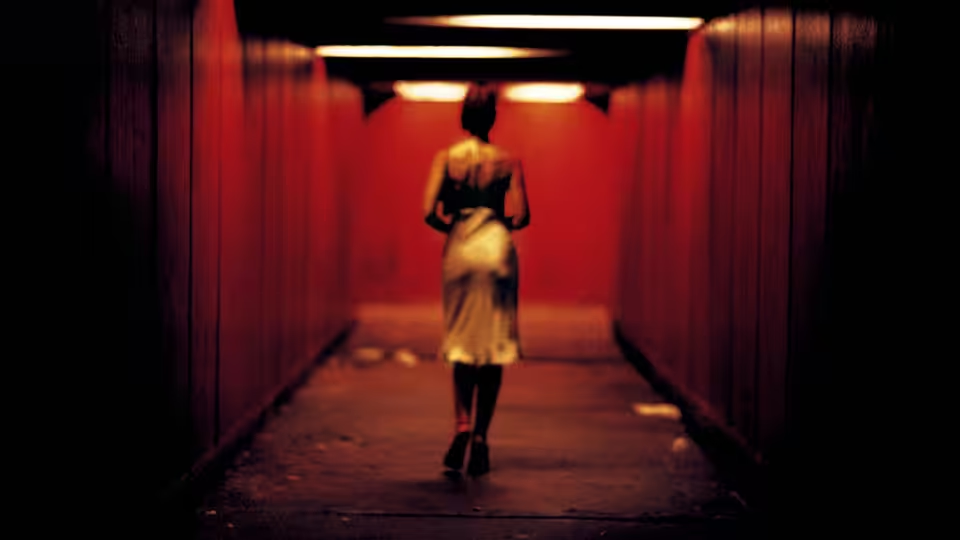
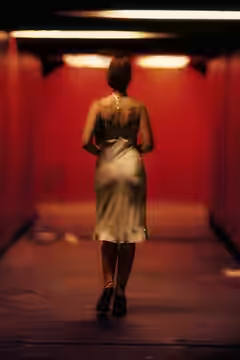
Benoît Debie and Gaspar Noé share the cinematography credit, and the fluid camera movement makes the disorientation feel deliberate rather than clumsy. There is something disturbing about being guided so confidently through images we would rather not inspect. The reverse chronology is handled with equal assurance, allowing our understanding of an event to shift after we have watched it. Noé is also the film’s writer and editor.
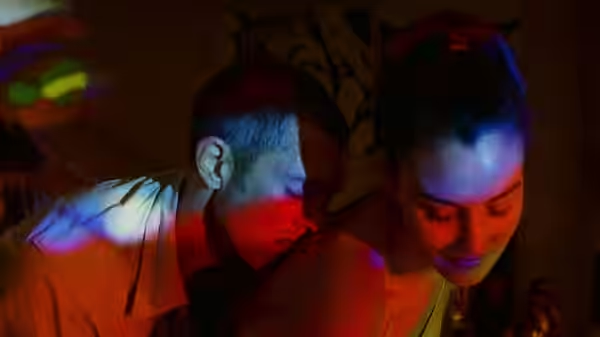
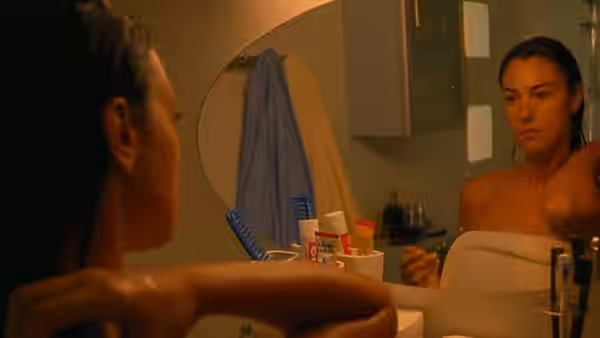
Monica Bellucci and Vincent Cassel keep this from becoming merely a demonstration of technique. Bellucci makes Alex’s joy as credible as her fear, giving us some sense of a life beyond the film’s determination to distress us. Cassel gives Marcus a force that survives the deliberately confusing presentation, holding our attention when the violence threatens to exhaust it. These performances matter because they suggest people worth attending to even without the elaborate rearrangement of their story.
We were horrified by the prolonged sexual assault, and then angry at how insistently the film made us keep looking. Its duration prevents the crime from becoming the brisk excuse for revenge that it might be in a less demanding thriller. That is a defensible purpose, but it does not settle the question of what the extended exposure achieves. We understand that the suffering is intolerable well before Noé permits the scene to end, and the further insistence adds little to our understanding.
Alain Juteau’s production design and the music credited to André Bézu and Thomas Bangalter contribute to the oppressive experience. Neither contribution strikes us as careless, but both are difficult to appreciate apart from the violence that dominates our response. This is a problem for a drama whose performances deserve attention on their own terms. The film leaves us thinking about how hard it was to watch, long after we have stopped thinking about the people in it.
As a revenge thriller, the film deserves credit for making brutality so unappealing. The backwards movement also complicates the usual invitation to take sides, because we have to keep reconsidering what we know. But Noé gives the pain more attention than the people, and the seriousness of his approach cannot simply be taken on trust. The question of why we are being shown quite so much remains unanswered.
At 97 minutes, Irreversible can feel considerably longer. We would be wary of treating the endurance it requires as evidence that it has succeeded. We would reserve it for those interested enough in the reverse chronology to accept its excesses. If prolonged sexual violence is a limit, the formal skill is not a reason to make an exception.