Aleshea Harris’s first film sends twin sisters west to kill the father who burned them, and while it is on the road with Kara Young and Mallori Johnson it is fierce, funny and alive. The look does not always keep up with the writing.
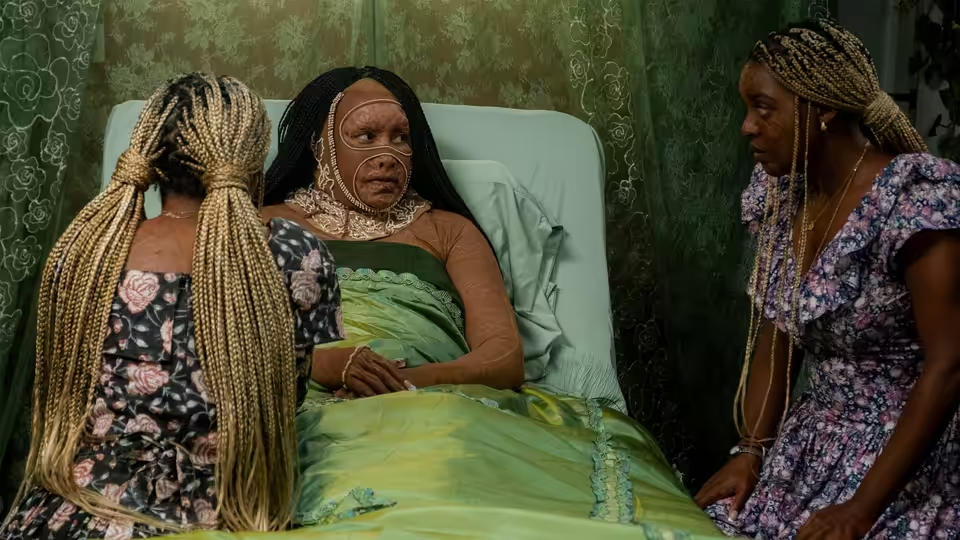
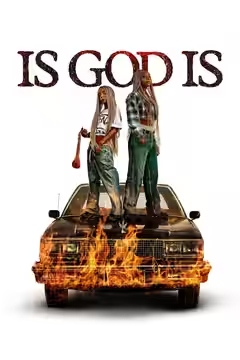
Aleshea Harris’s Is God Is has the bones of an old story. Twin sisters, burned as children in a fire their father set, are summoned by a mother they thought dead and told to kill him. That is a revenge story in the oldest shape there is: a wrong, a road, a reckoning at the end of it. Harris, writing and directing her first film, knows the shape and does not pretend otherwise. What she adds is the mother, whom the girls have always called God, and the question of what you owe a god who turns out to be a dying woman in a hospital bed.
Kara Young and Mallori Johnson carry it. Young’s Racine is the one who wants this, all forward motion, hands never still, a grin that arrives a second before the violence does. Johnson’s Anaia is the one who keeps asking whether they have to, and keeps getting in the car anyway. The scenes between them on the drive west, sharing food, needling each other, going quiet, moved us more than the plot had any right to. Harris writes them as people who have only ever had each other and are not sure that was enough.
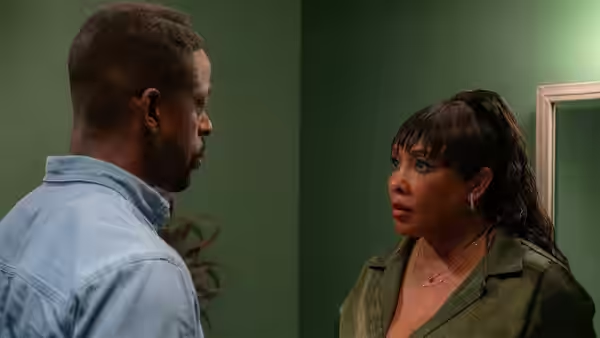
Vivica A. Fox has one long scene as Ruby, most of it flat on her back, and she makes the instruction to kill sound like a bedtime story. Sterling K. Brown, when the film finally gets to him, plays the father as a soft-spoken man who has built a calm life on top of what he did and would prefer not to be reminded. He is the best thing in the last third. Every line is reasonable and every one of them is a threat.
Alexander Dynan shoots the South dim and close, lamps and curtains, and the West in hard white daylight with too much sky, so the sisters look smaller the nearer they get to their target. Freyja Bardell’s design of the father’s house is clean and beige and expensively empty. Jay Rabinowitz cuts the killings short: a swing, a cut away, a face. The first one made us flinch, and we were glad the film did not let us enjoy it for long. Moses Sumney and Joseph Shirley score it mostly with voices, wordless and low, and it works best when it is barely there.
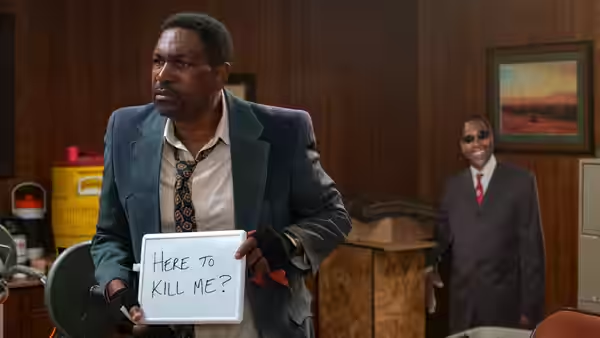
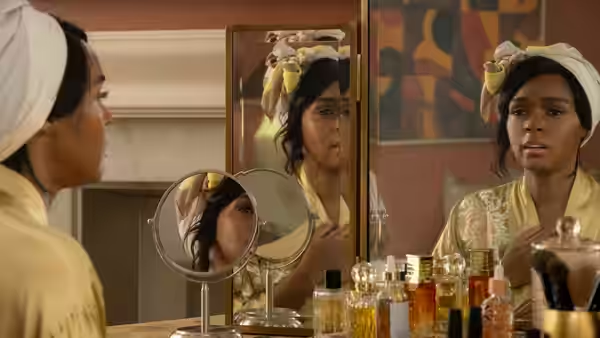
What does not work is the middle. Once the sisters leave Ruby’s bedside, the film becomes a series of encounters, and the people they encounter are ideas before they are people. Mykelti Williamson’s lawyer, Chuck Hall, gets the funniest scene in the film and then vanishes. Janelle Monáe’s Angie, the father’s new wife, and the twin sons Scotch (Xavier Mills) and Riley (Justen Ross) are there to rhyme with the sisters, and the rhyme is the whole of them. Erika Alexander turns up as a woman called Divine, and the name tells you what the film wants from her. They make their points and move on.
The look is uneven, too. There are images here that belong to nobody else, but there are also long stretches where the camera sits and waits for the dialogue to finish, and the dialogue, which is heightened, rhythmic and often funny, wants a room built to match it. This is where most critics divide: some found the film dazzling, a couple found it flat. We were somewhere between. The words are ahead of the pictures for most of the running time, and the pictures catch up about twice.
The climax goes where you knew it would from the tagline. That is not a complaint about a revenge film; it is a note that Harris has spent 100 minutes asking whether the old shape is enough and then answers with the old shape. Brown makes the ending worth it regardless.
It is an 18 and it earns it, though the violence is quick and never lingered on. Watch it for the two women in the front seat. They are worth the drive even when the film pulls over too often.