Johnny Harris wrote himself a boxer on the drink and plays him as if he has paid for every scene. The film around him is honest, well shot and short on surprises; the last fight is the best reason to stay.
Johnny Harris wrote Jawbone, produced it and plays its lead, and the film is about a man who drinks, has stopped boxing and tries to start again. It is a familiar shape. What Harris and his director Thomas Napper do with it is honest, small and well judged for the most part, and the parts that are not well judged are the parts every boxing film gets wrong. It is worth your evening if you can stand ninety minutes in the company of a man at his lowest, and we mean that as a recommendation.
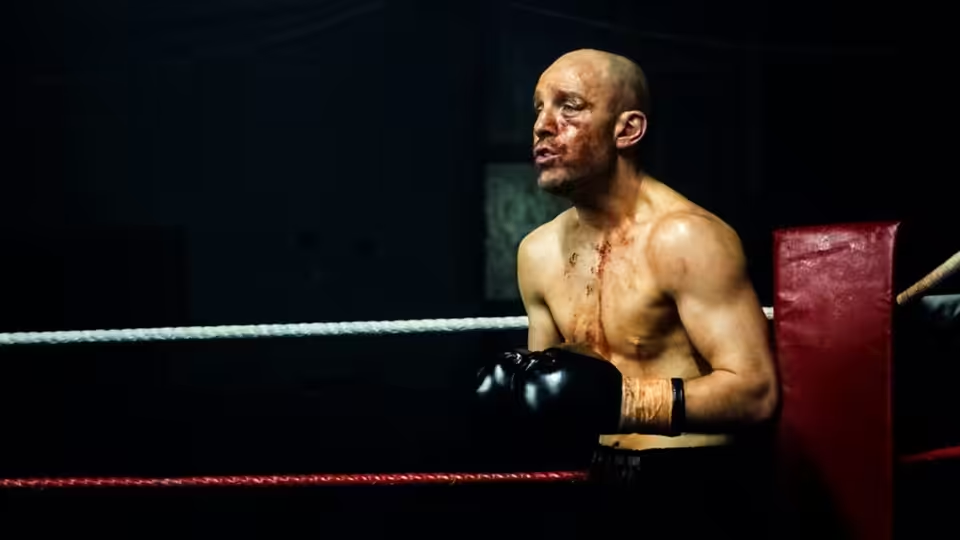
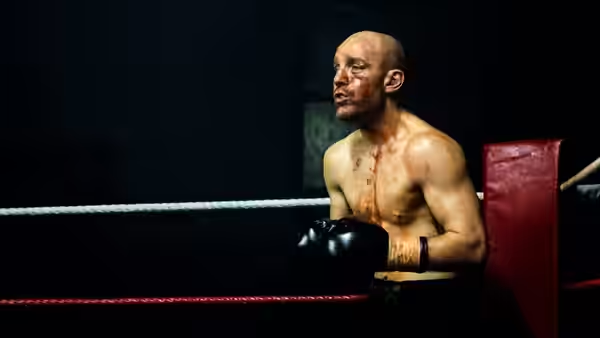
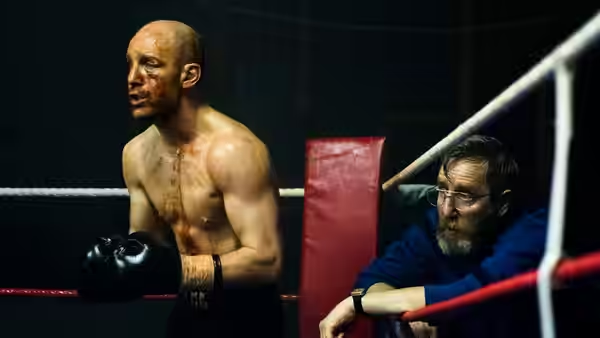
Jimmy McCabe is in nearly every frame, and Harris plays him from the body outwards. He walks as if the pavement might move. His hands shake until he has had a drink, and then they are steady and his eyes are not. There is a scene early on, Jimmy alone in a bare flat with the lights off and a bottle, that we found harder to sit through than any of the punches, because Harris does nothing in it except breathe and wait, and we knew exactly what he was waiting for. The film tells us little about where he has been and does not need to.
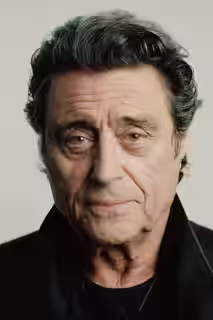
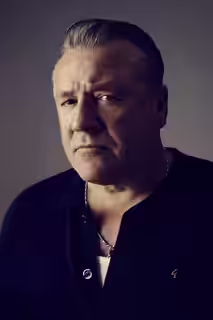
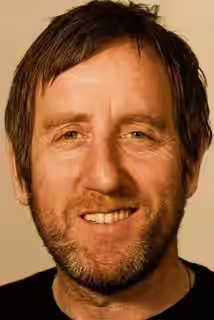
The gym gives him people to be ashamed in front of. Ray Winstone plays Carney quietly, which is a surprise and a good one; he does not shout, he puts a towel round Jimmy’s neck and tells him the rules. Michael Smiley’s Eddie, the corner man, is the warmest thing in the film and the only person who seems glad to see Jimmy back. Ian McShane’s Padgett sits in a pub back room and makes the unlicensed circuit sound like a favour he is doing a friend. He has perhaps four scenes and we wanted more of each.
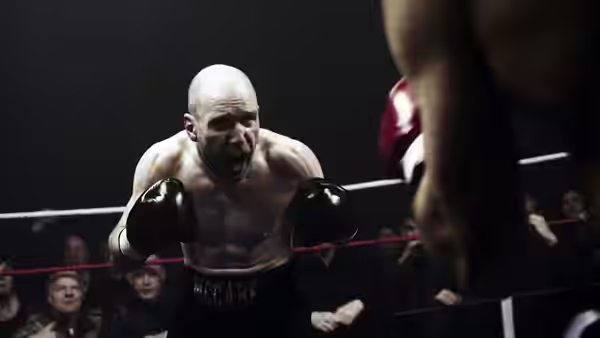
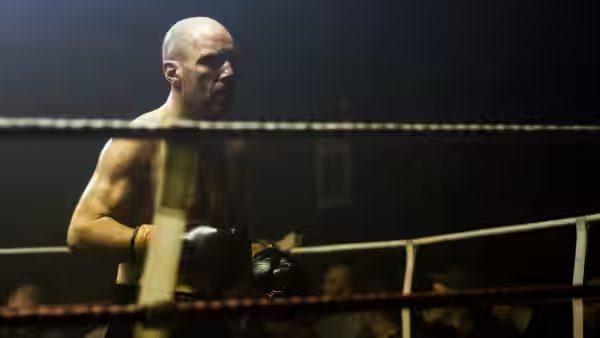
Tat Radcliffe shoots the gym in flat grey daylight and the streets outside it in sodium orange, and keeps the camera close to Harris’s shoulders, so that when Jimmy flinches the frame does too. The last fight is where this pays off. Radcliffe goes into the ring with the two men and stays there, handheld, at the height of a chin, and David Charap holds the shots long instead of cutting away to the crowd, so that we feel the rounds as rounds. It is the best boxing we have seen in a British film for some time, and it is also the only time the film raises its voice. Paul Weller’s score is mostly piano, used sparingly, and it never tells us what to feel. Guy Speranza keeps Jimmy in the same jacket throughout, which is the right call.
What the film lacks is a second idea. Once Jimmy has walked back into the gym we know every stop on the route: the relapse, the row with Carney, the training, the fight. Harris the writer does not fight the pattern or find anything inside it we have not met before. He trusts that playing it truthfully will be enough, and most of the time it is, but there are stretches in the middle hour where the film is simply waiting for the fight to arrive, and so were we. The women in Jimmy’s life are mentioned rather than seen. The bout itself is arranged with a speed that suggests the script needed it more than Jimmy did.
Against the genre it sits closer to Fat City than to Rocky: the drink is the story and the boxing is the excuse. It has none of the earlier film’s wit and does not want any. What it has is a lead who knows this man from the inside and a director who has the sense to stay out of his way.
See it for Harris, and for the last fifteen minutes. Do not expect to be surprised. It runs 91 minutes and carries a 15 certificate, and both feel about right.