Martin Scorsese’s Kundun is absorbing when it trusts pictures and music to convey the Dalai Lama’s unease. The dutiful dialogue and reverence can be tiring, but there is enough feeling here to reward patience.
Martin Scorsese’s Kundun is worth seeing for the feeling it finds in a life its screenplay often treats too respectfully. It asks us to stay near the Dalai Lama’s understanding of events, accepting that much will remain beyond his knowledge and ours. That restricted view gives the historical drama a useful uncertainty, even if the dialogue seldom does. The film holds our attention most securely when its images suggest something its central figure cannot comfortably express.
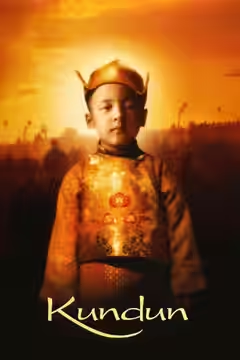
Tenzin Thuthob Tsarong plays the adult Dalai Lama with a restraint that suits this approach. His composure allows us to watch without being told at every moment what he is thinking, and the performance benefits from that freedom. The difficulty comes when the writing relies on the actor to supply almost everything that might distinguish a person from a revered public figure. He remains an absorbing presence, though we sometimes want a less carefully protected acquaintance with him.
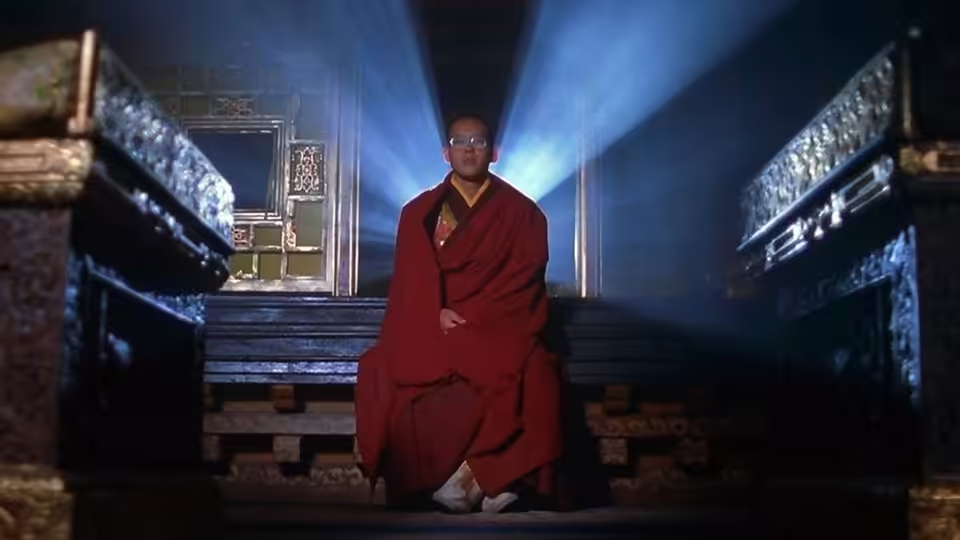
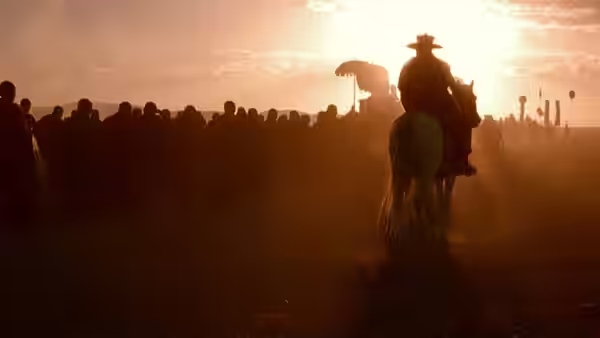
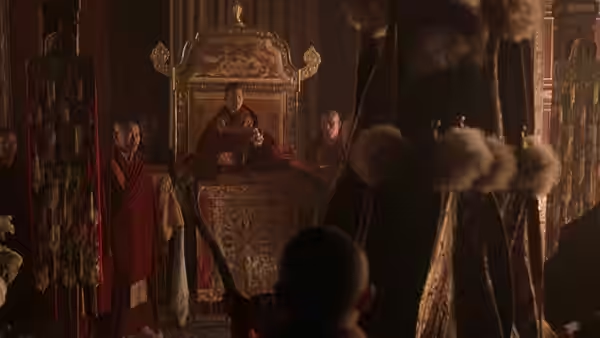
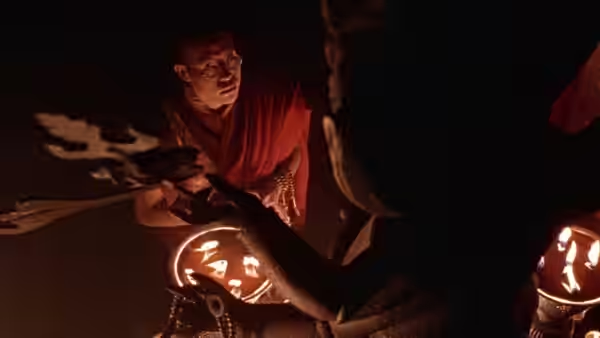
The dream passages give Roger Deakins’s cinematography a purpose beyond making the film handsome: they allow anxiety to disturb its otherwise respectful account. Dante Ferretti’s production design rewards attention, with a degree of care that sometimes makes the surroundings more absorbing than the conversations. He also designs the costumes, contributing to the film’s unusually coherent appearance. The richness of that visible world helps sustain passages in which the storytelling becomes thin, although it cannot make every exchange interesting.
Thelma Schoonmaker’s editing does more to bring us close to the central character. Its impressionistic movement between images suggests an unsettled mind beneath his outward calm, making his composure feel like something that requires effort. We were moved by the private strain that the cutting makes perceptible. Philip Glass’s score strengthens that feeling, supplying emotional pressure without requiring another explanation from the screenplay. These passages make quiet attention feel worthwhile, and they linger longer than the spoken exchanges.
Melissa Mathison’s screenplay is the persistent weakness. Its episodes do not always build on one another, and too often a scene establishes its place in the biography without making the next scene feel necessary. The dialogue can also be commonplace, leaving the actors to deliver information rather than discover anything through an exchange. A historical drama needs some explanation, but here the writing repeatedly interrupts work that the images and music are doing more effectively.
The reverence is harder to overlook because it restricts our acquaintance with the person at the centre. Keeping political events within his understanding is a defensible choice; it does not account for every unanswered question about his character. We wanted more room for awkwardness and contradiction. Still, the agitation conveyed through the dreams and editing gives us enough to care about, and keeps the film from settling into a succession of respectful illustrations.
At 134 minutes, this needs an evening when patience is available. Anyone expecting a historical drama driven by confrontation should allow for a slower, less direct experience, with stretches when the dialogue offers little help. We recommend it to those willing to give music, faces and the connections between images their full attention. Expect a biography that thoroughly explains its subject, however, and there is a fair chance of leaving frustrated.