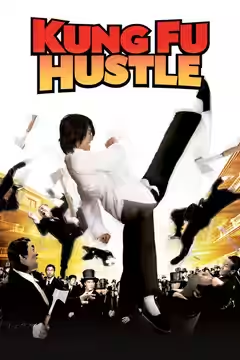
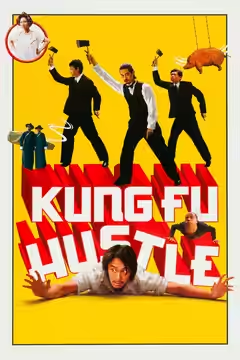
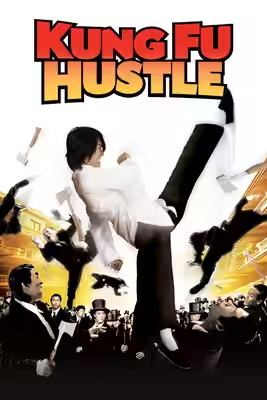
Stephen Chow builds a slum, hides three kung fu masters in it and sends the Axe Gang round to collect, and the result is one of the funniest martial-arts films we have seen. The story thins once the real fighting starts; the jokes do not.
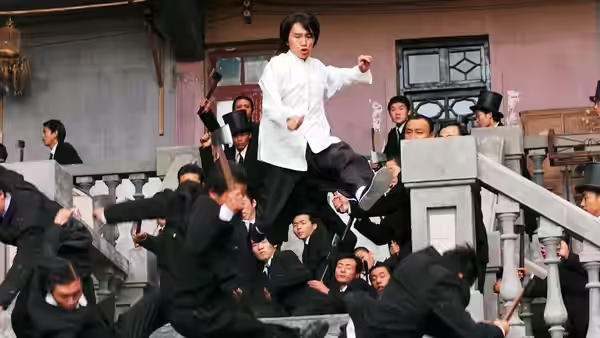
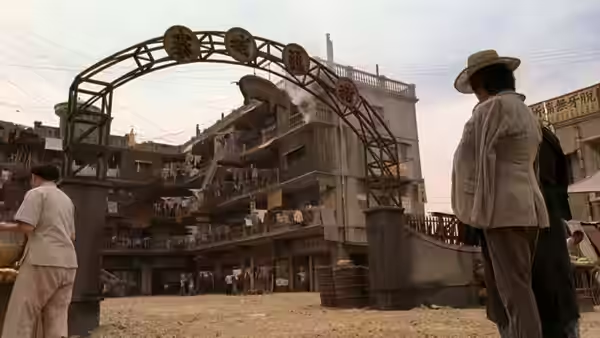
Stephen Chow has made a kung fu film in which the hero cannot fight. Sing, played by Chow himself, is a chancer in 1940s Shanghai who wants to join the Axe Gang, the men in black suits who run the city and dance in the street when they have killed someone. He is not good enough to be a gangster, so he picks on Pigsty Alley, a tenement so poor even the gangsters leave it alone, and finds that three of its tenants are retired masters. That is the whole engine of Kung Fu Hustle, and for most of its 99 minutes it is enough. We recommend it warmly, with one caveat: the film runs out of story some way before it runs out of fights.
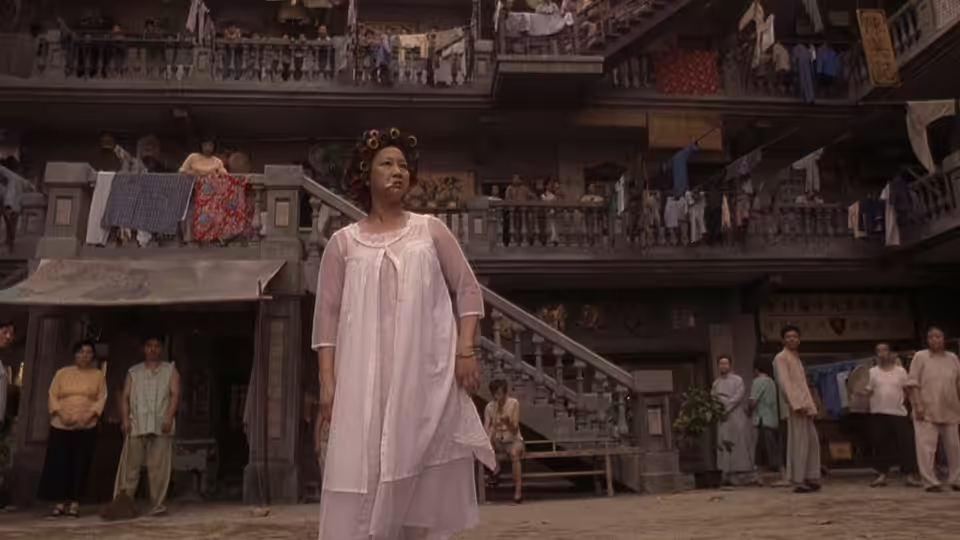
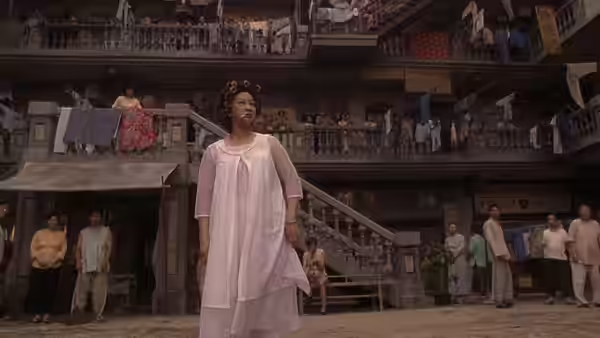
Oliver Wong’s production design does half the work. Pigsty Alley is a courtyard of balconies, washing lines and flaking plaster, with a single tap the Landlady turns off when she feels like it, and every tenant can see into every other tenant’s life. Poon Hang-Sang shoots it in dust and warm sun, and shoots the Axe Gang’s world in black, marble and night, so the two halves of the film look like two different cities. Angie Lam cuts like a cartoon editor: she holds the wide shot until the gag has fully landed, then cuts hard to the reaction. The pace never slackens and never hurries.
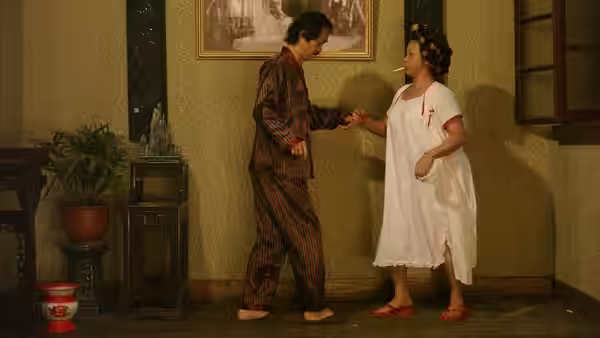
The set piece we will still be describing to people in ten years is a chase. Sing has tried to throw knives at the Landlady and they have gone everywhere but where he aimed, and now she is after him, in rollers and a dressing gown with a cigarette in her mouth, both of them running down an empty road with their legs a blur and the landscape streaming past. It is a Road Runner cartoon made with people. We laughed until it hurt, and what did it was the patience: Chow lets each knife arrive on its own, a beat late, so the joke is in the waiting rather than the impact.
Yuen Qiu’s Landlady is the best thing in the film. She is every landlady anyone has ever had, loud, mean about the rent and immovable, and the film loves her for it. Yuen Wah’s Landlord is a henpecked lecher who keeps getting caught peering at the lodgers. Chiu Chi-Ling’s Tailor, Xing Yu’s Coolie and Zhihua Dong’s Donut spend the opening as men hauling sacks and stretching dough, and when the gang arrives they simply put the work down and start hitting people, and nobody stops to explain. Danny Chan’s Brother Sum leads the gang with a dancer’s vanity. Lam Chi-chung is a round, loyal sidekick, and Bruce Leung’s Beast, who turns up in the second half in a vest and flip-flops, we will leave alone.
The weaknesses are real. Sing disappears from his own film for stretches of twenty minutes while the masters fight, and when he comes back the script has to work hard to make him matter. Huang Shengyi’s Fong, the mute ice-cream seller Sing knew as a child, is meant to be the heart of the thing and gets one flashback and a handful of silent scenes. The computer effects, which are of their time, hold up in the grounded gags and wobble in the later fights, where bodies turn rubbery and the camera swoops through spaces that do not exist. The screenplay by Chow, Tsang Kan-Cheong, Chan Man-Keung and Lola Huo Xin cares about the alley and not much about structure.
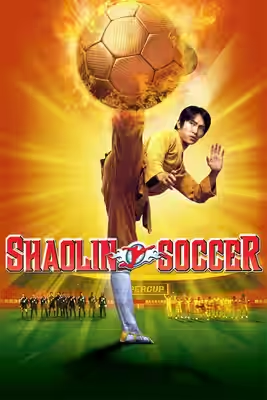
One trade critic found the film flat and the effects a substitute for people. We see the complaint and think it is aimed at the wrong film. Nobody here is pretending to drama; the score, credited to Chow, Xian Luo Zong, Raymond Wong and Hang Yi, hammers Chinese percussion over the fights and swells into full melodrama for the lollipop, and plays both with a straight face, which is the right choice. Set against Chow’s own Shaolin Soccer, this is broader, bigger and less reliant on dialogue, which is why it travelled as far as it did.
Watch it with other people and with the sound up. It carries a 15 certificate and the violence is of the kind where an axe connects and the man gets up again, and that is the right tone for a film that treats a slum as a playground. The plot will not survive the conversation afterwards. The Landlady’s chase will.