Bruce Beresford’s gentle ensemble comedy-drama offers an engaging Angourie Rice and a department store worth lingering in. Its warmth is appealing, but several characters need more attention than the screenplay gives them.
Ladies in Black is pleasant company, though its people are not consistently interesting enough to make it more than that. Bruce Beresford approaches this ensemble comedy-drama with an affection that gives us reasons to stay even when individual stories feel underfed. The old-fashioned manner suits the material, and there is nothing inherently wrong with optimism. The difficulty is how often a reassuring tone does work that ought to have been done by the writing.
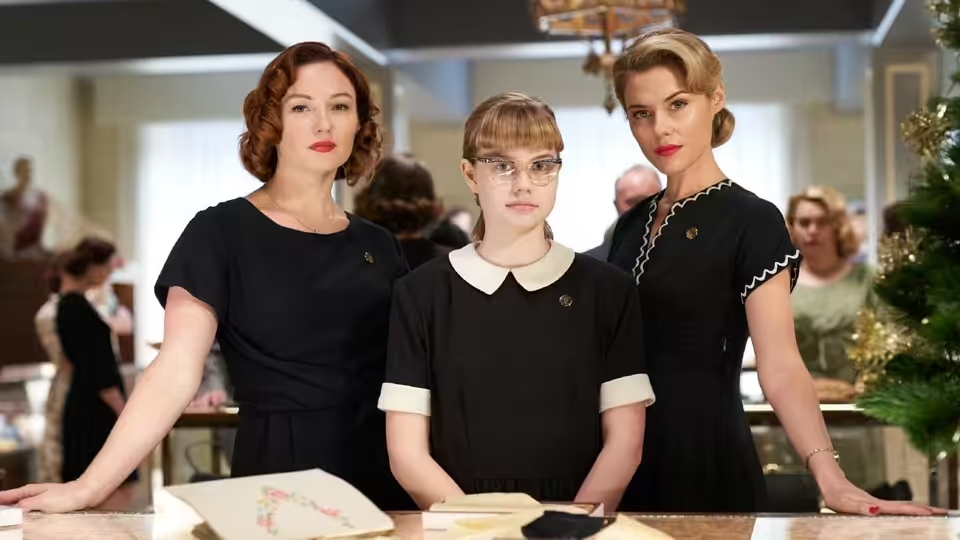
Angourie Rice supplies the strongest reason to care. As Lisa, she has a freshness that makes the film feel less settled in its assumptions, and her performance holds our attention without demanding it. There is room here for a younger presence to affect the temperature of an ensemble, and Rice makes good use of it. We wanted more of her, partly because she makes Lisa engaging and partly because the surrounding characterisation is so variable. That imbalance becomes harder to overlook whenever the film divides its attention.
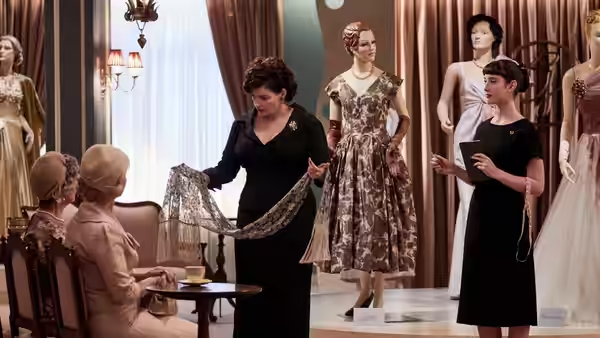
The department store is another persuasive reason to remain. Peter James’s cinematography gives the setting a brightness that suits the film’s fondness for it, while Felicity Abbott’s production design makes the recreation feel carefully considered. We felt a small lift of pleasure at the store itself: the care spent on making this place convincing invites us to settle in. Wendy Cork’s costume design belongs comfortably within that setting, without making the people seem incidental to their clothes. These contributions establish a world the screenplay does not always explore with comparable patience.
Beresford and Sue Milliken’s adaptation of Madeleine St. John’s novel struggles most with the distribution of attention. Several subplots feel as though they have been included because an ensemble needs them, rather than because the film has found enough to do with them. The effect is particularly frustrating in a story that asks us to take pleasure in different personalities sharing the screen. Thin characterisation limits that pleasure before the actors have much chance to develop it. Goodwill can keep a scene agreeable, but it cannot supply everything we need to know about the people in it.
Mark Warner’s editing has the difficult task of keeping those strands in proportion, and the unevenness survives the transitions between them. A smoother passage from one character to another would not, by itself, give the slighter stories more substance. Christopher Gordon’s music supports the welcoming mood, although that mood is rarely what needs reinforcing. The craft is generally serving the same gentle purpose; we wished the writing would occasionally make that gentleness harder to sustain.
As a nostalgic ensemble comedy, the film understands the appeal of spending time somewhere carefully recreated, among people treated with affection. It also illustrates a familiar weakness of the form: reassurance can arrive before a character has become sufficiently complicated to need it. Rice and the store give it enough distinction to reward an interest in this sort of modest, amiable drama. Choose it for a quiet evening, with expectations kept a little below the standard of the production design.