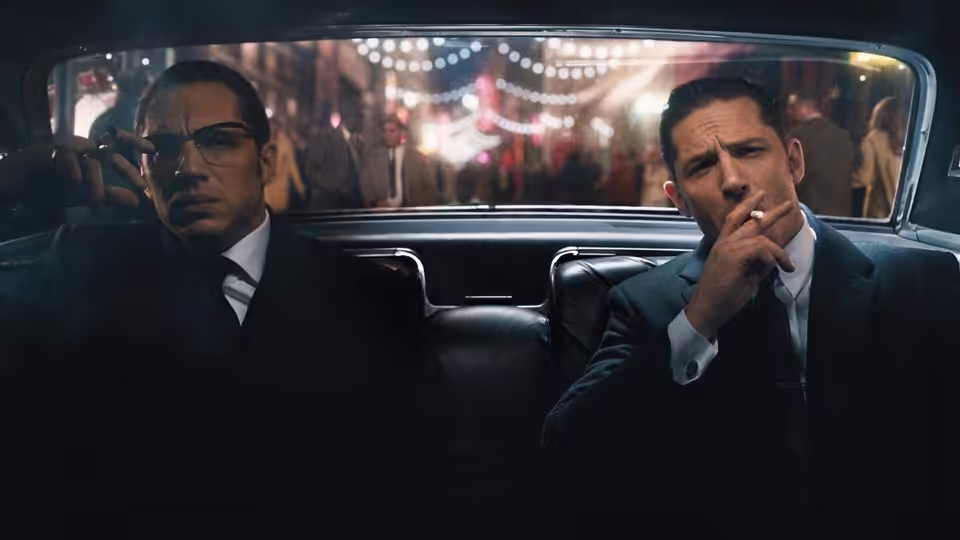
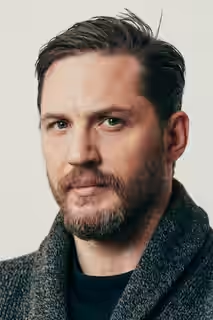
Tom Hardy plays both Kray twins and is worth watching as each of them. Brian Helgeland’s film around him is handsome and well dressed and oddly fond of its subjects, and it never decides what it thinks of them.
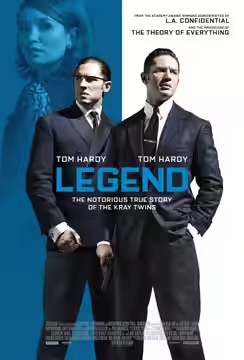
Brian Helgeland tells the story of the Kray twins, who ran the East End’s clubs and rackets in the 1960s, through the woman who married one of them. Tom Hardy plays both brothers, which is the reason to see it. Around him Helgeland builds a handsome film that enjoys the Krays’ suits, clubs and way of ending an argument, and never decides what it thinks of the men in the suits.
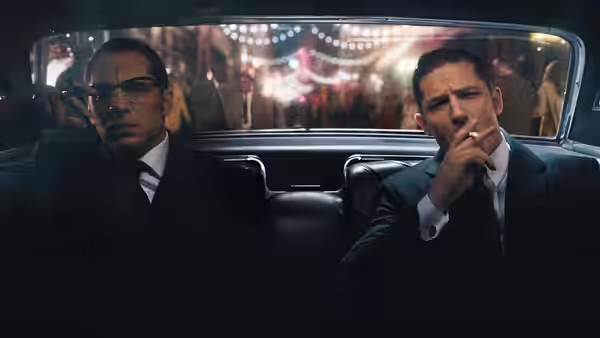
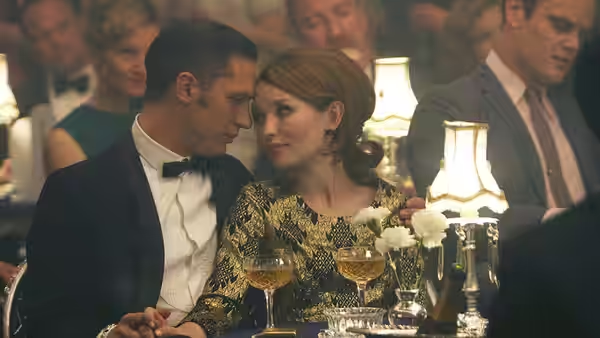
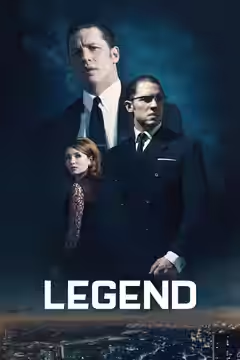
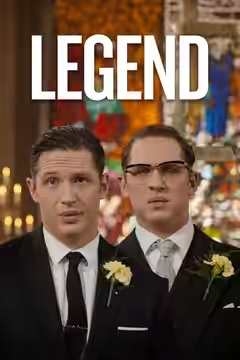
Reggie first. Hardy gives him a boxer’s ease, a smile that arrives a beat before the threat, and a voice pitched to make barmen lean in. He is the one the film loves, and the one Frances Shea (Emily Browning) falls for over tea. Ronnie is another matter. Hardy plays him behind heavy glasses, jaw pushed forward, words from the back of the throat, and announces his taste for boys to a table of hard men as flatly as a man reading a train time. We laughed at Ronnie more than we meant to, at the giggle and the sudden sulks, and then felt uneasy, because the film cuts from the laugh to a man being beaten on a pub floor and does not notice the join.
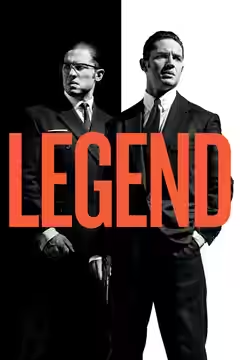
The trick of putting both Krays in one frame works well enough that we stopped looking for it. When the brothers fight, in a club, bottles going everywhere, Peter McNulty cuts it so that we never catch a double, and the scene plays as a marriage breaking rather than a stunt. It is the best scene in the film and it lasts three minutes.
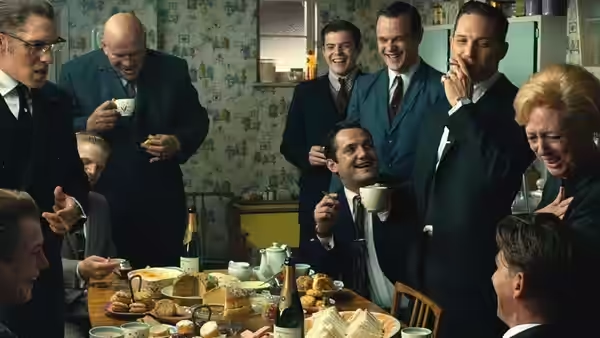
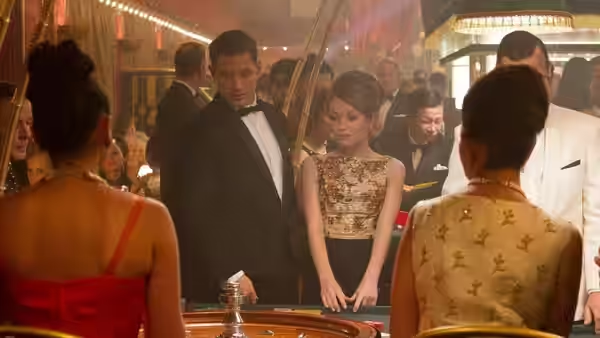
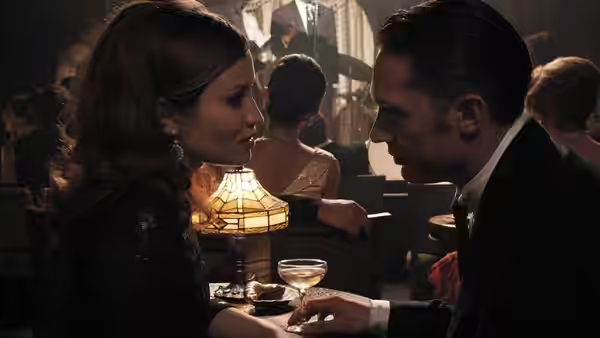
Dick Pope lights the East End in a warm amber that makes a terraced street look like somewhere you might want a drink, and the clubs in low gold and red so every face is half in shadow. Tom Conroy’s rooms are velvet banquettes and bad wallpaper. Caroline Harris puts Reggie in narrow suits and Frances in the short dresses and pale coats of a girl who reads the magazines. Carter Burwell’s score keeps a low, sour brass line under it and steps aside when Duffy, as the singer Timi Yuro, takes the stage.
The trouble is the voice holding it together. Frances narrates, and Helgeland has written her a commentary that tells us what we have just watched. Browning is good in the flesh, small and watchful and slowly frightened, but the voiceover turns her into a tour guide to her own marriage, and a woman on screen for two hours ends up wanting nothing but for Reggie to come home.
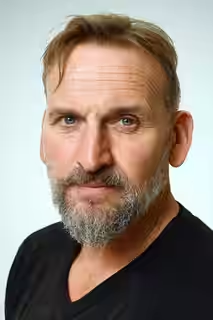
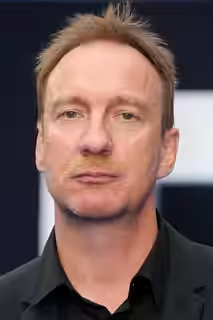
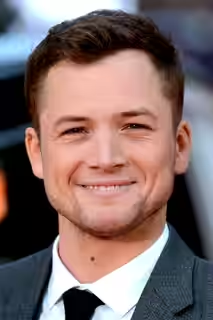
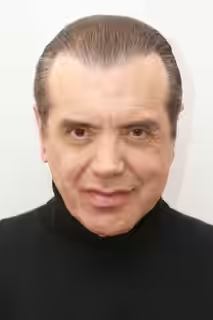
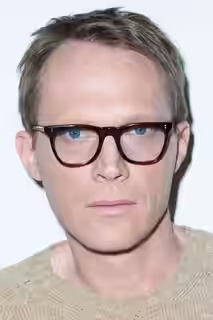
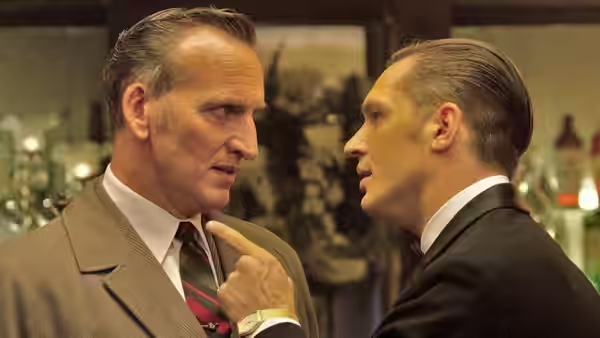
The men around the twins fare unevenly. David Thewlis gives Leslie Payne, the accountant who wants the firm’s money somewhere the police cannot see it, the patience of a man explaining tax to a dog; he is the best thing here that is not Hardy. Christopher Eccleston’s Nipper Read spends his scenes in a parked car with a flask. Taron Egerton giggles at Ronnie’s elbow as Mad Teddy Smith, Paul Bettany turns up as Charlie Richardson, and Chazz Palminteri brings American money as Angelo Bruno.
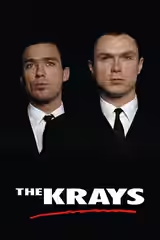
What does the film think of the Krays? The Krays (1990) put the Kemp brothers in the roles and kept a cold distance; this one wants us to have fun with Ronnie and fancy Reggie, and cannot find anything else to want. The second half takes a darker turn we will not describe, where a point of view was needed and only Frances’s narration turned up. By the last half hour we were tired of watching men be hit in bars, and then irritated, because Hardy had handed Helgeland the material for a harder film about two brothers and Helgeland made one about their tailoring.
See it for Hardy and Thewlis, with someone who will not mind being asked afterwards what any of it was for. It runs 132 minutes, carries an 18 for good reason, and is better at home, where you can pause to work out which brother just hit whom.