Richard Donner’s action sequel is good company whenever Mel Gibson and Danny Glover are arguing. Its awkward shifts between comedy and violence matter, but the central friendship makes the evening worthwhile.
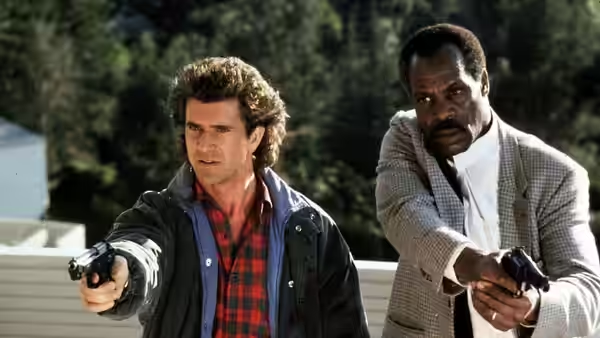
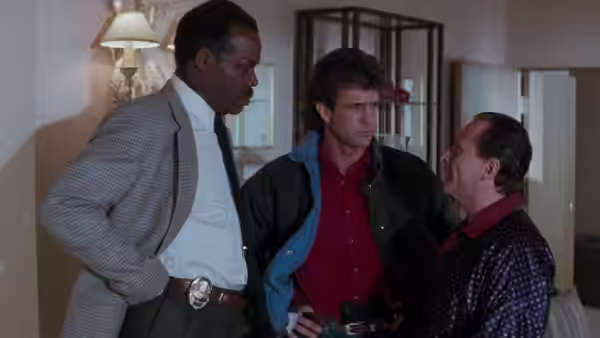
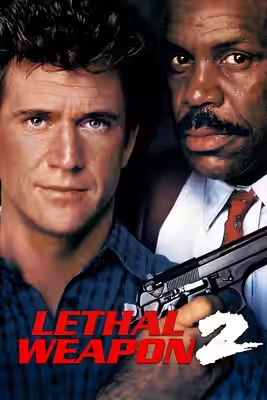
Richard Donner’s Lethal Weapon 2 is a brisk, funny action sequel, worth an evening if two argumentative cops are your sort of company. It understands why a continuing partnership can be more interesting than another collection of criminals. Martin Riggs and Roger Murtaugh are comfortable enough together for irritation to count as affection, and Richard Donner lets that familiarity do much of the work. The trouble comes when the violence demands feelings the comedy has just encouraged us to put aside.
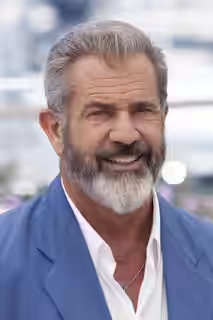
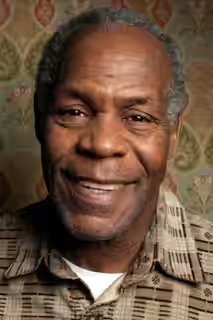
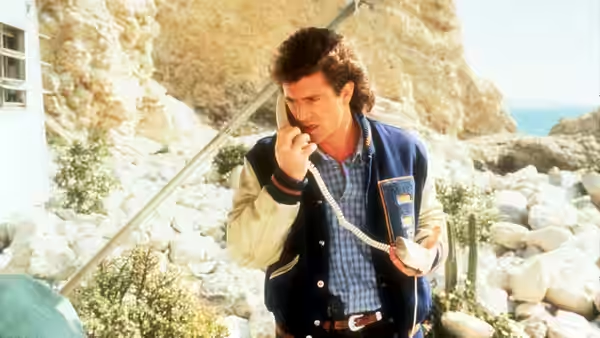
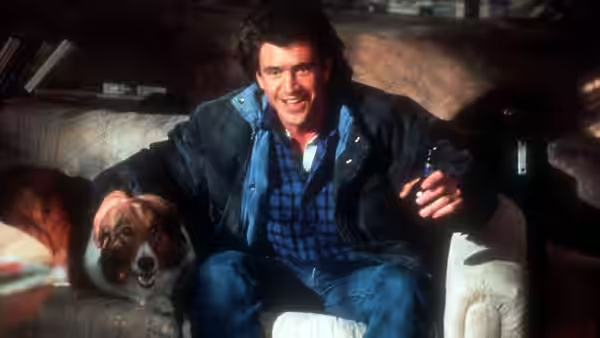
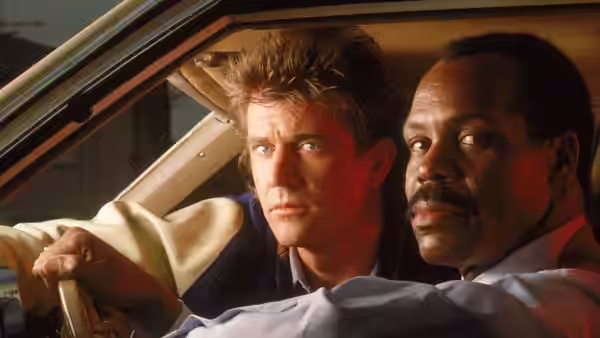
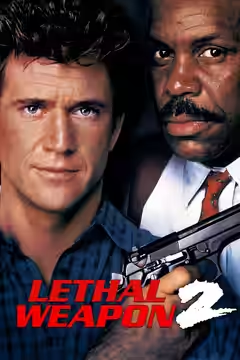
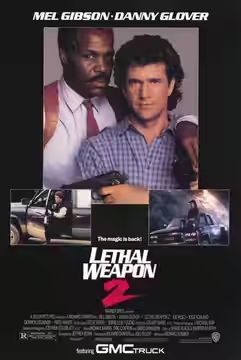
Mel Gibson gives Martin Riggs a restless energy that could quickly become tiresome without someone to answer it. Danny Glover makes Roger Murtaugh’s resistance funny without reducing him to a man who complains for a living. We believe these two enjoy each other’s company, even when the conversation suggests they have had quite enough of it. Their timing gives the exchanges a loose, familiar quality; the jokes rarely sound as though both actors are waiting for permission to laugh.
We were properly gripped by the high-speed chase, because the pursuit remains understandable as the danger increases. Stephen Goldblatt’s cinematography gives us enough visual information to follow the action, and Stuart Baird’s editing keeps it moving without making speed itself the whole attraction. The explosive crash delivers the expected jolt. Richard Donner is good at giving physical action a comic charge, though that same readiness to amuse becomes less helpful when the film wants its violence taken seriously.
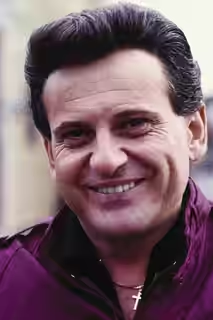
Joe Pesci, as Leo Getz, is an effective extra nuisance in a film whose leads hardly need assistance generating friction. His insistence can be funny, although the performance occasionally feels like one more voice trying to fill a conversation that was lively enough already. The supporting cast has less room to establish the ease we get from Mel Gibson and Danny Glover. Patsy Kensit’s Rika Van Den Haas is particularly thinly felt, and the performance does little to make the character linger.
Jeffrey Boam’s screenplay has the more serious problem of deciding how much weight any given incident should carry. The jokes encourage us to treat danger lightly, then the harsher passages ask for an emotional commitment the film has not consistently earned. We can accept a buddy-cop thriller changing moods; the changes still need to feel like part of the same story. Here they sometimes feel as though the actors have been handed a different set of instructions.
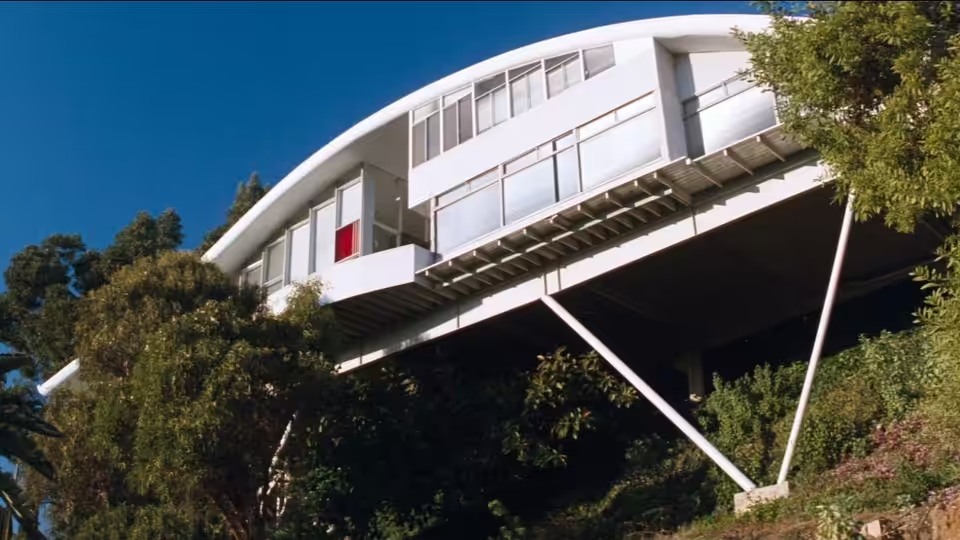
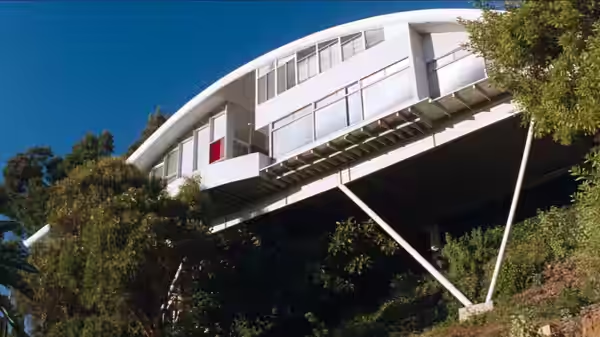
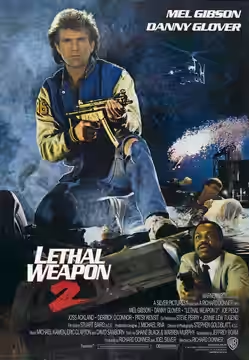
J. Michael Riva’s production design is at its most useful when it gives the action clear spaces to move through. We notice the performers before we notice their surroundings, which is the right order here. The music credited to Michael Kamen, Eric Clapton and David Sanborn is less restrained, sometimes underlining excitement the pictures have already supplied. It helps maintain momentum, but a little less insistence would have left more room for the actors.
Within the buddy-cop formula, the convincing friendship is enough to make the familiar business welcome. Richard Donner knows the pleasure of watching capable actors disagree, and usually gives that pleasure enough space between the loud bits. The uneven handling of violence stops this being an easy recommendation to anyone who simply wants a comedy. If the action is what brought you here, stay for Mel Gibson and Danny Glover.