Paul Thomas Anderson’s 1970s Valley comedy runs on two leads who had never acted and look as if they have never done anything else. It rambles, sometimes to a fault, and one running joke should have gone. We recommend it warmly anyway.
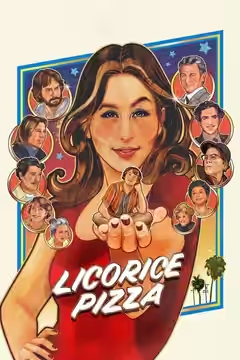
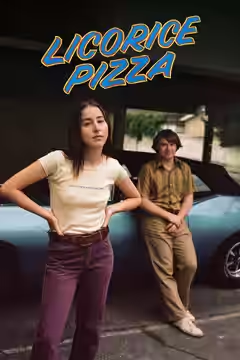
Paul Thomas Anderson has made a film about hanging about. Encino, in the San Fernando Valley, 1973. Gary Valentine (Cooper Hoffman) is fifteen, a child actor on his way out and a salesman by temperament. Alana Kane (Alana Haim) is twenty-five, assisting a school photographer, living at home, and has no plan at all. He asks her to dinner on picture day. She says no, then turns up. The rest of Licorice Pizza is the two of them drifting through a year of schemes and detours, and we liked it a great deal, with reservations.
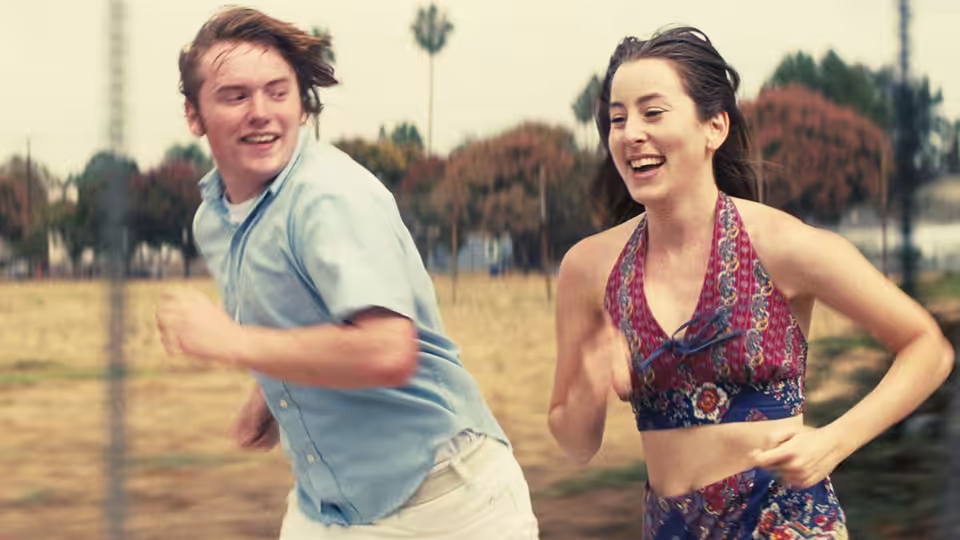
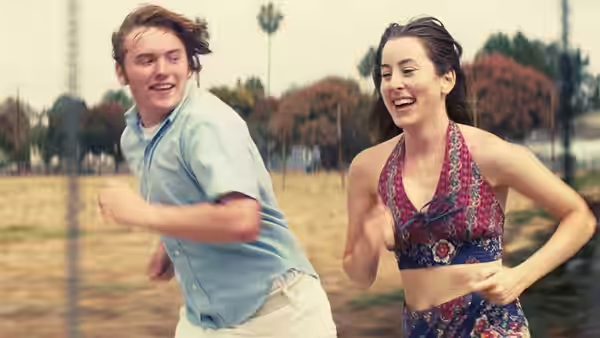
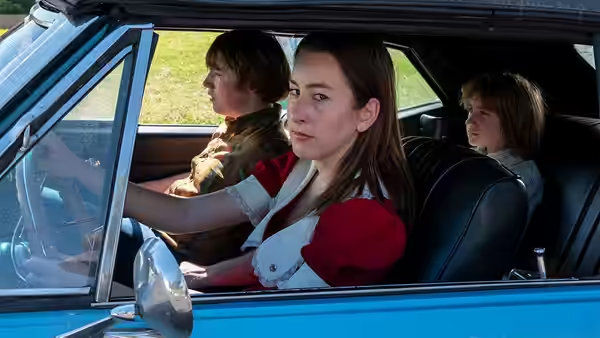
Neither Hoffman nor Haim had acted before, and the film belongs to them. Hoffman gives Gary a round, open face and a patter learned from grown-ups, and Anderson lets us see how tiresome that could get without ever letting it. Haim has the harder part. Alana scowls, strides, snaps at children and is rude to nearly everyone, and she is the film’s centre because she is the only person in it who does not know what she wants. Early on, Gary rings her after their date and neither of them speaks. They sit in separate rooms with the receivers to their ears and breathe. It moved us more than two people breathing down a telephone has any business doing. They are not in love so much as unwilling to hang up.
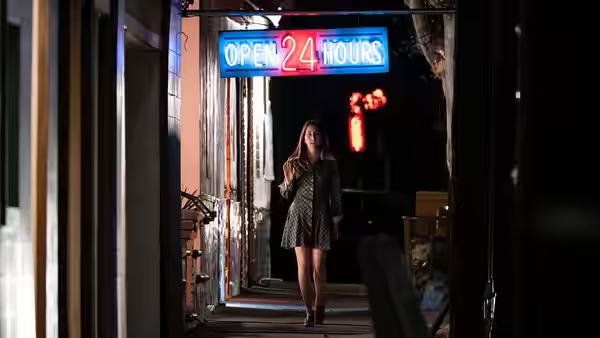
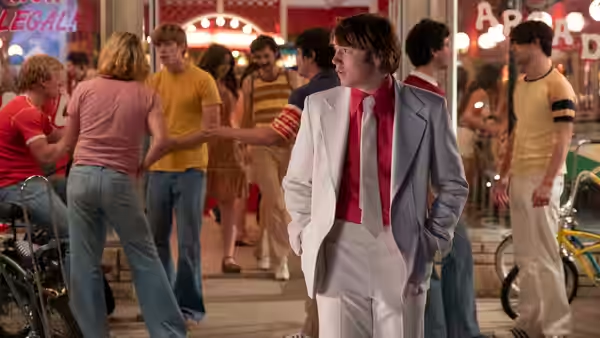
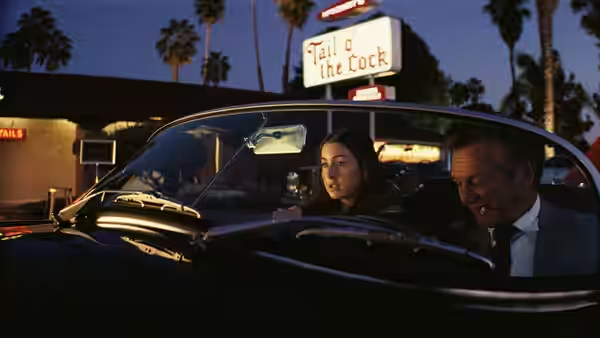
Anderson shares the camera credit with Michael Bauman, and they shoot the Valley in a warm brown haze, late light coming sideways through smog, with people running in it. Everybody in this film runs, towards things that will have moved by the time they arrive. Florencia Martin’s production design gives them a restaurant with red leather booths, a pinball palace and a waterbed showroom in a strip mall with one phone and a hand-painted sign. Andy Jurgensen lets scenes run past their punchline and then cuts hard into the next, so the scenes accumulate rather than build. Jonny Greenwood’s score is used sparingly; the records of the period carry it, and David Bowie’s “Life on Mars?” over the two of them walking is the best stretch of picture and sound Anderson has put together in years.
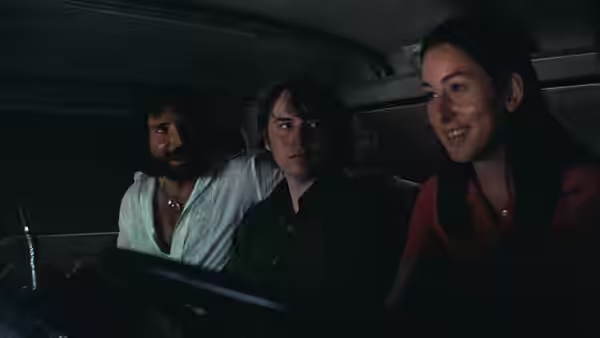
The set pieces are what most critics have written about, and they are right to. Bradley Cooper plays Jon Peters, a hairdresser turned producer who introduces himself by the name of his famous girlfriend and threatens a van full of teenagers while buying a waterbed. We laughed harder than at anything else in the film, and then, when Alana takes a lorry with no petrol in it down a long hill in reverse, we stopped laughing and held our breath. Sean Penn and Tom Waits turn up as Jack Holden and Rex Blau, an old actor and an old director, drunk and unsafe around a motorbike. Harriet Sansom Harris has one scene as the agent Mary Grady, in a small office with a nervous Alana, and walks off with it. Benny Safdie is quieter and sadder as Joel Wachs, a councilman Alana goes to work for.
Now the reservations. John Michael Higgins plays Jerry Frick, who owns a Japanese restaurant and speaks to his Japanese wife in a mock accent. It happens twice. Anderson presumably means the joke to be on Frick, but the camera does not stay long enough on the wife’s face to make that clear, and the cinema we saw it in went quiet both times. It is the one thing we would cut. The other problem is shape. Wachs and his troubles arrive late and pull Alana into a story the film has not left room for, and at 133 minutes it could lose a quarter of an hour without anyone noticing.
Then there is the age gap, which one critic found creepy and most did not mention. We were uneasy, and we think the film wants us to be. Alana says the numbers aloud more than once. Anderson keeps the two of them at the point of not-quite, and the film is at its most honest when she looks around at Gary’s friends and asks herself what a woman her age is doing there. It is a fair question and the film does not entirely answer it.
This is Anderson back in the Valley of Boogie Nights without that film’s engine, and closer in temperature to Punch-Drunk Love: sunny, sore, a little embarrassed by its own feelings. It is a 15 certificate. Watch it with the window open on a warm night. It is a film about a place where nothing much happens, and it minds that it doesn’t.