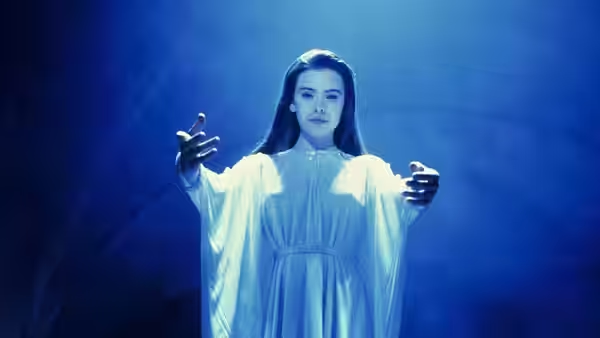
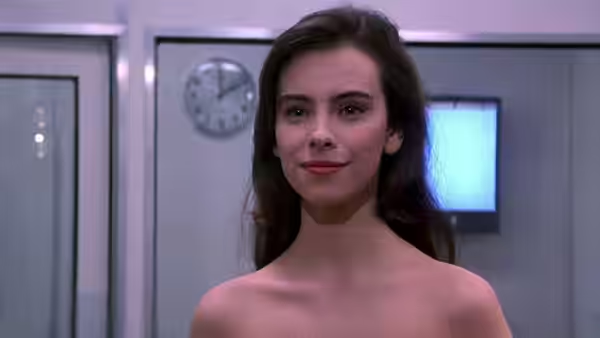
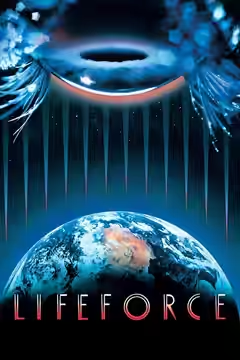
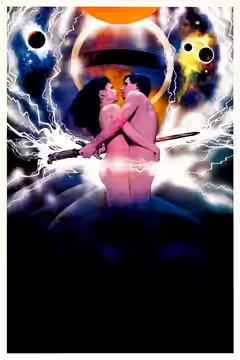
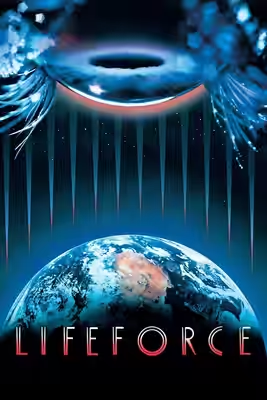
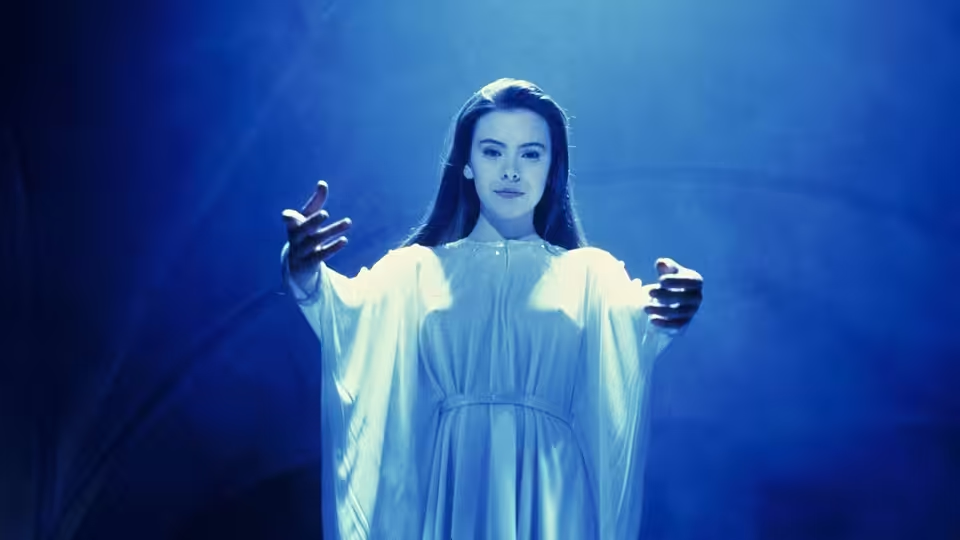
The Space Girl (Mathilda May) in a white gown reaches forward under blue light
Film review

Lifeforce

1985 · Directed by Tobe Hooper · 1h 42m

In a sentenceSpace vampires, extensive nudity and a cast determined to behave as though this is a perfectly ordinary assignment

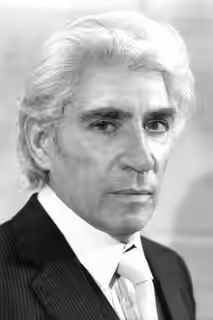
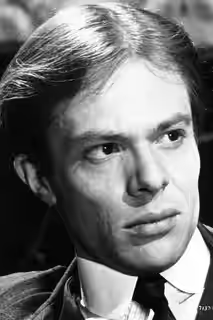
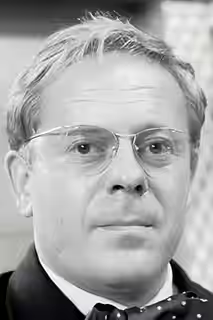
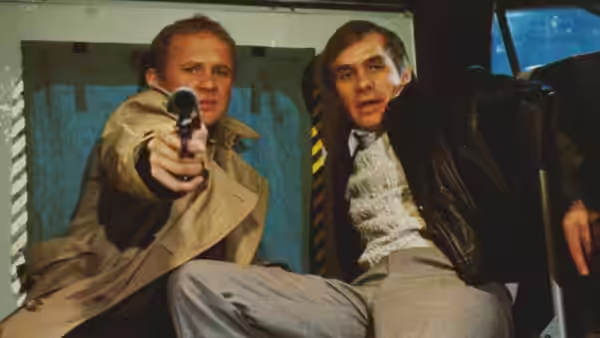
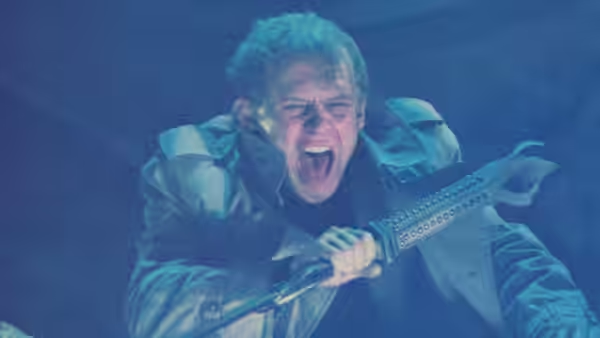
Col. Tom Carlsen (Steve Railsback), Col. Colin Caine (Peter Firth) and Dr. Hans Fallada (Frank Finlay) face a threat involving space vampires. At the centre is Space Girl (Mathilda May), an extraterrestrial presence whose sexual allure forms part of the horror. Dr. Armstrong (Patrick Stewart) and Dr. Bukovsky (Michael Gothard) also figure in a story combining mystery, horror and action. Extensive nudity is part of the film’s treatment of its alien menace, and it carries an 18 certificate.

Plays from YouTube when you press play; nothing loads from them until then.

Fi1m review

Tobe Hooper’s space-vampire horror has a poised Mathilda May and an imposing Henry Mancini score. Its clumsy dialogue and faltering mystery make it a qualified recommendation for those with a taste for extravagant horror.

Lifeforce is an uneven curiosity with enough conviction to reward a taste for extravagant horror. Tobe Hooper attempts science fiction, sexual nightmare and gothic romance within the same 102 minutes, and the changes of emphasis cause some of the trouble. We can enjoy the space-vampire premise without asking for scientific respectability. Keeping us interested in the next discovery is a more reasonable demand, and the film meets it only intermittently.

Mathilda May, credited as Space Girl, gives the film a steadiness that its plotting lacks. Her graceful movement makes the extensive nudity feel less awkward than it might, though the prolonged interest in displaying her body remains hard to ignore. She is more effective when allowed to seem strange than when the film simply expects us to look at her. We were unsettled by her composure amid the sexualised imagery; she makes the threat convincing without appearing to strain for an effect.

Henry Mancini’s score treats this business with a grandeur that could easily have made it insufferable. Instead, the music helps sustain a seriousness that the dialogue frequently puts at risk, giving the actors something dependable to work alongside. Steve Railsback, Peter Firth and Frank Finlay belong to a cast whose refusal to signal embarrassment is one of the film’s chief pleasures. We laughed at the solemn line readings, but their conviction also kept us interested when the words themselves were doing little to help.

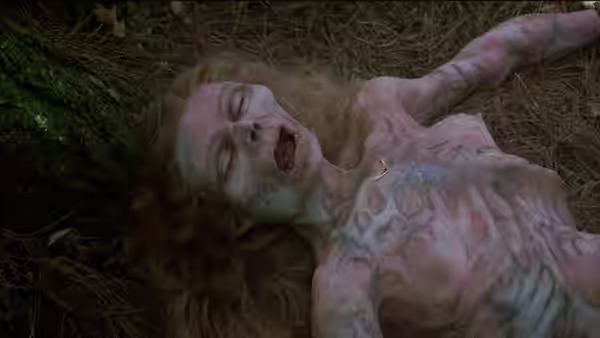
Alan Hume’s cinematography is most persuasive around Mathilda May, where the film’s interest in bodily beauty becomes uncomfortable rather than merely decorative. The camera’s attention is plainly erotic, but her performance keeps those images from feeling entirely safe. Some of the special effects hold the attention, too, even when the story gives us insufficient reason to care about what they represent. John Grover’s editing cannot give the mystery a comparable hold on us, and the changes of emphasis too often feel like starting over just as something promising has begun.

The screenplay is credited to Dan O’Bannon, Michael Armstrong, Olaf Pooley and Don Jakoby, and its dialogue places a considerable burden on the performers. An awkward line can be enjoyable when delivered with sufficient gravity, but there are limits to how often that pleasure can sustain a scene. The mystery needs a clearer sequence of questions worth asking, with each answer making the next discovery more urgent. Too frequently, the writing seems satisfied that the subject is outlandish enough to keep us occupied, leaving the actors and music to supply the urgency.

By the standards of science-fiction horror, the combination of bodily unease and extravagant invention gives the film plenty to work with. Tobe Hooper deserves credit for taking the material seriously enough to risk looking foolish, although the results do not always repay that commitment. At 102 minutes, it still has passages that feel longer than their material warrants. Try it for Mathilda May, Henry Mancini and the peculiar pleasure of actors refusing to smirk; a low tolerance for clumsy dialogue is a sound reason to choose something else.
Critical consensus AI synthesised

54
Positive
2
Mixed
2
Negative
2

The consensus is mixed, with a wide gap between critics who enjoy Lifeforce’s excesses and those who find them exhausting. Praise centres on its extravagant tone and the conviction of its performers. Slant Magazine sees a coherent blend of horror, comedy and gothic romance, praising Mathilda May’s grace and Hooper’s mixture of reverence and satire. The Los Angeles Times enjoys the silliness, with particular praise for Henry Mancini’s score and the cast’s dead-serious delivery.

The main divide concerns whether that enthusiasm survives the storytelling and dialogue. Variety finds that a promising science-fiction horror story deteriorates into a disappointing mystery plot. Radio Times is harsher, finding the adaptation laughably bad and its dialogue appalling, though it allows some credit for the special effects. The spread is broad: what sympathetic critics enjoy as operatic absurdity, detractors regard as failures of writing and execution.

Slant Magazine
16 June 2013 · ★★★★ · Chuck Bowen
80

Bowen finds the film an adventurous, coherent blend of horror, comedy, and gothic romance. He praises Mathilda May’s graceful performance and Hooper’s reverent yet satirical treatment of the film’s sexualized imagery.

Read the full review →
Los Angeles Times
5 July 2013 · Andy Klein
75*

Klein says the film has improved with age and now finds its silliness enjoyable. He praises its operatic tone, especially Henry Mancini’s score and the cast’s dead-serious line readings.

Read the full review →
The New York Times
21 June 1985
64*

The accessible page does not reveal the critic’s verdict. It provides no verifiable praise or complaint about the film.

Read the full review →
Time Out
★★★ · Tom Huddleston
60

The review frames the film as a loopy sci-fi-horror hybrid. It singles out its space vampires, zombie slaves, excessive nudity and Brent Cross Shopping Centre.

Read the full review →
Variety
31 December 1984 · Variety Staff
25*

The review says the film initially promises a scary science-fiction story but soon becomes disappointing. It singles out the plot’s descent into subpar Agatha Christie territory as a weakness.

Read the full review →
Radio Times
★ · Alan Jones
20

The critic pans the film as a laughably bad adaptation. A few interesting special effects are singled out as a partial bright spot against the appalling dialogue.

Read the full review →

Straight answers AI written, from our review

Is Lifeforce worth watching?
Lifeforce is worth considering if extravagant science-fiction horror is your taste; we score it 65 out of 100. Mathilda May’s unsettling composure, Henry Mancini’s imposing score and the cast’s solemn conviction reward the interest, but clumsy dialogue and a faltering mystery make this a qualified recommendation.
How long is Lifeforce, and what is it rated?
Lifeforce runs 1h 42m. It is a horror and science fiction film.
Where can I watch Lifeforce in Belgium?
Lifeforce is streaming on Amazon Prime Video in Belgium, and it is also available to rent from Amazon Prime Video and Apple TV from €3.99. It leaves Amazon Prime Video on 30 September. Availability is checked daily; the links above go straight to each service.
How violent or frightening is Lifeforce, and is it suitable for children?
Lifeforce carries a UK 18 certificate and is not suitable for children, with extensive nudity and sexualised horror central to its alien threat. We find Mathilda May’s composure amid that imagery unsettling; viewers uncomfortable with erotic menace or bodily unease have good reason to choose something else.

How does Lifeforce compare to Under the Skin?
Lifeforce is the more extravagant, uneven choice beside Under the Skin, which we recommend more strongly for controlled, frightening science fiction. Both make human desire unsettling through an extraterrestrial presence, but Under the Skin offers fewer explanations and greater patience; Lifeforce suits a taste for solemn performances, grand music and outlandish horror.
Is Lifeforce based on a true story or a book?
Lifeforce is adapted from a novel by Colin Wilson, rather than based on a true story. For viewers approaching it without the book, we recommend it chiefly for its extravagant space-vampire premise, Mathilda May’s performance and Henry Mancini’s music, with clumsy dialogue a substantial reservation.

Cast

If you liked this, try…

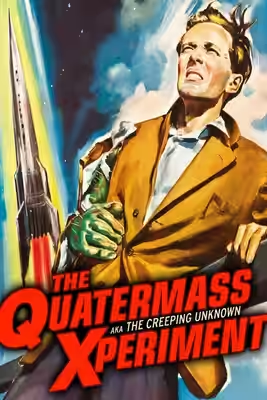
  1. The Quatermass Xperiment (1955) · not reviewed yetAnother extraterrestrial threat meets British officialdom, with considerably firmer control of the investigation.

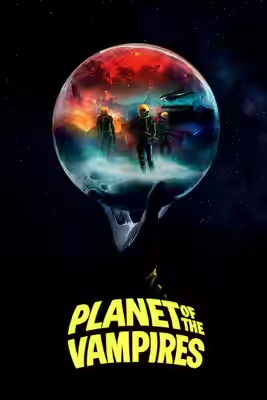
  2. Planet of the Vampires (1965) · not reviewed yetFor more space horror sustained by atmosphere when the explanations grow doubtful.

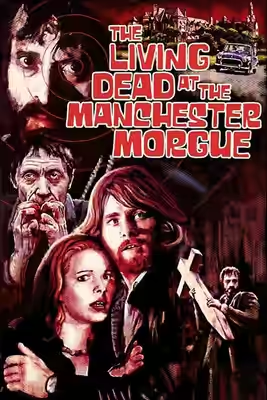
  3. The Living Dead at Manchester Morgue (1974) · not reviewed yetFor the undead and unhelpful authorities, treated with a more consistent sense of dread.

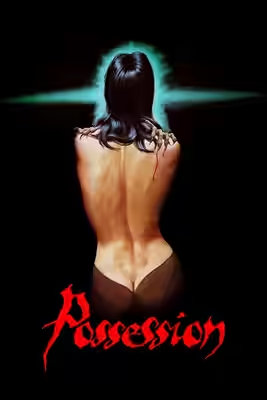
  4. Possession (1981) · not reviewed yetSexual dread and extravagant performances, with far less distance from the pain.

  5. Under the Skin (2013, Fi1m 81)An extraterrestrial presence makes human desire unsettling, with fewer explanations and greater patience.

Free account

Know what to watch tonight

Two lists that know where things are streaming, collections you can share, your own score beside ours, and Discover that remembers what you have seen.

  • Want to see, sorted by what is streaming now
  • Seen, with your score out of ten
  • No adverts, ever