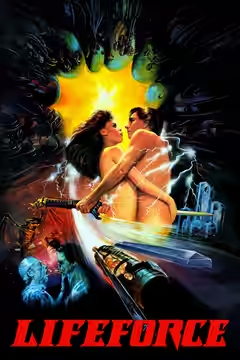
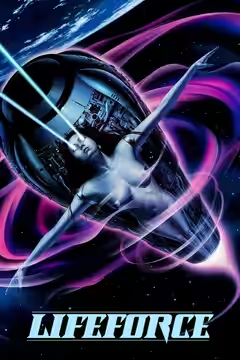
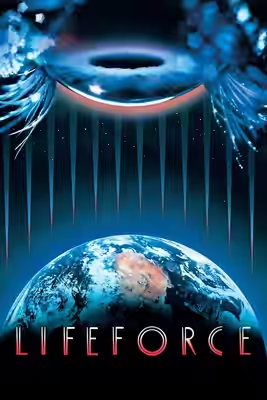
Tobe Hooper’s space-vampire horror has a poised Mathilda May and an imposing Henry Mancini score. Its clumsy dialogue and faltering mystery make it a qualified recommendation for those with a taste for extravagant horror.
Lifeforce is an uneven curiosity with enough conviction to reward a taste for extravagant horror. Tobe Hooper attempts science fiction, sexual nightmare and gothic romance within the same 102 minutes, and the changes of emphasis cause some of the trouble. We can enjoy the space-vampire premise without asking for scientific respectability. Keeping us interested in the next discovery is a more reasonable demand, and the film meets it only intermittently.
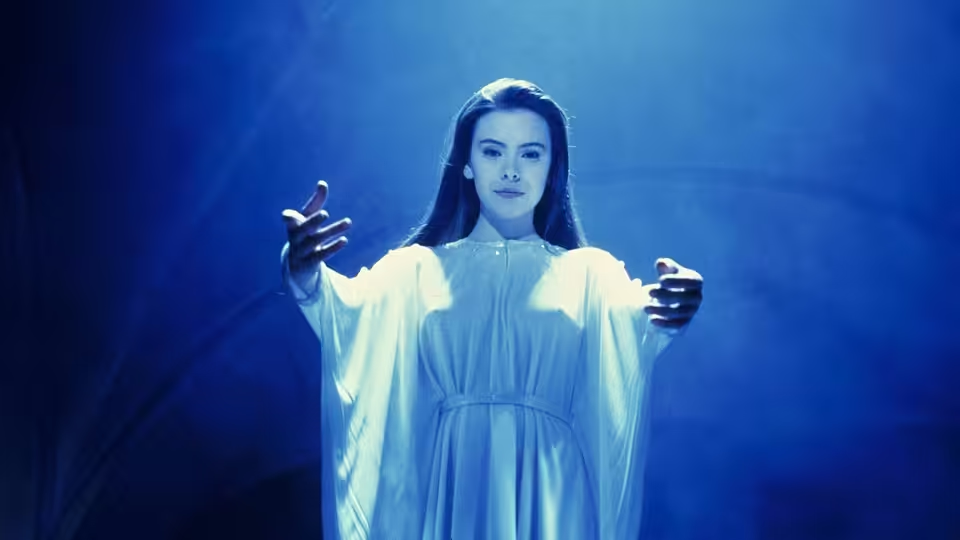
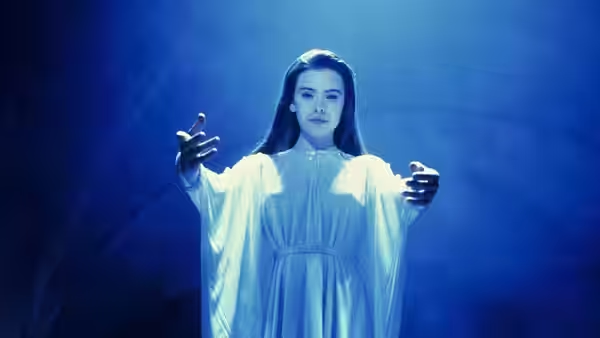
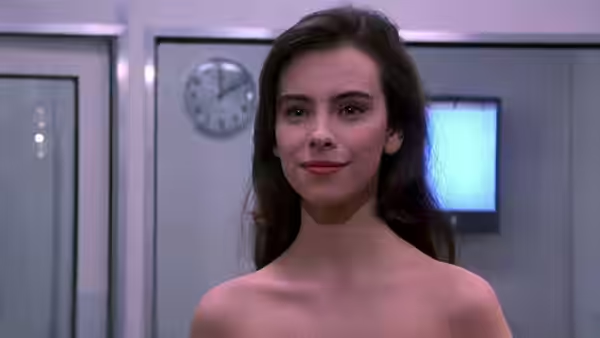
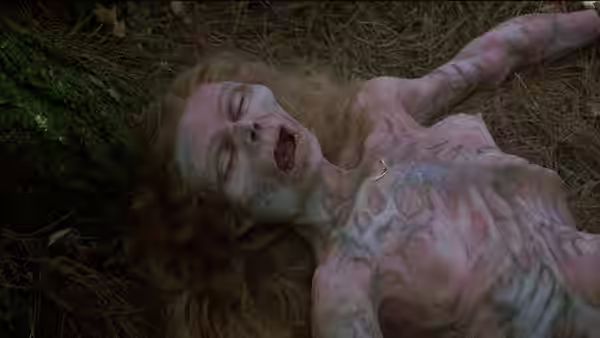
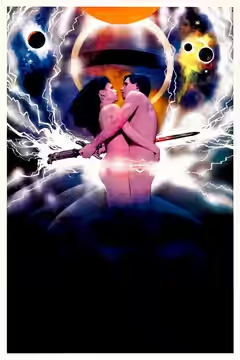
Mathilda May, credited as Space Girl, gives the film a steadiness that its plotting lacks. Her graceful movement makes the extensive nudity feel less awkward than it might, though the prolonged interest in displaying her body remains hard to ignore. She is more effective when allowed to seem strange than when the film simply expects us to look at her. We were unsettled by her composure amid the sexualised imagery; she makes the threat convincing without appearing to strain for an effect.
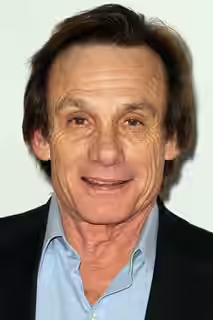
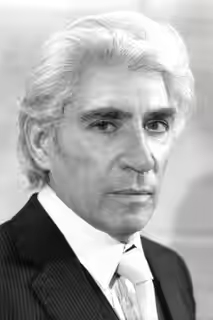
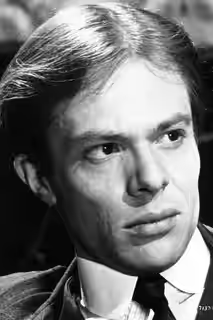
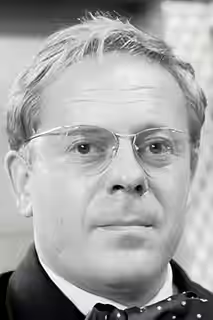
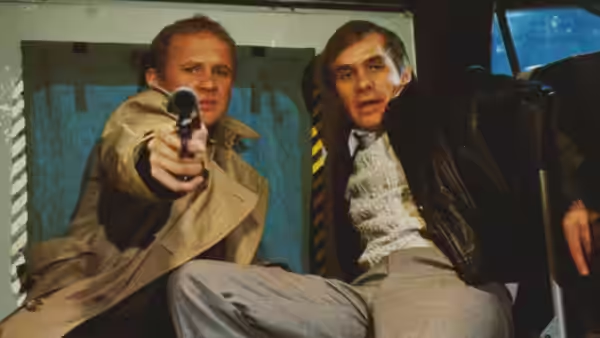
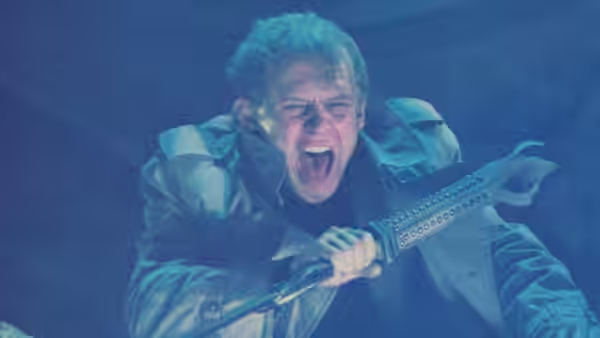
Henry Mancini’s score treats this business with a grandeur that could easily have made it insufferable. Instead, the music helps sustain a seriousness that the dialogue frequently puts at risk, giving the actors something dependable to work alongside. Steve Railsback, Peter Firth and Frank Finlay belong to a cast whose refusal to signal embarrassment is one of the film’s chief pleasures. We laughed at the solemn line readings, but their conviction also kept us interested when the words themselves were doing little to help.
Alan Hume’s cinematography is most persuasive around Mathilda May, where the film’s interest in bodily beauty becomes uncomfortable rather than merely decorative. The camera’s attention is plainly erotic, but her performance keeps those images from feeling entirely safe. Some of the special effects hold the attention, too, even when the story gives us insufficient reason to care about what they represent. John Grover’s editing cannot give the mystery a comparable hold on us, and the changes of emphasis too often feel like starting over just as something promising has begun.
The screenplay is credited to Dan O’Bannon, Michael Armstrong, Olaf Pooley and Don Jakoby, and its dialogue places a considerable burden on the performers. An awkward line can be enjoyable when delivered with sufficient gravity, but there are limits to how often that pleasure can sustain a scene. The mystery needs a clearer sequence of questions worth asking, with each answer making the next discovery more urgent. Too frequently, the writing seems satisfied that the subject is outlandish enough to keep us occupied, leaving the actors and music to supply the urgency.
By the standards of science-fiction horror, the combination of bodily unease and extravagant invention gives the film plenty to work with. Tobe Hooper deserves credit for taking the material seriously enough to risk looking foolish, although the results do not always repay that commitment. At 102 minutes, it still has passages that feel longer than their material warrants. Try it for Mathilda May, Henry Mancini and the peculiar pleasure of actors refusing to smirk; a low tolerance for clumsy dialogue is a sound reason to choose something else.