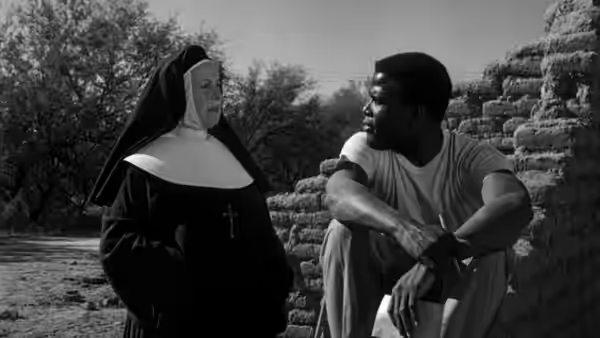
Ralph Nelson’s fable about a drifter and five German nuns in the Arizona desert is slight, sweet and a little too pleased with how easily everyone gets along. Sidney Poitier and Lilia Skala, sparring over wages and God, make it worth the ninety-four minutes.
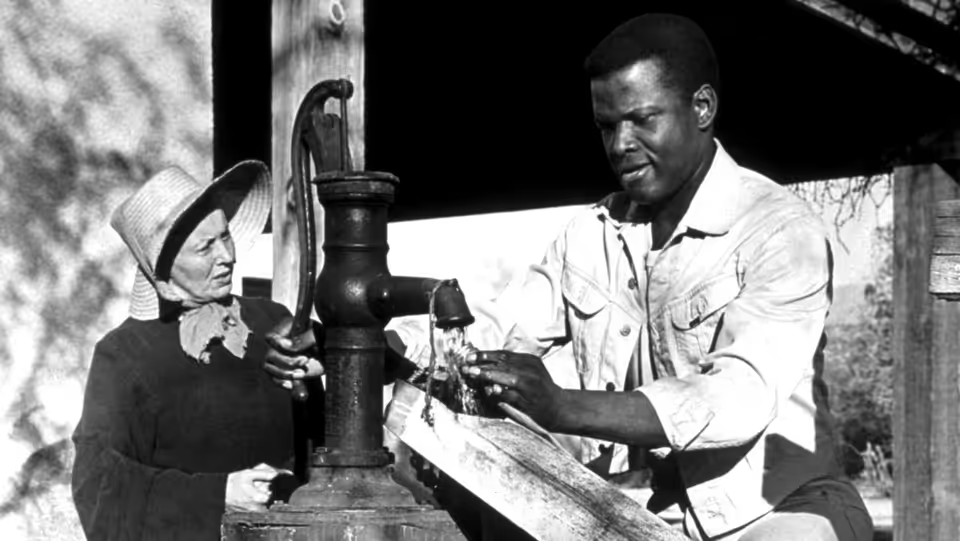
Homer Smith drives into the Arizona desert in a station wagon, stops at a run-down farm for water, and is put to work on a roof by a woman who has no intention of paying him. Mother Maria and her four sisters have come from East Germany with nothing, and she has decided God has sent her a builder. James Poe’s screenplay, from William E. Barrett’s novel, is a fable and knows it: one man, one woman, one argument, run for 94 minutes. Ralph Nelson directs it plainly and cheaply, and the plainness is most of its charm.
The argument is the film, and the two people having it are well matched. Poitier plays Homer as a man who enjoys his own competence and wants it acknowledged, preferably in cash. He fixes the roof beautifully and then stands there waiting to be told so. Skala’s Mother Maria never raises her voice and never thanks him directly; she thanks God for the roof, in front of him, so that he cannot claim it. The best joke in the picture is that she is always in the wrong and always wins.
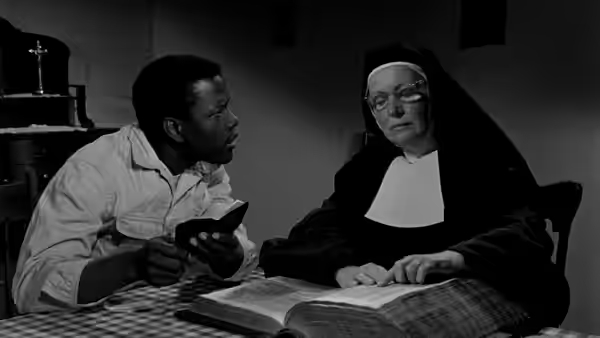
Homer sits with the nuns after supper and teaches them a spiritual, line by line, and they sing it back in careful, stiff, accented English, getting louder as they gain confidence. We grinned like fools, and then felt slightly embarrassed about how little it had taken. It works because the scene is about the sisters trying, not about Homer performing. The singing voice belongs to Jester Hairston, uncredited, and Poitier mouths it well enough that we did not mind. Jerry Goldsmith builds the score around that one tune, mostly guitar and voices, and keeps it small, which is the right size for a film about a man and a pile of bricks.
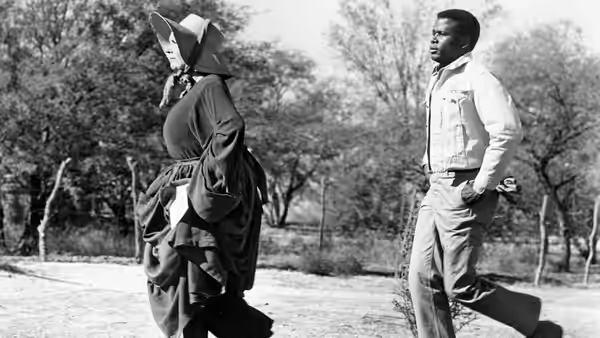
Ernest Haller shoots the desert in black and white with the horizon as a hard line and the sky washed out to nothing. The farm is a few grey buildings and a fence, and the midday light gives everyone short shadows and squinting eyes. John W. McCafferty cuts scenes off as soon as they have made their point, which suits a script that rarely has more than one point per scene. Stanley Adams gives Juan Acolito, the cafe owner who feeds Homer properly, a cheerful cynicism the film could have used more of. Nelson casts himself as Ashton, the contractor, the only man in the picture who offers Homer paid work.
What does not work is everything around the two leads. This is a film about a black man, five German refugees and a Mexican town in 1963, and nobody in it says a hard word to anyone. The sisters’ escape from East Germany is a single line of dialogue. The townspeople exist to be grateful. Homer’s colour is mentioned and then set aside. We do not ask a comedy to be a sermon, but a fable about people who have lost everything ought to let one of them look, for one scene, as if they had. The story is not very believable; the greater trouble is that it is untroubled.
The middle stretch also repeats itself. Homer sulks, Maria prays, Homer drives off, Homer comes back. The beat is good the first time and adequate the second, and the film runs it more than it needs to, so that at the hour mark we were fond of everyone and slightly restless. Poe’s script has one idea and one relationship, and 94 minutes is close to the outer limit of what they will carry.
It is one of the better gentle, well-meaning pictures of its kind, because the two people at its centre are allowed to be stubborn and petty as well as good. Poitier would go on to sharper and angrier films; this is the sunny one, and not the one to show a stranger who wants to know what he could do. It is the one for a wet Sunday and someone who needs cheering. Bring a cup of tea, and do not expect to remember much beyond the singing, which you will.