Hong Khaou’s Lilting is worth seeing for Ben Whishaw and Cheng Pei-pei, whose performances make its quiet study of grief affecting. The contrived conversations and slow stretches are harder to forgive.
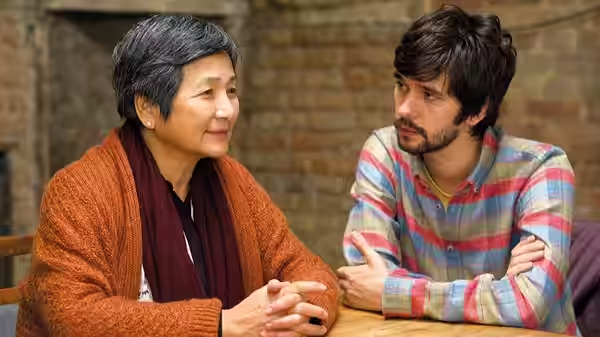
Lilting is a small drama about grief that earns our attention through its actors, even when its conversations feel arranged. Hong Khaou, who writes and directs, asks how people can begin to understand one another when language is already an obstacle. Richard and Junn have sorrow in common, but that gives them no easy way to speak. The film is good at allowing each to be difficult without treating either as a problem to be solved.
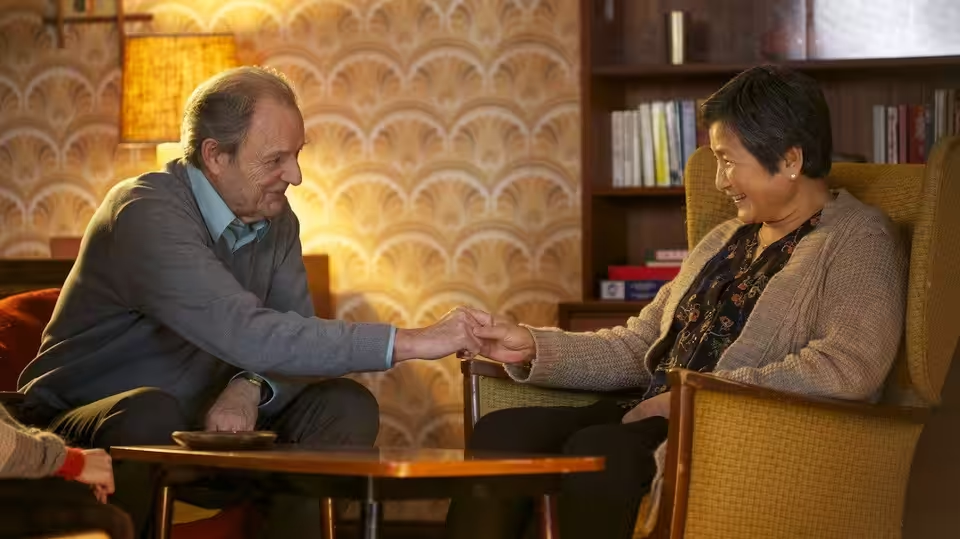
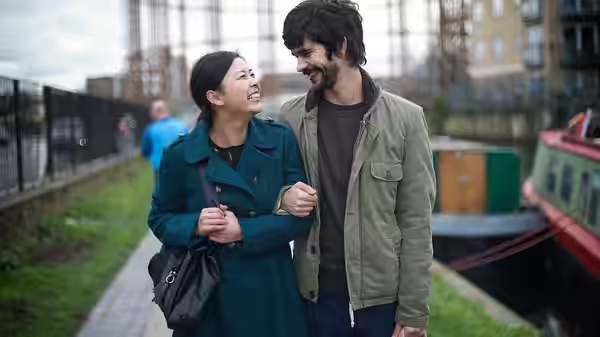
Ben Whishaw gives Richard a vulnerability that makes even the more direct dialogue bearable. We were moved by Richard’s attempts to speak to Junn: the effort seems exhausting, and getting the words out offers little immediate relief. Cheng Pei-pei gives Junn enough resistance to prevent these exchanges becoming a series of invitations to feel sorry for Richard. Her reserve requires us to pay attention to her separately, and helps keep their scenes from belonging entirely to him.
Urszula Pontikos’s cinematography gives the film a softness that suits its returns to memory. Miren Marañón’s production design helps keep the surroundings as carefully considered as the performances, without demanding that we admire them separately. The beauty works when it encourages us to stay with a hesitant exchange and notice what is going unsaid. It becomes less helpful when the scene has already communicated its feeling and the director seems reluctant to let it end.
Mark Towns’s editing gives the flashbacks an unforced rhythm, allowing recollection to interrupt the present without making every interruption feel like an explanation. That is a useful choice for a film concerned with people who cannot simply put their loss behind them. Stuart Earl’s music is sympathetic, though the performances need little help making the sadness felt. Between the images, the cutting and the score, the film sometimes settles into a gentleness that makes different scenes feel too much alike.
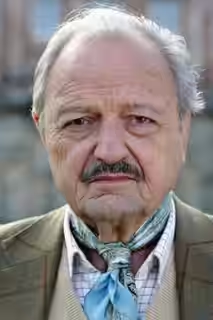
Junn’s relationship with Alan, played by Peter Bowles, is the clearest example of the writing trying too hard. It offers another way of considering intimacy and misunderstanding, but the connection feels contrived and receives more attention than it can sustain. Hong Khaou also lets some dialogue state feelings that the actors have already made apparent. We can still believe in the characters, though we become conscious of how carefully their conversations have been arranged.
What keeps Lilting above the dutiful grief drama is its willingness to let communication remain awkward. A language barrier is an obvious dramatic device, and there are stretches when its use here feels mechanical. Yet the actors find enough embarrassment, hurt and stubbornness in the exchanges to keep the subject from becoming an illustrated lesson in understanding. Their performances make the difficulty of reaching another person worth watching in itself.
At 91 minutes, it still has passages that feel prolonged, so this is not the choice for an evening that needs much pace. We would see it for the two leads, who make the conversations matter even when the writing is too deliberate. Allow for a little impatience with the film’s insistence on being gentle.