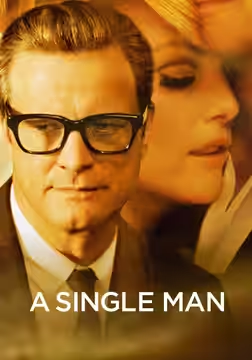
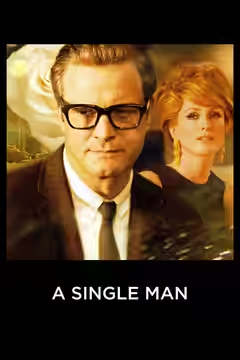
Tom Ford’s first film is a fashion designer’s film in both senses: every frame is composed to the inch, and Colin Firth’s grief is the realest thing in it. Firth is worth the evening. The colour grading keeps telling us what he has already shown.
Tom Ford, a fashion designer making his first film, has taken Christopher Isherwood’s short novel about one day in the life of a bereaved man and made something that looks like the most expensive advertisement ever shot for grief. That is not quite an insult. A Single Man is a careful, often beautiful film, and at its centre is a performance from Colin Firth that is as fine as anything he has done. See it for him. The film around him keeps reaching in to adjust the picture, and after a while we wanted it to leave the man alone.
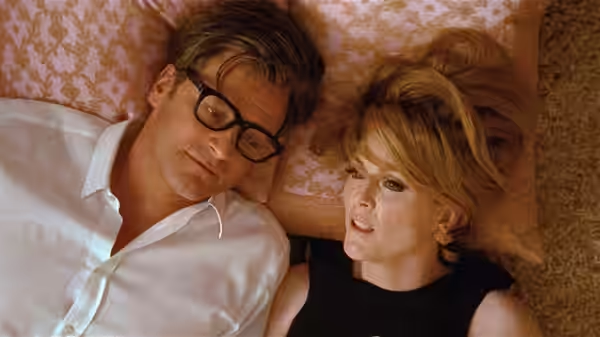
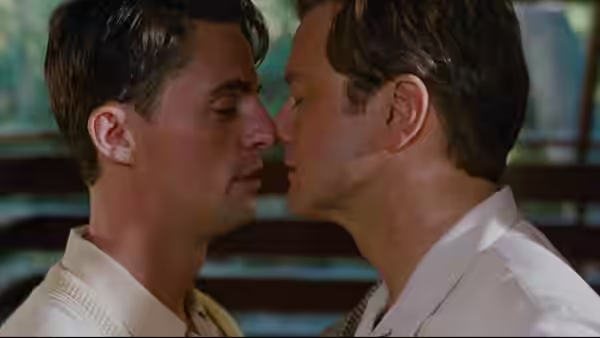
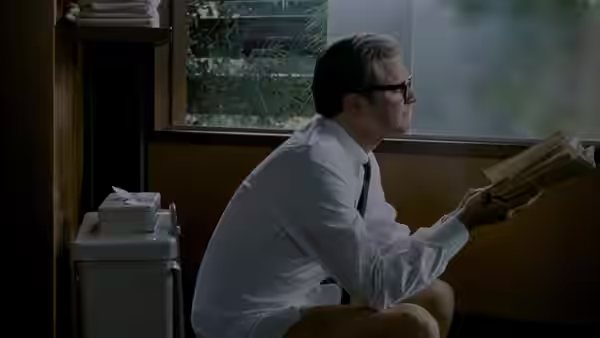
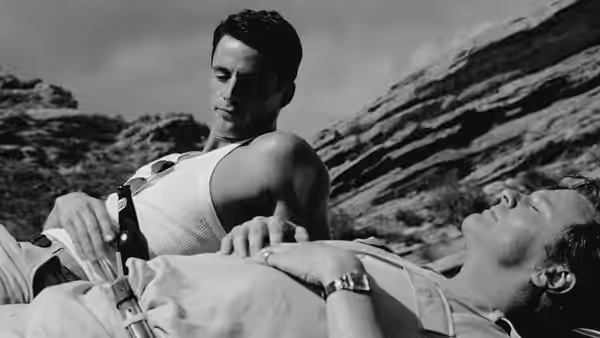
George, an English professor in Los Angeles, lost his partner Jim (Matthew Goode) eight months earlier in a car accident, and has decided that this November day in 1962 will be his last. He lays out his suit, writes his letters, buys bullets. Firth plays the routines with an exactness that is itself a kind of sorrow: the man has nothing left but his habits, so he does them perfectly. The scene that undid us comes early, in flashback, when he takes the telephone call from Jim’s cousin telling him of the death and adding that the funeral is for family only. Firth says almost nothing. He thanks the man. His face does the rest. We were moved more than we expected to be, and what moved us was the politeness.
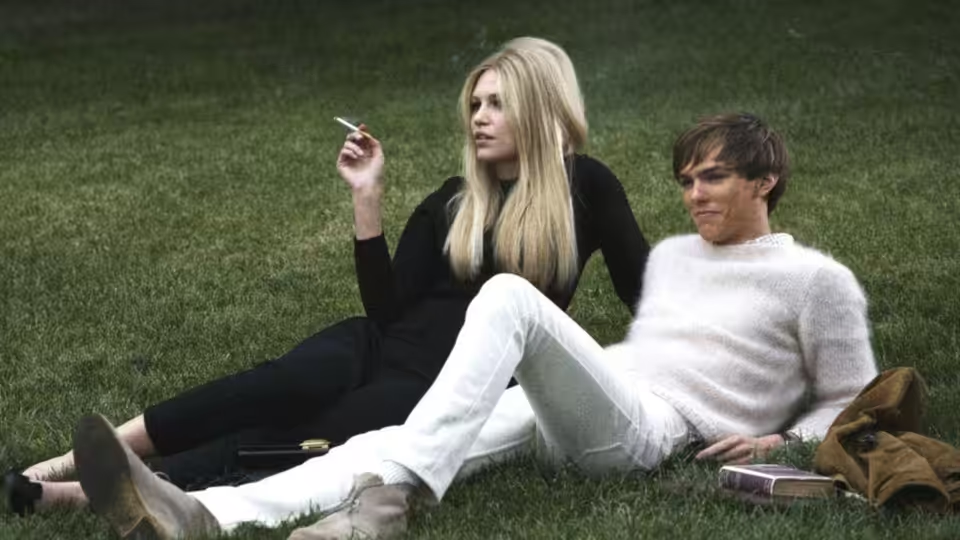
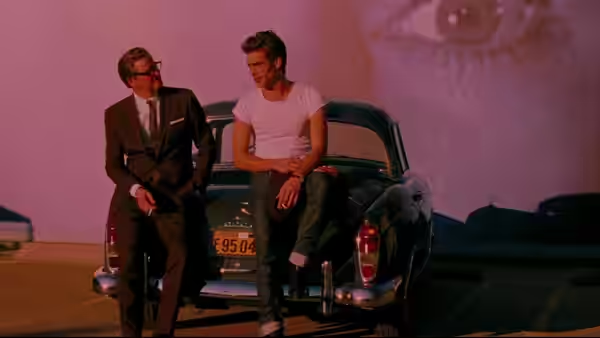
Eduard Grau shoots most of George’s day drained nearly to grey, the beige of the campus and the brown of the kitchen all of a piece, then lets colour flood the frame whenever George notices something alive: a secretary’s lipstick, a neighbour’s child in a blue dress. The first time it happens it is a good idea plainly stated. By the sixth we had the hang of it and the film was still explaining. Dan Bishop puts George in a low house of glass and timber in which every object has been placed, and Arianne Phillips dresses him in narrow black suits and heavy spectacles. Ford then photographs them like a catalogue, and that is the trouble.
Abel Korzeniowski’s score is strings, a slow waltz pulse that rises whenever the colour does. Laid over the colour and the slow motion it is one signal too many. Ford slows down anything handsome, a tennis game of shirtless students, a girl twirling in a dress, and Joan Sobel cuts these in as reveries that stop the day dead. Firth is already showing us a man looking at the world as if for the last time. He did not need three departments confirming it.
Julianne Moore has one long scene as Charley, George’s old friend from London, who has invited him to dinner, started on the gin well before he arrives and put on a gown for a party of two. They dance to a record, she asks him to come and live with her, and then she says something about his years with Jim that cannot be taken back. Moore plays her as a woman who has mistaken loneliness for candour, and for once Firth has someone to push against.
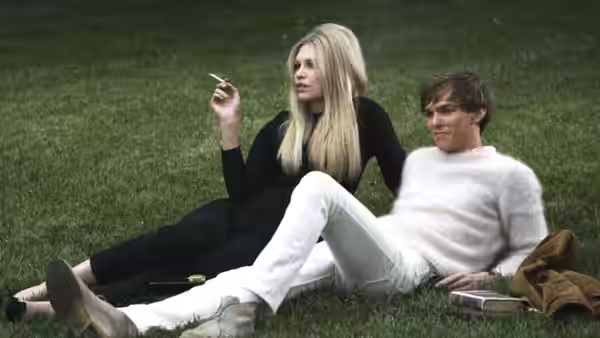
Nicholas Hoult’s Kenny, the student who follows George out of a lecture and will not quite go away, is harder to credit. Hoult is open and watchful, but the script by David Scearce and Ford never settles what Kenny wants, so we are left guessing whether he is a rescuer or a boy who has spotted a lonely man. The odd exchange with the Strunk girl (Ryan Simpkins) across the street, who repeats something she has heard at home, is the one place where Ford’s stylisation does real work, because the child does not know what she is saying and George does.
Isherwood’s novel stays inside George’s head and lets the day be ordinary. Ford has turned it inside out, so that every feeling is announced on the surface of the image, and the surface is exquisite. The last stretch takes a turn we will not describe. It runs 100 minutes, carries a 12 certificate, and is worth it for a face that never once raises its voice.