Soi Cheang’s black-and-white thriller builds a Hong Kong out of landfill and photographs it with great care; the craft is not in question. What it does to Cya Liu’s Wong To for two hours is, and we left impressed and uneasy.
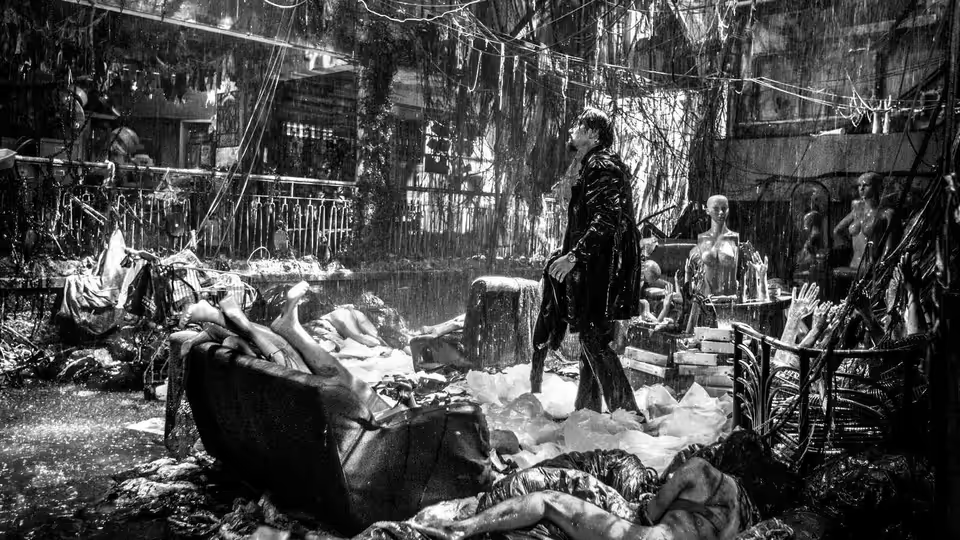
Soi Cheang’s Limbo is a serial killer film set in a Hong Kong made almost entirely of rubbish. Cheng Siu-Keung shoots it in black and white, so the alleys are pale heaps and black water, and the sky, when it appears at all, is a strip of grey between buildings. Somebody is cutting the left hands off women and leaving them in the heaps, and two detectives, one old and one new, go looking. It is superbly made, and for long stretches we did not like it, and both of those things are true at once.
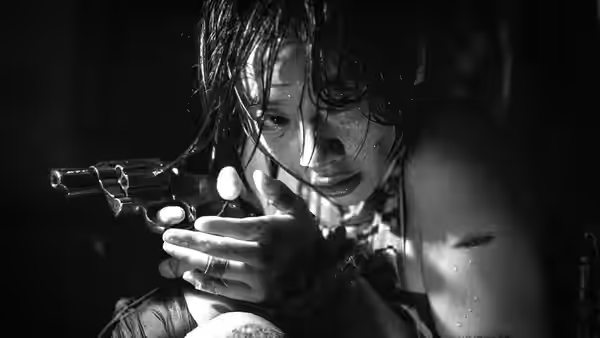
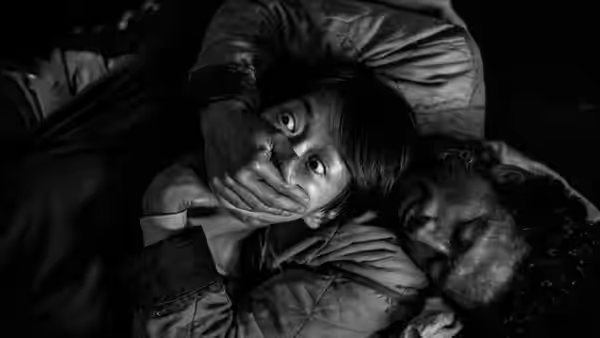
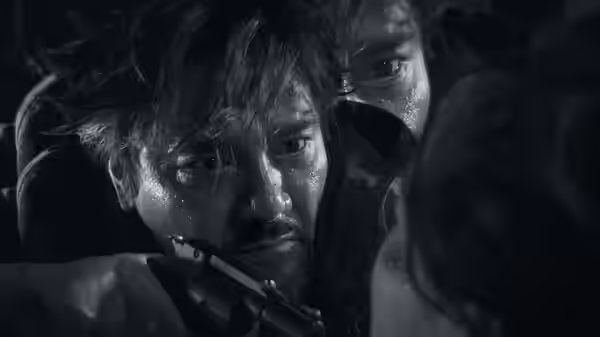
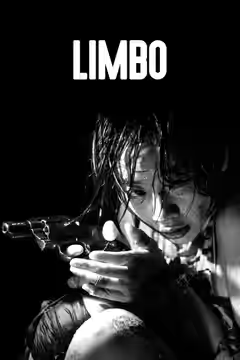
Gordon Lam plays Cham Lau heavy and unshaven, a man who hits first and asks nothing afterwards. Mason Lee’s Will Ren is the graduate who has read the manual, and Lee spends the film wincing at his tooth and at his partner in roughly equal measure; he is the conscience of the piece, and the piece is not much interested in conscience. Cya Liu’s Wong To is the reason to watch. She plays a woman who has decided she deserves whatever is coming, and Liu lets us see, in small movements of the mouth, the moment she starts to disagree with herself. She spends most of the film running, and she runs like someone who has done it before.
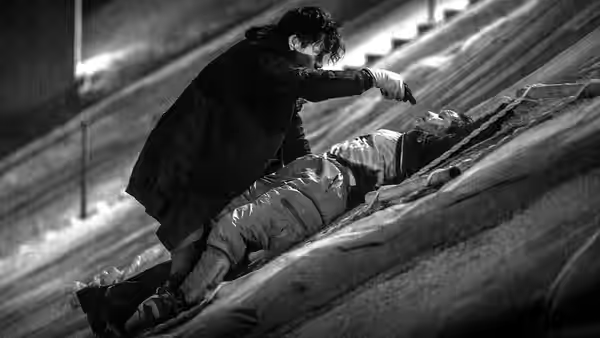
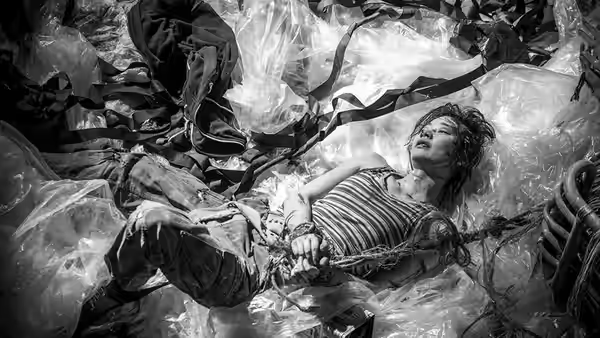
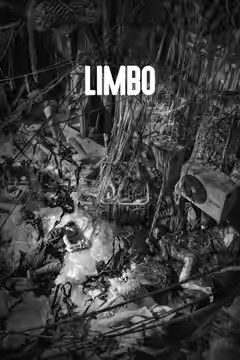
The city is Kenneth Mak’s, and it is a considerable piece of work. Shanties are built from scaffolding and bin bags. Mannequins lie in the drifts of plastic with their limbs at wrong angles, so that every heap might have a body in it. Cheng lights the daytime hard and white and the nights with single bulbs, and it rains, at length, on everything. David M. Richardson cuts the fights fast without losing us; when Cham chases a man up a stairwell we know where both of them are on every landing. Kenji Kawai’s score stays low and spare and mostly out of the way, which is the right decision in a film this loud on its own. Bruce Yu keeps Cham in one shirt that gets steadily wetter, and Wong To in layers she has plainly slept in.
The first hour had us gripped. The discovery of the first hand, a small pale thing in a mountain of grey, and the slow business of working out how large this city of waste actually is, are done with patience and confidence, and we sat forward. There is a moment when the two detectives climb to a rooftop and the camera shows us what they are looking down on, and we felt the scale of the job before either of them said a word.
Then the script, by Au Kin-Yee and Shum Kwan-Sin, shows its hand. Whatever else it is doing, its plan for Wong To is that she suffer, at length and on camera, and that we watch. Somewhere in the middle there is a stretch where she is knocked down, chased across the dump, dragged and knocked down again, and it goes on, and at a certain point we stopped being frightened for her and started being tired of watching, and then angry that the film appeared to think our tiredness was the point. The reviews so far are split on exactly this, and we do not think the split is unreasonable.
Hiroyuki Ikeuchi has a role we will not describe. Sammy Sum Chun-Hin’s Boss Spark and Fish Liew Chi-Yu’s Coco fill out the underworld Wong To is trying to leave, and both are good in the little they are given. Hanna Chan, as Will’s wife, exists to be worried about.
Cheang made Dog Bite Dog (2006), another film about a man living like an animal in the city’s leavings, and Limbo is that idea with far more control and far more money on the screen. He has always been better at rooms than at people, and here the rooms are the whole of Hong Kong. The killer’s motive, when it arrives, is thin, and the film knows it, and hurries past.
See it in a cinema if you can, where the blacks have weight and the rain looks like rain and the 118 minutes feel like a place rather than a length. Bring nobody who has had a bad week.