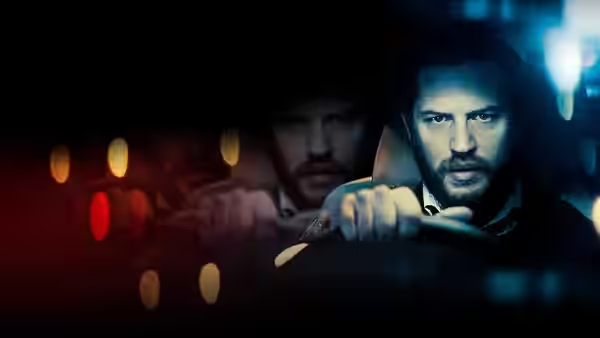
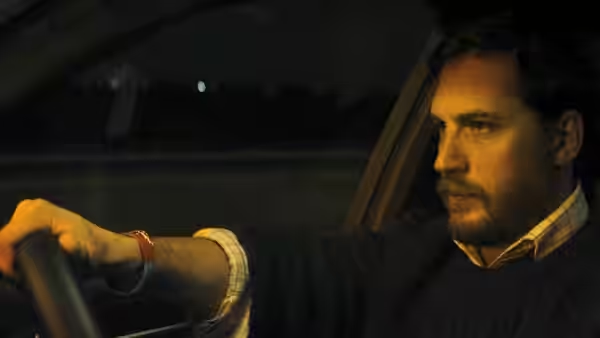
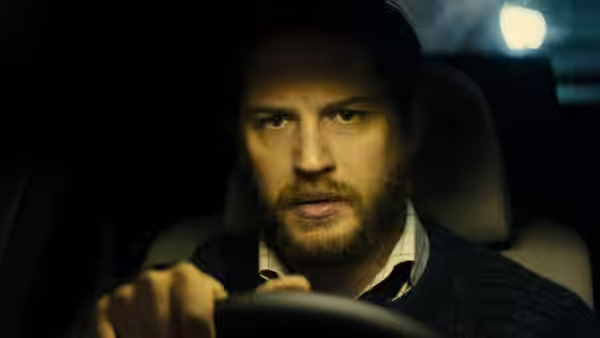
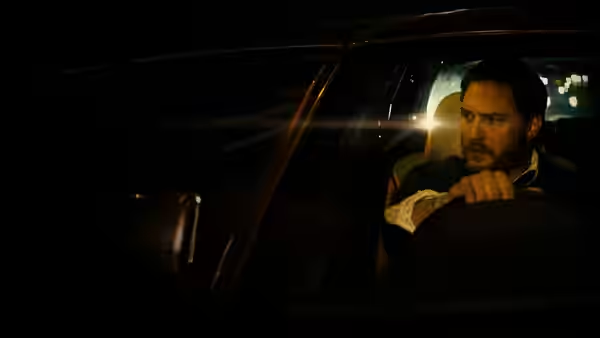
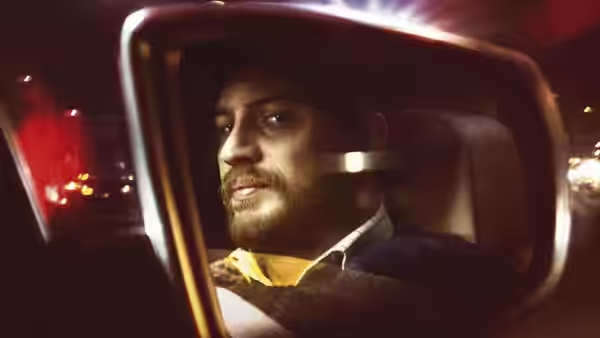
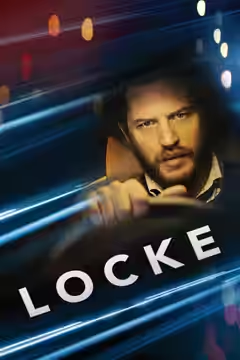
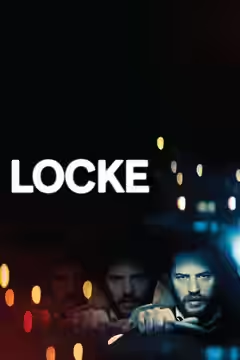
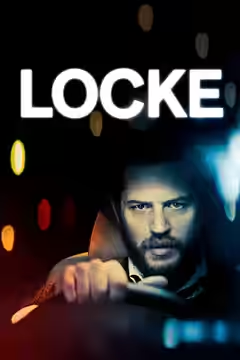
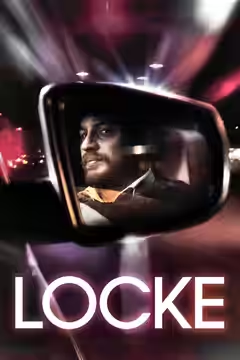
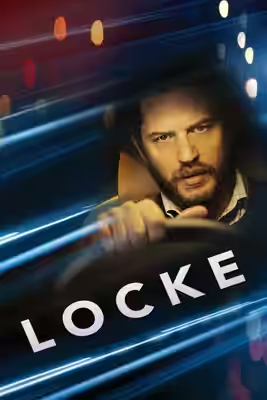
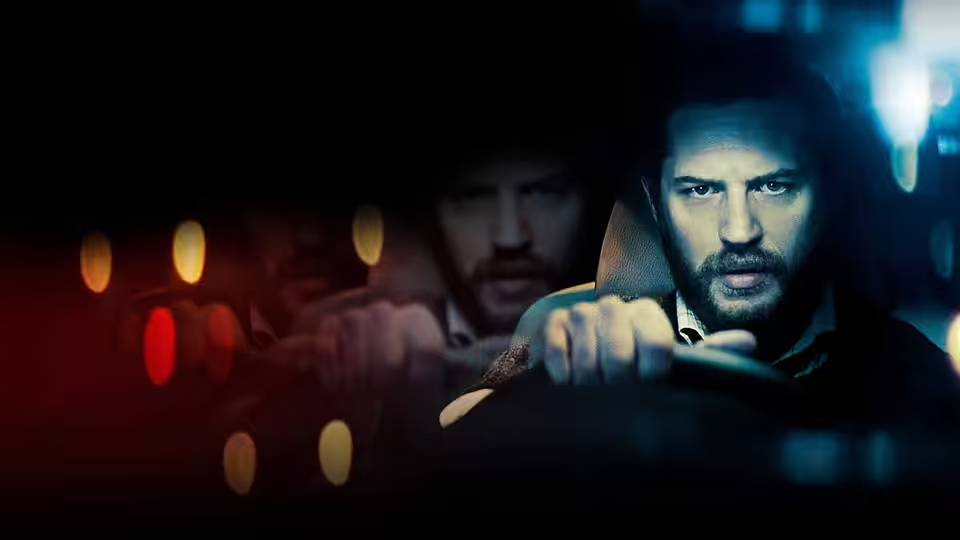
Ivan Locke (Tom Hardy) gripping the steering wheel at night
Film review

Locke

2014 · Directed by Steven Knight · 1h 25m

In a sentenceTom Hardy spends a car journey answering calls we would have sent straight to voicemail

Construction foreman Ivan Locke (Tom Hardy) is driving at night when telephone calls bring his work and family problems into the car. He tries to deal with both from behind the wheel, speaking to people he cannot see while we stay with him. Katrina (Ruth Wilson) and Donal (Andrew Scott) are among the voices at the other end of the line. His efforts to keep control of the situation have to pass through a telephone, with nobody beside him to help.

Plays from YouTube when you press play; nothing loads from them until then.

Fi1m review

Tom Hardy makes a night of telephone calls tense enough to justify Locke’s confined setting. Steven Knight’s writing sometimes arranges the crises too neatly, but the performance and the close attention to it keep us watching.

Steven Knight’s Locke is a gripping drama built around a restriction that could easily have become a nuisance: we stay with a man driving at night while his problems arrive by telephone. It works because Tom Hardy makes listening worth watching. Ivan Locke is a construction foreman trying to deal with crises at work and within his family, and his attempts at calm look increasingly difficult to sustain. We recommend it, with a reservation about how neatly the screenplay arranges the trouble.

The performance is controlled without being blank. His careful delivery suggests a man who believes the right words, spoken in the right order, will allow him to take charge of whatever comes next. We felt anxious watching him listen, because the close-ups leave us waiting with him for a voice to finish and for an answer he can bear to give. The tension survives the absence of anyone else in the frame; there is enough to follow in his face.

The unseen cast matters to this more than the description of a one-man film allows. Ruth Wilson, Andrew Scott and Olivia Colman supply voices that the driver must respond to, and those exchanges keep the people beyond the car from becoming mere subjects of his concern. We cannot look away from him to check another expression or decide who deserves our sympathy. That makes the telephone an effective restriction, although it also gives him rather more of our attention than anyone else can claim.

Haris Zambarloukos photographs him in close quarters, using the reflections in the car to keep the image shifting around him. The moving light gives the eye something to register without distracting from a change in expression. It is enough variation for this story, even if the car cannot remain visually surprising for the whole journey. The close-ups justify the decision to make this a film: hearing the same dialogue without seeing his face would lose much of what makes it troubling.

Justine Wright’s editing keeps the succession of calls moving without making the pauses feel like delays to be eliminated. At 85 minutes, the film gives us time to study its driver without stretching our patience with the confined setting. Dickon Hinchliffe’s score supports the unease without becoming the main reason for it. The most affecting sounds remain the voices, because they make demands that the man behind the wheel has to answer.

Steven Knight’s writing is less convincing when the calls seem arranged to present Ivan Locke with a complete examination of his character. The personal and professional demands fit together a little too conveniently, and the insistence on his wish to act decently can feel like special pleading. Tom Hardy allows more uncertainty than that: his calm can seem considerate, stubborn or simply inadequate to the person addressing him. We would have preferred the screenplay to leave more of that judgement to the performances.

As a thriller, Locke understands how uncomfortable it can be to wait for someone to answer a question. Its confinement gives that familiar experience unusual force, and it rarely needs to pretend that a car journey is anything more exciting than a car journey. What matters is the man having to keep speaking. Give it a quiet evening; the small changes in Tom Hardy’s delivery are worth being able to hear.

Critical consensus AI synthesised

75
Positive
20
Mixed
3
Negative
2

Most critics respond warmly to Locke, with praise centred on Tom Hardy’s controlled performance and the tension Steven Knight sustains inside a single car. The reviews repeatedly single out Hardy’s voice, precise delivery and expressive close-ups as enough to make a life beyond the vehicle feel present. For the majority, the restricted setting gives the personal and professional crises an urgency that needs little physical action.

The spread is wide, however, and the central disagreement concerns how much cinema Knight makes from his premise. Some admire the reflections and close framing; others find the images repetitive and the drama too theatrical. The AV Club sees contrived phone conversations and an acting exercise with limited cinematic imagination. Slant Magazine admires the phone-call structure but objects to explicit symbolism, while even several favourable reviews acknowledge the strain of the setup. Hardy attracts praise across the divide.

Empire
13 February 2014 · Olly Richards
90*

The critic calls the film a daring experiment brilliantly executed, highlighting its thriller elements of whispers and silences rather than action. Tom Hardy's economical and riveting lead performance is singled out as one of his career bests.

Read the full review →
Los Angeles Times
24 April 2014 · Kenneth Turan
90*

Tom Hardy's mesmerizing acting and Steven Knight's whip-smart direction turn the single-location premise into something continuously involving and tense. The critic notes how the micro-budgeted film's hypnotic execution outpaces more expensive productions despite its contrived setup.

Read the full review →
RogerEbert.com
25 April 2014 · Glenn Kenny
90*

The film succeeds as a cinematic stunt thanks to Tom Hardy's mesmerizing one-man performance as a man driving through a night of personal and professional crisis. The critic praises the way the constrained format deepens the portrayal of moral choice and emotional weight.

Read the full review →
The Guardian
20 April 2014 · Peter Bradshaw
90*

Tom Hardy proves he can act in a minor key in this compelling portrait of a man in transit and in crisis. The film is a bold, evocative drama in which voices, intonations and noises off build up a detailed picture of a world and a man's life, as elegantly and economically as the best radio play.

Read the full review →
The Hollywood Reporter
3 September 2013 · festival review · David Rooney
90*

The critic calls it a virtuoso narrative and technical experiment in real-time minimalist storytelling, driven by Tom Hardy's knockout performance as a man whose life unravels during a fraught car journey.

Read the full review →
Screen Daily
2 September 2013 · festival review
85*

Locke is a gripping and deeply cinematic human and ethical drama and one of the few real revelations of the Venice Film Festival; Hardy gives a magnificent performance as a decent man determined to do the right thing.

Read the full review →

Straight answers AI written, from our review

Is Locke worth watching?
Locke is worth watching for anyone who can settle into a drama told almost entirely through one man's telephone calls, and we scored it 82. Tom Hardy makes listening worth watching, though Steven Knight's screenplay arranges the crises a little too neatly. Give it a quiet evening rather than a distracted one.
How long is Locke, and what is it rated?
Locke runs 1h 25m. It is a drama and thriller film.
Where can I watch Locke in Saudi Arabia?
Locke is not on any streaming or rental service in Saudi Arabia at the moment. It is available in 22 other countries; change your country at the top of the page to see where. Availability is checked daily.
How violent or frightening is Locke, and is it suitable for children?
Locke carries a UK 15 certificate, so it is not for children, though the discomfort comes from strong language and adult tension rather than violence. The whole film is a man in a car taking calls about his work and family, and the anxiety builds from waiting for answers. Teenagers with patience for slow drama will manage it; it is never frightening in a horror sense.
How does Locke compare to Taste of Cherry?
Locke is the tighter and more tense of the two, while Taste of Cherry gives its car journey far more silence and room to breathe. Abbas Kiarostami's film is a slower, deeply moving search for help, and its repeated conversations can test patience. Choose Locke for a thriller's grip and Taste of Cherry if you want something contemplative.
What should I watch after Locke?
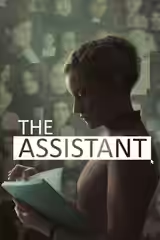
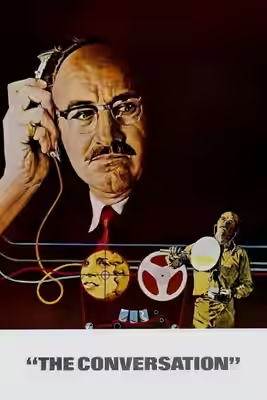
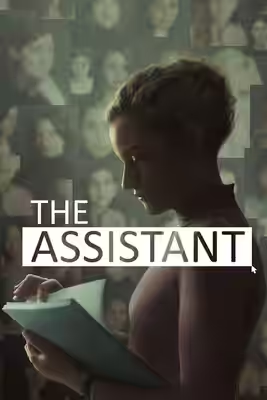
After Locke, try Taste of Cherry (1997, Fi1m 86): Car journeys and difficult conversations, given more silence and room to breathe. Then The Conversation (1974, Fi1m 92): For the anxious listening, and a lead performance that keeps its worries private; and The Assistant (2019, Fi1m 81): Workplace routines become quietly alarming through small decisions and an attentive central performance.

Cast

Awards

European Film Award for Best Actor, 2014

Nominated
European Film Award for Best Actor

European Film Award for Best Director, 2014

Nominated
European Film Award for Best Director

European Film Award for Best Editor, 2014

Won
European Film Award for Best Editor

European Film Award for Best Screenwriter, 2014

Nominated
European Film Award for Best Screenwriter

If you liked this, try…

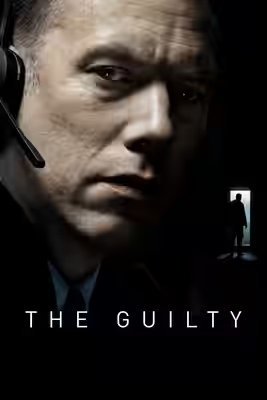
  1. The Guilty (2018) · not reviewed yetAnother telephone-bound crisis, with each voice changing what the listener thinks he knows.

  2. Taste of Cherry (1997, Fi1m 86)Car journeys and difficult conversations, given more silence and room to breathe.

  3. The Conversation (1974, Fi1m 92)For the anxious listening, and a lead performance that keeps its worries private.

  4. The Assistant (2019, Fi1m 81)Workplace routines become quietly alarming through small decisions and an attentive central performance.

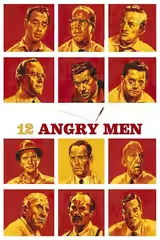
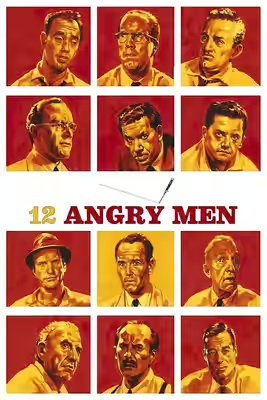
  5. 12 Angry Men (1957, Fi1m 91)A confined space and competing consciences, with every change of mind made visible.

Free account

Know what to watch tonight

Two lists that know where things are streaming, collections you can share, your own score beside ours, and Discover that remembers what you have seen.

  • Want to see, sorted by what is streaming now
  • Seen, with your score out of ten
  • No adverts, ever