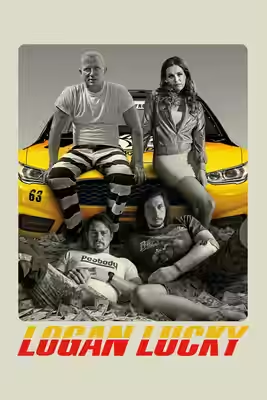
Steven Soderbergh’s blue-collar heist comedy is loose, funny and fond of its people, and Daniel Craig, bleached and drawling, is the best reason to see it. The plan is tidier than the film, which keeps going for twenty minutes after the job is done.
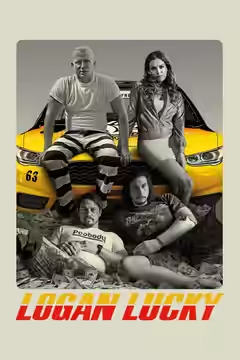
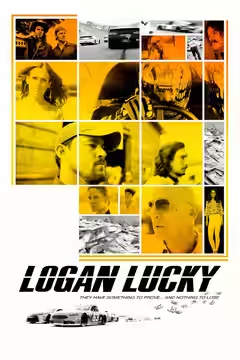
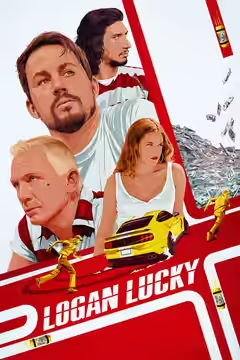
Steven Soderbergh announced he had retired from making films and then did not, and Logan Lucky is what he came back with. It is a heist comedy about people who have never been inside a casino. Jimmy Logan (Channing Tatum) is laid off from a job filling sinkholes under a motor speedway because of a limp nobody had asked about before. His brother Clyde (Adam Driver) tends bar with one hand and believes the Logans are cursed. Jimmy’s answer is to rob the speedway during a race. The film is good, it is funny, it is kind to its characters, and it runs about twenty minutes longer than its plot does. We liked it a good deal and we also checked the time.
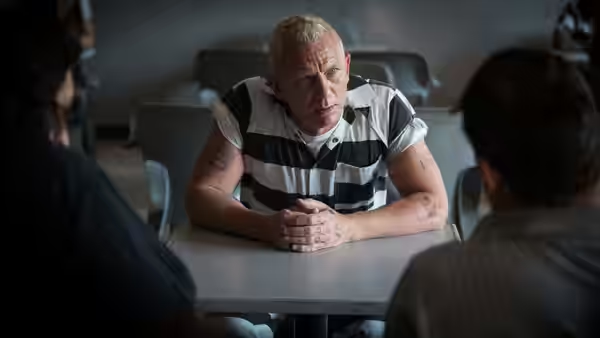
Soderbergh shoots and edits it himself, and the look is bright, flat and unfussy. The daylight is the hard yellow sort, the interiors run to beige and institutional green, and he holds the speedway in wide shots so you can see how much concrete sits between a man and the money. Howard Cummings gives Clyde a bar decorated almost entirely in duct tape and gives Jimmy a trailer the size of a decent bathroom. Ellen Mirojnick dresses everyone in what they would wear: oil-stained work trousers, leopard print for Mellie (Riley Keough), and prison stripes for Craig that make him look like a barcode with opinions. David Holmes’s music is twangy guitar and organ, and it sounds like it came out of the car radio rather than a score.
Craig is the film’s engine. Joe Bang is an explosives man serving a sentence, and the plan requires breaking him out and back in before the guards notice. Craig plays him with bleached hair, a drawl he enjoys, and the seriousness of a man who regards blowing up a vault as a craft with standards. His chemistry lesson, delivered to two men who do not follow a word of it, is the funniest scene in the film. We laughed out loud, mostly at how still he keeps his face while everyone around him panics. Brian Gleeson and Jack Quaid, as his brothers, are useless in ways the film enjoys.
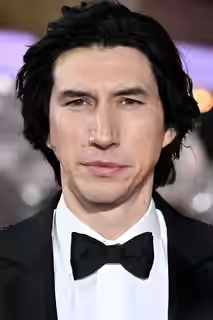
Driver is the other pleasure. Clyde speaks slowly, thinks slowly and turns out to be right more often than his brother, and Driver never once plays the slowness as stupidity. Tatum has the harder part. Jimmy is a decent man who has stopped expecting anything, and Tatum plays that honestly, but there are stretches where honest becomes glum and the film waits for him to cheer up. Katie Holmes, Sebastian Stan and Katherine Waterston are each given a scene or two and make them count.
Seth MacFarlane does not. His Chilblain, a British energy-drink millionaire in a wig and an accent from nowhere in particular, belongs to a broader film, and every time he appears this one gets worse. The other problem is the ending. Once the race is over, Jules Asner’s script keeps going, tying off threads nobody was worried about. Soderbergh the editor is brisk for a hundred minutes; in the last twenty he becomes patient, and at 119 minutes the patience shows.
The film is gentle about class in a way that is likable and not quite clear. There is a lost job, a clinic in a van, a child’s pageant, and a sense that these people are owed something, but it never says by whom. We did not mind. There is a scene in the second half involving that child and a song, which we will not describe, and it caught us out; we had come for a caper and found ourselves with a lump in the throat, because Soderbergh holds on faces that are not acting and lets the song finish.
Set against Ocean’s Eleven, it is the same machine built from cheaper parts, and the parts turn out not to be the point. Most critics have been warmer than us by a few degrees, and they are not wrong about the cast; they were more forgiving of the ending. Soderbergh came out of retirement for this. It was not worth the announcement. It was worth the evening.