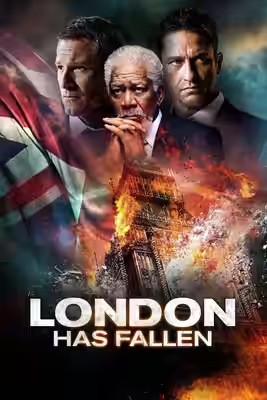
Gerard Butler works hard in a rescue thriller undone by ugly violence and flimsy digital destruction. Babak Najafi supplies pace, but the attacks on London become repetitive long before they become exciting.
London Has Fallen is a poor rescue thriller with enough physical energy to make its laziness frustrating. Babak Najafi aims for the simple pleasure of watching a capable man steer a president through catastrophe, and there is nothing wrong with that ambition. Gerard Butler supplies the necessary determination and some welcome humour. But the film treats mounting brutality as a reliable substitute for suspense, and London as a collection of things awaiting demolition.
The opening build-up has some tension, because the arrival of world leaders gives the attackers an unusually concentrated set of targets. The screenplay, credited to Creighton Rothenberger, Chad St. John, Katrin Benedikt and Christian Gudegast, makes that opening threat more interesting than the pursuit it sets off. Once the attacks begin, the sheer extent of the assault becomes hard to believe. The devastation also makes the script’s narrow concern for the president harder to accept.
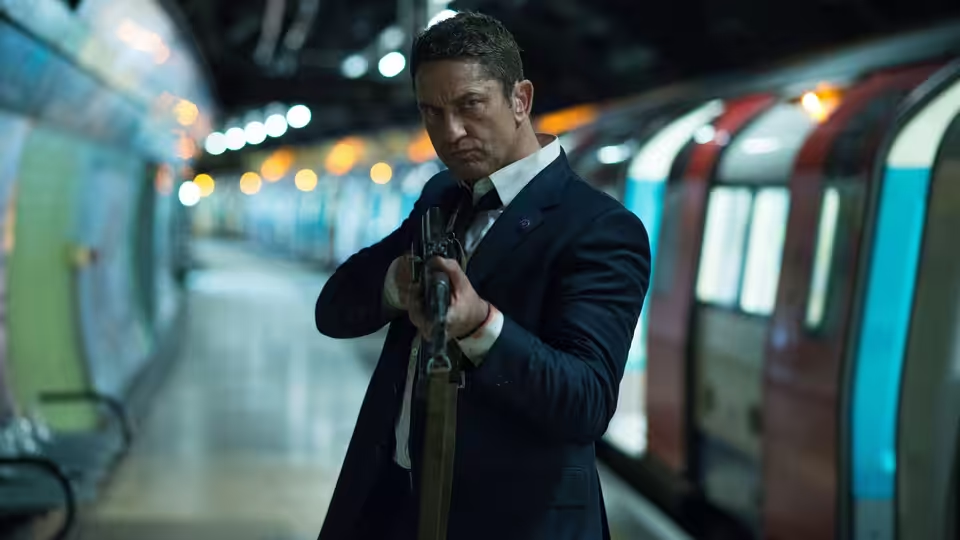
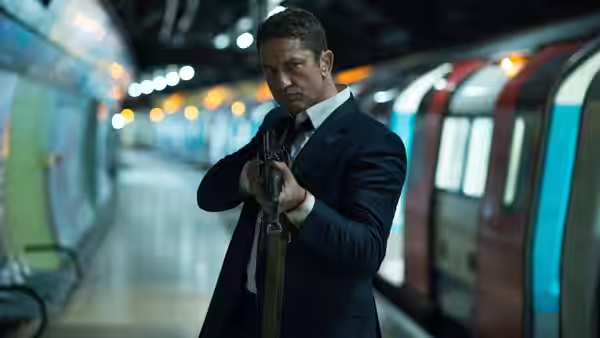
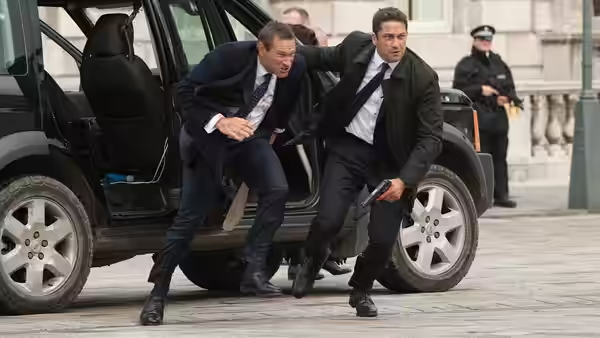
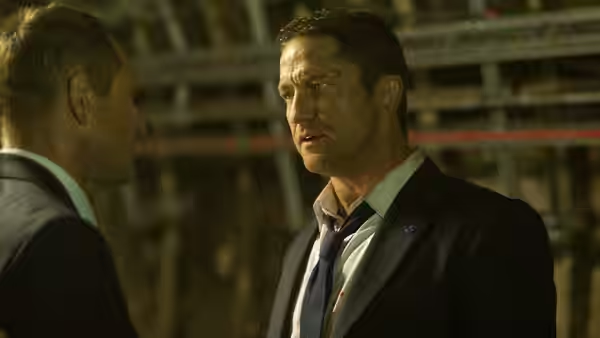
Gerard Butler is the strongest reason to persist. He moves quickly and handles the fights with conviction, while his blunt delivery produces the occasional laugh. Aaron Eckhart is good company for him, though the film gives their companionship little room to develop. Angela Bassett and Morgan Freeman bring authority to supporting parts that give them little to work with. Their presence makes the thinness of the writing more conspicuous.
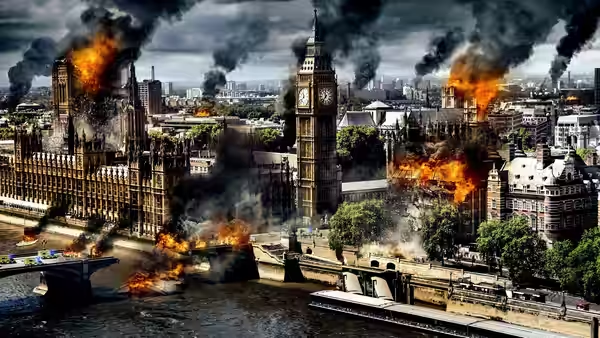
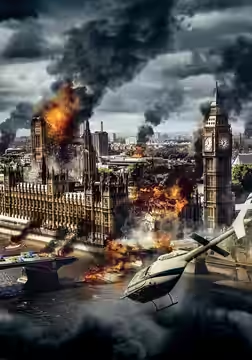
Ed Wild’s photography is at its most useful when the action stays close enough to read Gerard Butler’s physical work. The attacks on London’s landmarks offer much less convincing digital destruction, with little sense of weight or consequence. Joel Collins’s production design cannot establish much sense of a lived-in city beneath that barrage of effects. We were bored by the demolition, because each fresh burst of destruction seemed to remove something that had never looked solid in the first place.
Editors Michael J. Duthie and Paul Martin Smith do keep the picture moving, which matters at 99 minutes. The cuts deliver urgency more consistently than a clear sense of where anyone can go. Too often, movement alone is expected to keep us interested in the escape. Trevor Morris’s score adds further urgency, although it does little to vary the mood. There are passages where the rhythm briefly works and the fighting has force; they make the surrounding confusion harder to excuse.
An action thriller is allowed to be blunt, and moral complexity need not be a condition of a good chase. Here, however, Banning’s violence is offered with a relish that makes the thin characterisation matter. The attackers are scarcely characterised, while the devastation around the president rarely broadens the film’s concern. The violence leaves little room for the relief or humour that might make this an enjoyable escape.
Against the basic standards of the rescue thriller, the film makes too little of escape, uncertainty and the effort of keeping another person alive. It repeatedly offers a larger attack where a more difficult choice might have helped. There is enough commitment in Gerard Butler’s performance to understand the appeal, but too little around him to reward it. Choose it only if relentless aggression is the attraction; for suspense, look elsewhere.