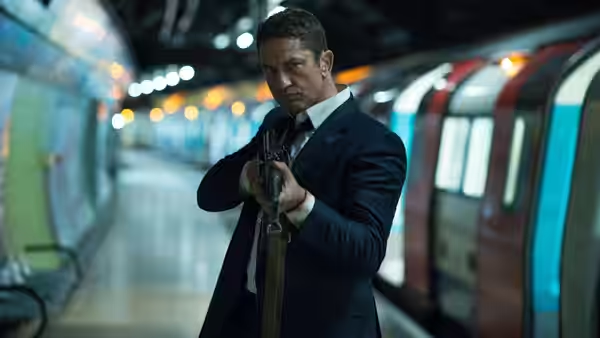
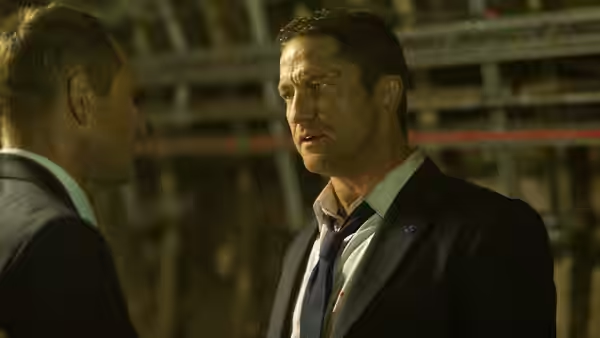
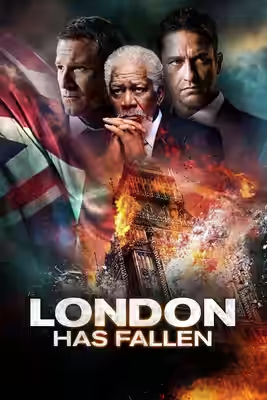
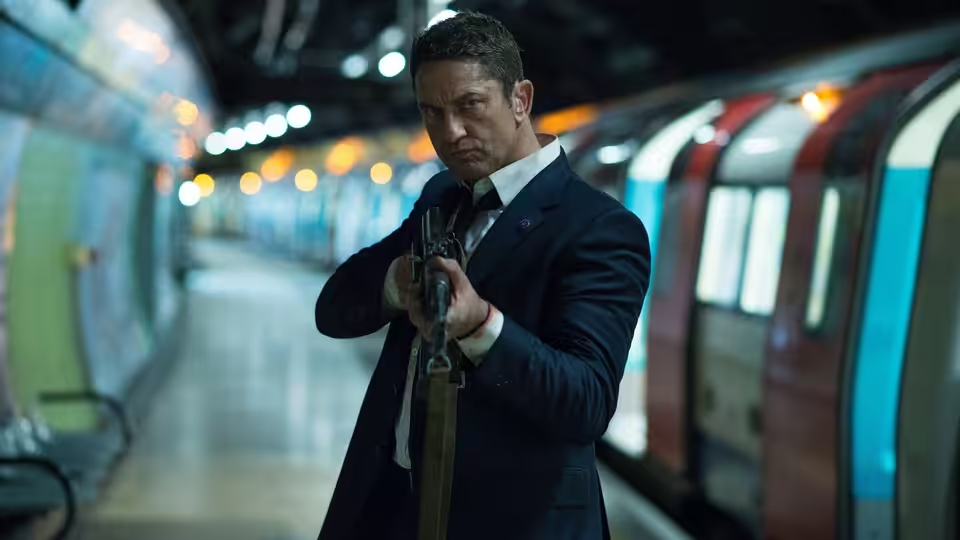
Mike Banning (Gerard Butler) aims a gun inside a brightly lit underground station
Film review

London Has Fallen

2016 · Directed by Babak Najafi · 1h 39m

In a sentenceLondon gets demolished so Gerard Butler can put in another shift

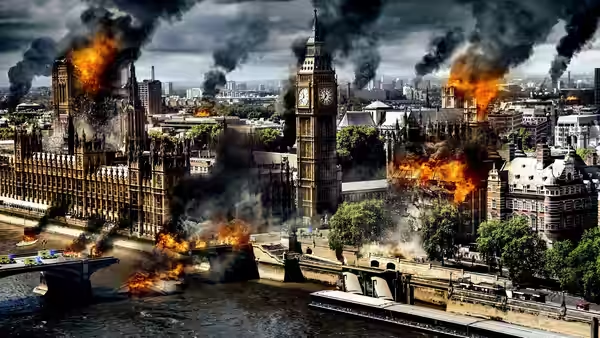
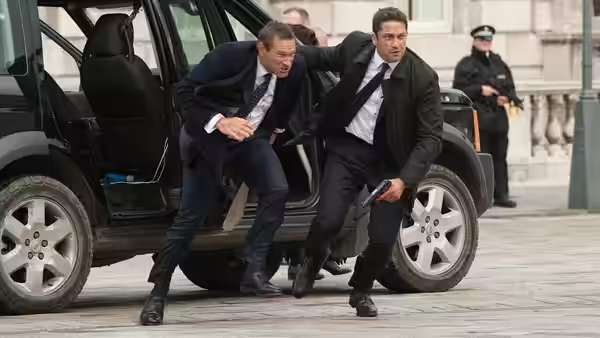
World leaders assemble in London, and their enemies gather to attack them. President Benjamin Asher (Aaron Eckhart) is among those in danger, with Mike Banning (Gerard Butler) trying to keep him alive. The other figures include Lynne Jacobs (Angela Bassett) and Alan Trumbull (Morgan Freeman). Attacks spread across the city, striking its landmarks and turning the gathering into a security disaster. Banning has to get Asher through a capital under assault, as a threat aimed at an international gathering becomes a struggle to protect one president.

Plays from YouTube when you press play; nothing loads from them until then.

Fi1m review

Gerard Butler works hard in a rescue thriller undone by ugly violence and flimsy digital destruction. Babak Najafi supplies pace, but the attacks on London become repetitive long before they become exciting.

London Has Fallen is a poor rescue thriller with enough physical energy to make its laziness frustrating. Babak Najafi aims for the simple pleasure of watching a capable man steer a president through catastrophe, and there is nothing wrong with that ambition. Gerard Butler supplies the necessary determination and some welcome humour. But the film treats mounting brutality as a reliable substitute for suspense, and London as a collection of things awaiting demolition.

The opening build-up has some tension, because the arrival of world leaders gives the attackers an unusually concentrated set of targets. The screenplay, credited to Creighton Rothenberger, Chad St. John, Katrin Benedikt and Christian Gudegast, makes that opening threat more interesting than the pursuit it sets off. Once the attacks begin, the sheer extent of the assault becomes hard to believe. The devastation also makes the script’s narrow concern for the president harder to accept.

Gerard Butler is the strongest reason to persist. He moves quickly and handles the fights with conviction, while his blunt delivery produces the occasional laugh. Aaron Eckhart is good company for him, though the film gives their companionship little room to develop. Angela Bassett and Morgan Freeman bring authority to supporting parts that give them little to work with. Their presence makes the thinness of the writing more conspicuous.

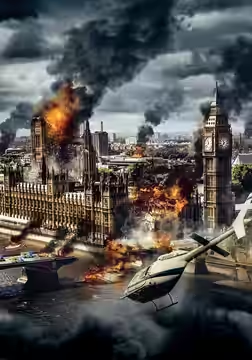
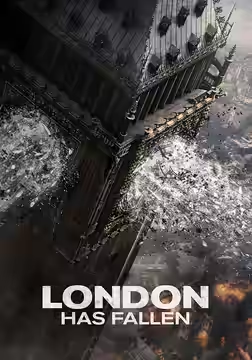
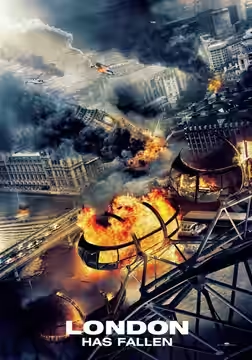
Ed Wild’s photography is at its most useful when the action stays close enough to read Gerard Butler’s physical work. The attacks on London’s landmarks offer much less convincing digital destruction, with little sense of weight or consequence. Joel Collins’s production design cannot establish much sense of a lived-in city beneath that barrage of effects. We were bored by the demolition, because each fresh burst of destruction seemed to remove something that had never looked solid in the first place.

Editors Michael J. Duthie and Paul Martin Smith do keep the picture moving, which matters at 99 minutes. The cuts deliver urgency more consistently than a clear sense of where anyone can go. Too often, movement alone is expected to keep us interested in the escape. Trevor Morris’s score adds further urgency, although it does little to vary the mood. There are passages where the rhythm briefly works and the fighting has force; they make the surrounding confusion harder to excuse.

An action thriller is allowed to be blunt, and moral complexity need not be a condition of a good chase. Here, however, Banning’s violence is offered with a relish that makes the thin characterisation matter. The attackers are scarcely characterised, while the devastation around the president rarely broadens the film’s concern. The violence leaves little room for the relief or humour that might make this an enjoyable escape.

Against the basic standards of the rescue thriller, the film makes too little of escape, uncertainty and the effort of keeping another person alive. It repeatedly offers a larger attack where a more difficult choice might have helped. There is enough commitment in Gerard Butler’s performance to understand the appeal, but too little around him to reward it. Choose it only if relentless aggression is the attraction; for suspense, look elsewhere.

Critical consensus AI synthesised

41
Positive
2
Mixed
7
Negative
13

Most critics find London Has Fallen a poor sequel, with objections extending beyond its implausible plotting to its politics and appetite for violence. Gerard Butler’s physical commitment is a recurring point of praise, even in reviews that dislike the material he serves. Some critics also credit Babak Najafi with keeping the chases and fights moving briskly, though there is little agreement that speed makes up for thin characterisation or familiar plotting.

The sharpest reservations concern xenophobia, flag-waving and gleeful brutality, alongside cheap-looking digital effects. The spread is wide, and the action itself divides opinion: some find it forceful, others incoherent or dull. IndieWire offers a favourable dissent, praising the precision of the mayhem and a prolonged single-take street sequence. The Evening Standard likewise enjoys the chases and landmark destruction despite the silliness. For most critics, those pleasures are insufficient to excuse the repetition and simplistic politics.

Evening Standard
4 March 2016 · David Sexton
70*

Sexton finds the sequel a zestful, briskly made action film, despite its silliness and inauthenticity. He praises its exciting chases and fights, along with its gleeful destruction of London landmarks.

Read the full review →
IndieWire
2 March 2016 · B- · Nick Schager
70

Schager calls it a brash, brutal, simplistic throwback that delivers its mayhem with punishing precision. He praises the visceral staging of the action, especially a prolonged single-take street sequence.

Read the full review →
The Hollywood Reporter
2 March 2016 · Todd McCarthy
65*

McCarthy finds the film an effective, fast-moving action sequel that gets the job done. He praises Babak Najafi’s hard-driving pace and tone, while noting that the visual effects are merely adequate.

Read the full review →
RogerEbert.com
64*

The page is blocked, so the critic’s verdict cannot be determined. No specific praise or complaint can be verified from the supplied content.

Read the full review →
Screen Daily
2 March 2016 · Fionnuala Halligan
64*

The page identifies this as Screen Daily’s review, but its verdict is unavailable in the accessible text. No specific element of the film is available to report as praised or criticized.

Read the full review →
The New York Times
64*

The supplied page does not reveal the critic’s verdict. It provides no readable review text from which to identify what the critic praised or criticized.

Read the full review →

Straight answers AI written, from our review

Is London Has Fallen worth watching?
London Has Fallen is a poor rescue thriller we score 38/100, with little to recommend beyond Gerard Butler’s physical commitment and occasional humour. It may suit viewers who want relentless aggression, but we find the repetitive destruction, unconvincing effects and thin characterisation leave too little suspense to make the escape exciting.
How long is London Has Fallen, and what is it rated?
London Has Fallen runs 1h 39m. It is an action and adventure film.
Where can I watch London Has Fallen in Panama?
London Has Fallen is available to rent from Apple TV from PAB 3.99. Availability is checked daily; the links above go straight to each service.
How violent or frightening is London Has Fallen, and is it suitable for children?
London Has Fallen carries a UK 15 certificate and is unsuitable for children, with brutal fighting and widespread attacks on a city. We find its relish for violence more oppressive than exciting, while repeated destruction leaves little room for humour or relief. It is a poor choice for squeamish viewers, including teenagers uncomfortable with sustained aggression.
How does London Has Fallen compare to Die Hard?
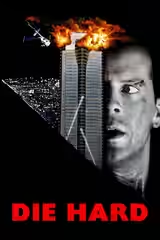
London Has Fallen is a weaker rescue thriller than Die Hard, which we recommend for its clear staging, vulnerable hero and balance of tension and humour. The confined action in Die Hard makes geography and injuries matter; London Has Fallen spreads destruction across a capital but struggles to make the escape convincing, despite Gerard Butler’s effort.
What should I watch after London Has Fallen?
After London Has Fallen, try Die Hard (1988, Fi1m 89): A confined rescue thriller that makes its geography, injuries and jokes count. Then The Raid (2011, Fi1m 83): Relentless close combat, with clear spatial stakes and formidable physical commitment; and Victoria (2015, Fi1m 76): City streets and sustained physical movement create tension without demolishing the neighbourhood.

Cast

If you liked this, try…

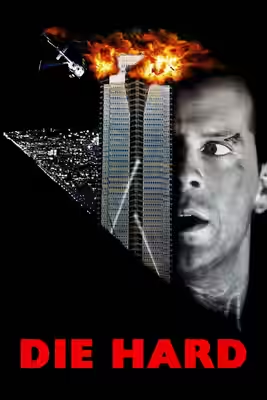
  1. Die Hard (1988, Fi1m 89)A confined rescue thriller that makes its geography, injuries and jokes count.

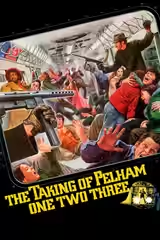
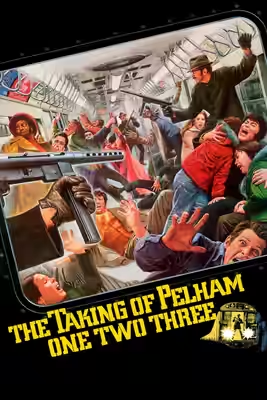
  2. The Taking of Pelham One Two Three (1974) · not reviewed yetDry humour and clear stakes give a threatened city some actual inhabitants.

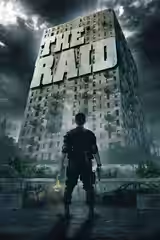
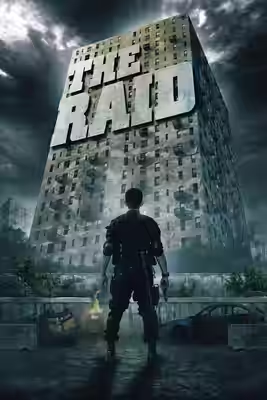
  3. The Raid (2011, Fi1m 83)Relentless close combat, with clear spatial stakes and formidable physical commitment.

  4. Sleepless Night (2011) · not reviewed yetA rescue under pressure, with cramped spaces doing the work of spectacle.

  5. Victoria (2015, Fi1m 76)City streets and sustained physical movement create tension without demolishing the neighbourhood.

Free account

Know what to watch tonight

Two lists that know where things are streaming, collections you can share, your own score beside ours, and Discover that remembers what you have seen.

  • Want to see, sorted by what is streaming now
  • Seen, with your score out of ten
  • No adverts, ever