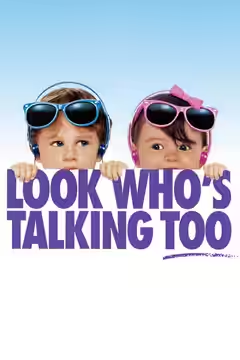
John Travolta brings some warmth to a thin sequel whose extra baby voices wear out a small joke. Amy Heckerling’s comedy has a few amiable moments, but the toilet humour and weak story overwhelm them.
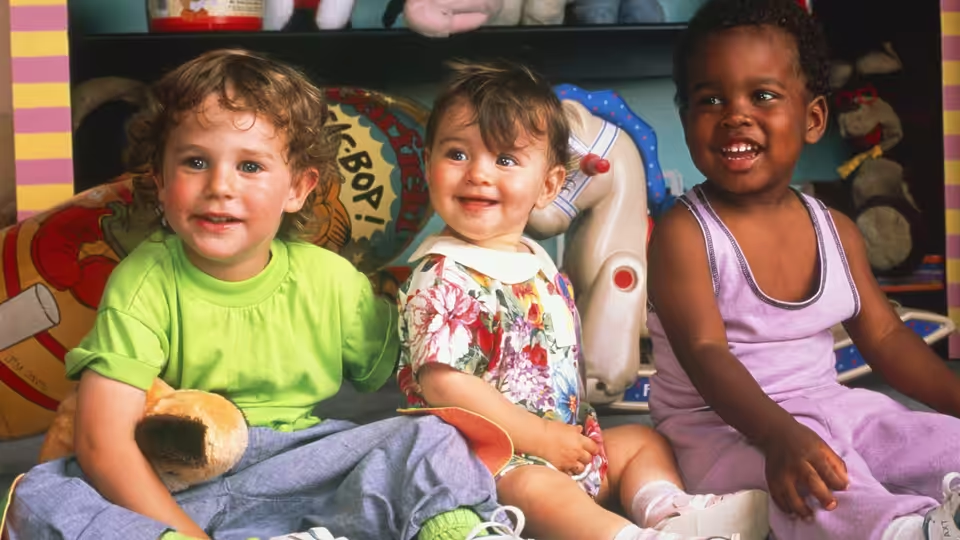
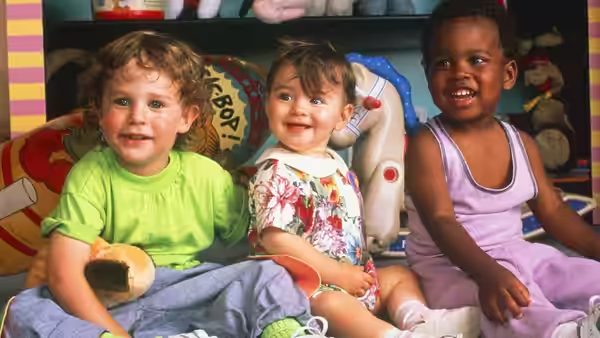
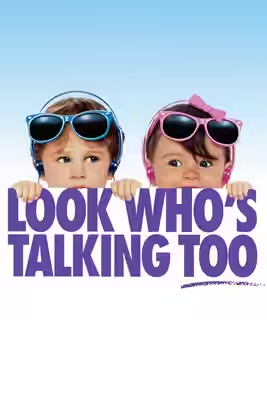
Amy Heckerling’s Look Who’s Talking Too adds a sister to Mikey’s life and another adult voice to the cast, hoping sibling rivalry will keep the talking-baby joke going. It is a poor sequel, short of a story and much too dependent on familiar people saying unsuitable things through small children. There is a workable comedy in a child discovering that the family’s attention is no longer his alone. Heckerling and co-writer Neal Israel keep interrupting it to deliver another remark.
Bruce Willis supplies Mikey’s voice with enough casual ease to make some of the material sound better than it is. Roseanne Barr, voicing Julie, brings a sharper impatience, but the contrast soon becomes wearing because both children seem so ready with a response. The pleasure ought to come from recognising a baby’s bewilderment in words the baby could never manage. Too often we are simply waiting for the next adult wisecrack.
The toilet humour makes that problem harder to ignore. Mel Brooks is credited as the voice of Mr. Toilet Man, which gives a fair indication of how much comic mileage the film expects from bodily functions. We became bored by the repeated baby commentary, because the voices kept explaining reactions that were already plain enough. Heckerling and Israel rarely let a childish difficulty develop without making certain that someone has supplied the joke for it.
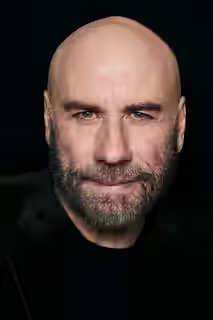
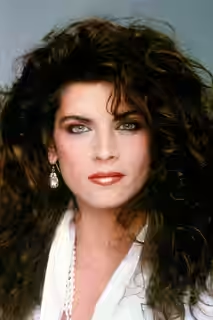
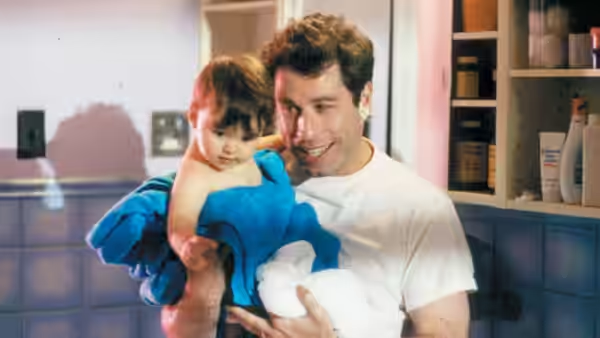
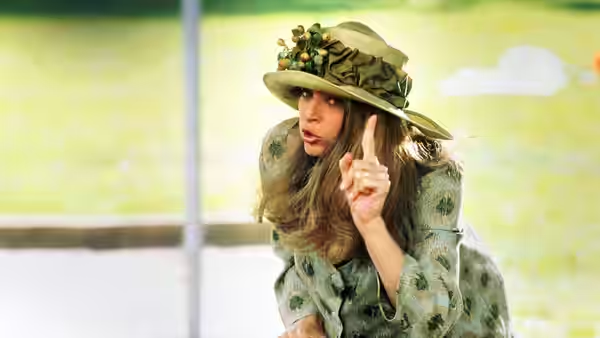
John Travolta and Kirstie Alley, as James and Mollie, give the film some much-needed human warmth. Travolta’s playgroup dance is an agreeable reminder of how much comedy can come from letting a performer move. We smiled at his willingness to look silly; the scene briefly relieves the dependence on wisecracks. Alley is an easy presence alongside him, though neither actor can make the scattered sketches add up to much.
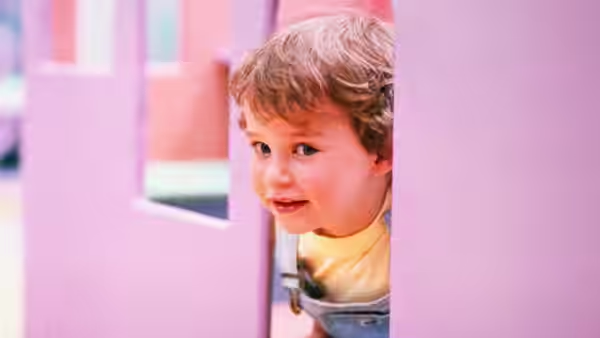
Thomas Del Ruth’s photography has to compete with dialogue that keeps deciding what the children mean before we can make much of their expressions. The images seldom get to carry a joke unaided, and that leaves the film looking more ordinary than its premise suggests. Reuben Freed’s production design is similarly easy to overlook beneath the commentary. The children’s surroundings offer little comic interest of their own, so another useful way of varying the humour goes largely unused.
Debra Chiate’s editing keeps the individual exchanges moving, but cannot give the sequence of sketches much momentum. At 81 minutes, the film has little excuse for feeling stretched, yet the repetitions make us conscious of how little is changing between jokes. David Kitay’s score does not make those exchanges feel any lighter; the voices already leave scant room for the music to help. The film keeps trying to rouse a laugh when it needs to spend longer setting one up.
A family comedy can get a long way with affection for its adults and curiosity about its children, and there are traces of both here. They are regularly crowded out by the need to give the babies another line, until even their squabbling feels like an obligation. Consider it for Travolta if his easy company is enough; do not expect the new arrival to freshen the routine.