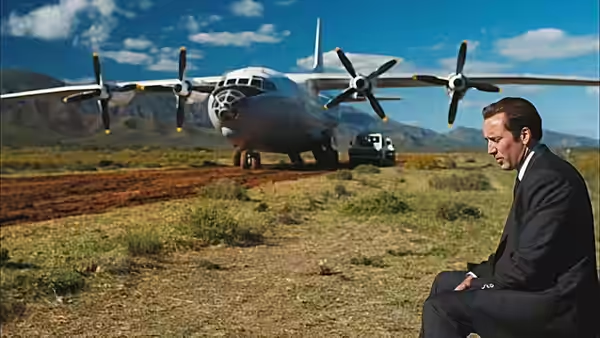
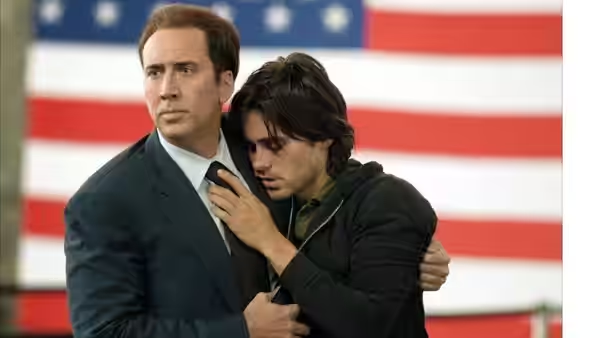
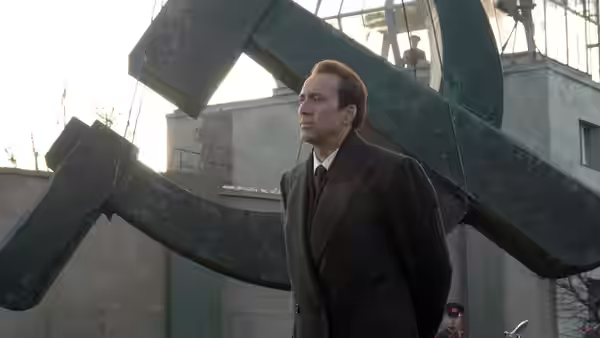
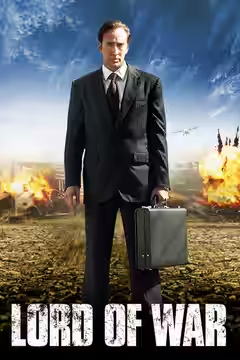
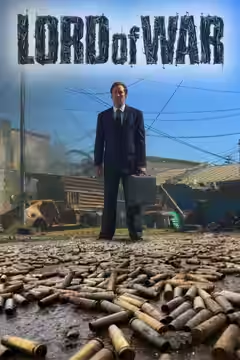
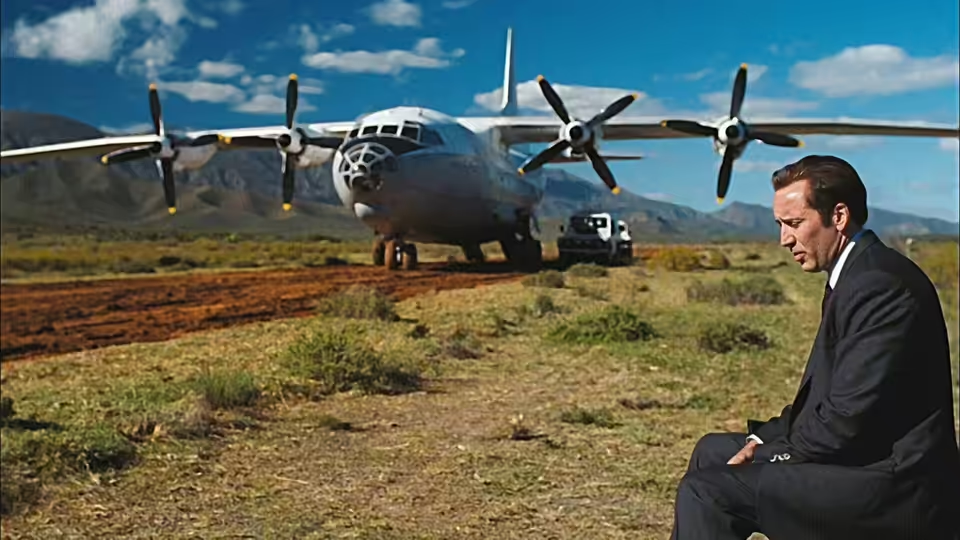
Yuri Orlov (Nicolas Cage) sits in a field beside a military transport plane
Film review

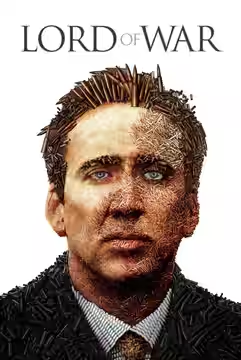
Lord of War

2005 · Directed by Andrew Niccol · 2h 02m · Kijkwijzer 16

In a sentenceNicolas Cage could sell a weapon and make the receipt sound like an alibi

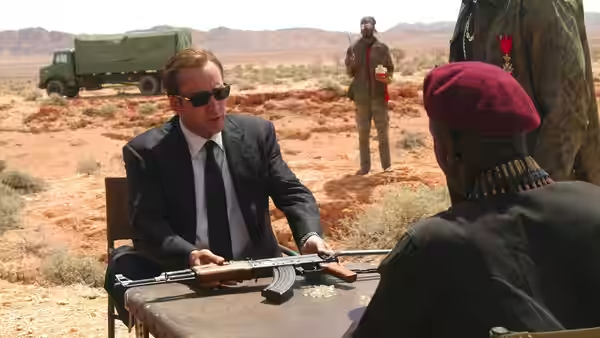
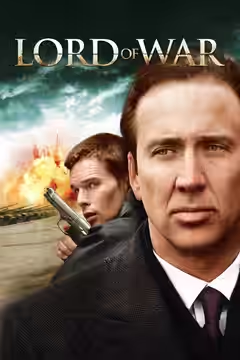
A bullet travels from manufacture to its victim. Yuri Orlov (Nicolas Cage) makes his living selling weapons, pursuing profit in the international arms trade. The people around him include Vitaly Orlov (Jared Leto), Ava Fontaine Orlov (Bridget Moynahan) and Jack Valentine (Ethan Hawke). Yuri wants the rewards of the business without taking responsibility for what his customers do with their purchases. His dealings belong to a larger trade in which powerful countries are also implicated, and the consequences of a sale reach people who never had a say in it.

Fi1m review

Andrew Niccol’s arms-trade satire has a bracing opening and a persuasive salesman in Nicolas Cage. Its humour keeps us interested, but the thin characters and laboured storytelling limit how strongly it makes its case.

Lord of War is a sharp, uneven black comedy, worth considering for Nicolas Cage rather than for its crime story. Andrew Niccol, who writes and directs, wants us to enjoy the company of an arms dealer long enough to notice how readily we accept his excuses. Cage makes Yuri Orlov watchable even when the screenplay gives him little more to do than explain his business. The problem is that the explanations keep coming after we have understood what sort of man he is.

The opening follows a bullet from manufacture to its victim. We were horrified by it, because we have been encouraged to follow the bullet as a product before being confronted with the person it reaches. Zach Staenberg’s editing makes the distance between production and harm seem short, and the sequence makes its point with a directness the dialogue seldom matches. That is a difficult standard for the rest of the film to meet, and Niccol keeps trying to improve on it with more information.

Cage’s persuasive ease is the film’s most reliable pleasure. Yuri can be amusing without becoming someone we admire, and the performance allows us to understand the appeal of a man whose work ought to repel us. Niccol does not have to make him likeable, but he does need to find something beyond the self-interest established at the outset. Too often Yuri seems to have been retained to present the research, with his character left much where we first found it.

The supporting work from Jared Leto as Vitaly Orlov and Bridget Moynahan as Ava Fontaine Orlov is welcome, but neither character makes Yuri much more interesting. Ethan Hawke gives Jack Valentine useful firmness, though the film remains organised almost entirely around its leading man’s appeal. Each encounter seems to arrive with a point to make about Yuri, leaving too little room for anyone else to surprise us. The international reach of the story cannot disguise how narrowly it draws these people.

Amir Mokri’s cinematography gives the business an attractive polish, and the danger of enjoying the images is part of the film’s appeal. Jean-Vincent Puzos’s production design reinforces that gloss, though Niccol sometimes seems too pleased with how good the whole enterprise looks. Antonio Pinto’s music leaves less of an impression; it cannot provide the emotional involvement missing from the thinner dramatic passages. The second half is less involving, however briskly Staenberg tries to move it along.

The film is on firmer ground when it points to the complicity of powerful countries in the arms trade. That gives its anger somewhere useful to go beyond one man’s conduct, although the insistence with which Niccol presses the case can become tiring. A crime satire is allowed to make a crook entertaining; the more serious weakness here is how often we are told what to think after the images have already done the job. Choose it for Cage and the uncomfortable humour if the subject interests you, but expect the lecture too.

Critical consensus AI synthesised

57
Positive
4
Mixed
6
Negative
4

The reviews are mixed, with praise clustering around Nicolas Cage’s morally unsettling performance, the inventive opening credits and the film’s willingness to confront the arms trade. The sequence following a bullet from manufacture to destination draws approval even from critics who find the rest less persuasive. Supporters see a pointed, entertaining black comedy, while several less enthusiastic reviews still credit its visual flair and disturbing detail about the weapons business.

The divide is wide over whether that forcefulness makes for convincing drama. Reservations centre on uneven tone, an overloaded story and a central character whose appeal can undermine the condemnation of his trade. The AV Club regards the film’s account of powerful countries’ complicity as clear-eyed and forceful; Slant Magazine sees hypocrisy in its treatment of Yuri. The Independent’s objections extend to the portrayal of Africa, which it finds stereotyped and opportunistic.

The AV Club
14 September 2005 · Keith Phipps
90*

Phipps finds the film a bracing, forceful political entertainment that leaves a lasting impression. He especially praises its opening credits and its clear-eyed argument about the complicity of powerful countries in the arms trade.

Read the full review →
Total Film
14 October 2005 · ★★★★ · Total Film
80

The review calls the film a compelling, rewatchable blend of purpose and plot, despite a slightly less exciting second half. It particularly praises Nicolas Cage’s charismatic, morally unsettling performance as Yuri Orlov.

Read the full review →
The New York Times
16 September 2005 · A.O. Scott
70*

The critic treats the film as an entertaining, pointed satire of the arms trade. He singles out its sharp satirical premise, while finding its execution less fully successful.

Read the full review →
Time Out
11 October 2005 · CT
65*

The available text gives a positive impression of the film’s opening, but does not reveal the review’s overall verdict. It singles out the sensational sequence tracing a bullet’s journey from factory to destination.

Read the full review →
Screen Daily
20 September 2005 · Brent Simon
64*

The page identifies this as a review, but its text is unavailable here. The critic’s verdict and any specifically praised or criticized element cannot be determined.

Read the full review →
Radio Times
★★★ · Sloan Freer
60

The review calls the film a sleek, confrontational black comedy that takes a cynical swipe at the arms trade. It praises the film’s precise execution and its forceful condemnation of those who profit from weapons.

Read the full review →

Straight answers AI written, from our review

Is Lord of War worth watching?
Lord of War is worth considering for Nicolas Cage’s persuasive arms dealer and its uncomfortable humour; we score it 65 out of 100. We recommend it to viewers interested in arms-trade satire, with reservations about thin supporting characters and a screenplay that keeps explaining what its images have already made clear.
How long is Lord of War, and what is it rated?
Lord of War runs 2h 02m and is rated 16 by the Kijkwijzer in Belgium. It is a crime and drama film.
Where can I watch Lord of War in Belgium?
Lord of War is not on any streaming or rental service in Belgium at the moment. It is available in 14 other countries; change your country at the top of the page to see where. Availability is checked daily.
How violent or frightening is Lord of War, and is it suitable for children?
Lord of War has a UK 15 certificate and is not suitable for children under 15; its opening follows a bullet from manufacture to its victim. We found that sequence horrifying because it turns an apparently impersonal manufacturing process into human harm, so squeamish viewers should approach with care despite the film’s black humour.
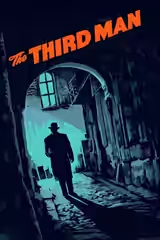
How does Lord of War compare to The Third Man?
Lord of War is the more laboured crime satire; we recommend The Third Man as the more gripping account of compromised people and profitable harm. Cage’s persuasive salesman gives Lord of War its uncomfortable humour, but its repeated explanations limit the drama, while The Third Man offers a mystery with a central character we find easier to care about.
What should I watch after Lord of War?
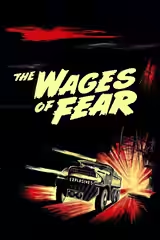
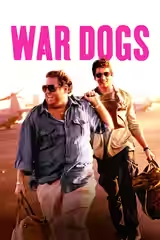
After Lord of War, try The Third Man (1949, Fi1m 92): For another sharply written account of compromised lives and profitable misery. Then The Wages of Fear (1953, Fi1m 90): Dangerous work and disposable lives, with the suspense this film sometimes lacks; and War Dogs (2016, Fi1m 55): Another arms-dealing business venture, with youthful bravado adding to the moral queasiness.

Cast

If you liked this, try…

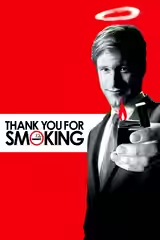
  1. Thank You for Smoking (2005) · not on Fi1m yetAnother fluent salesman explains away the damage, with sharper comic timing.

  2. The Third Man (1949, Fi1m 92)For another sharply written account of compromised lives and profitable misery.

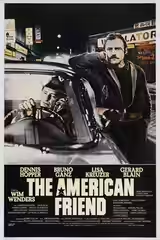
  3. The American Friend (1977) · not on Fi1m yetFor murkier criminal dealings, divided loyalties and a less comfortable friendship.

  4. The Wages of Fear (1953, Fi1m 90)Dangerous work and disposable lives, with the suspense this film sometimes lacks.

  5. War Dogs (2016, Fi1m 55)Another arms-dealing business venture, with youthful bravado adding to the moral queasiness.