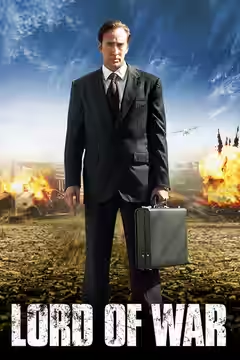
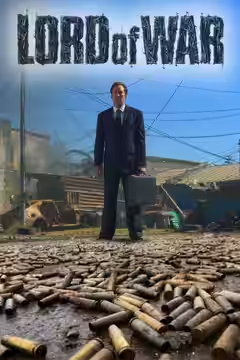
Andrew Niccol’s arms-trade satire has a bracing opening and a persuasive salesman in Nicolas Cage. Its humour keeps us interested, but the thin characters and laboured storytelling limit how strongly it makes its case.
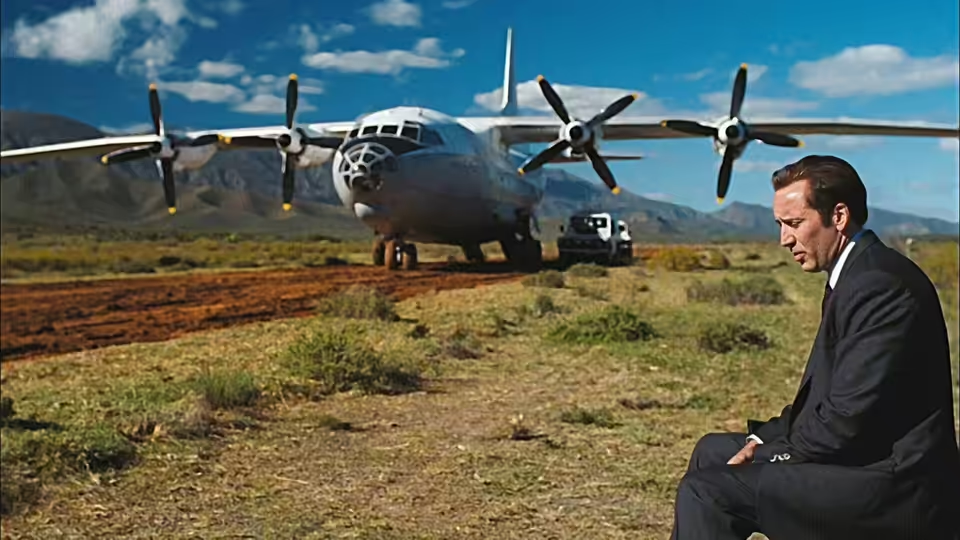
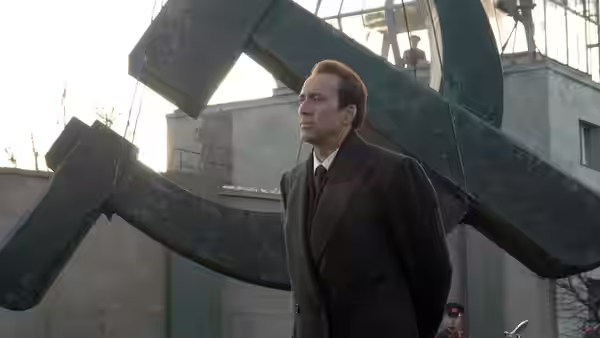
Lord of War is a sharp, uneven black comedy, worth considering for Nicolas Cage rather than for its crime story. Andrew Niccol, who writes and directs, wants us to enjoy the company of an arms dealer long enough to notice how readily we accept his excuses. Cage makes Yuri Orlov watchable even when the screenplay gives him little more to do than explain his business. The problem is that the explanations keep coming after we have understood what sort of man he is.
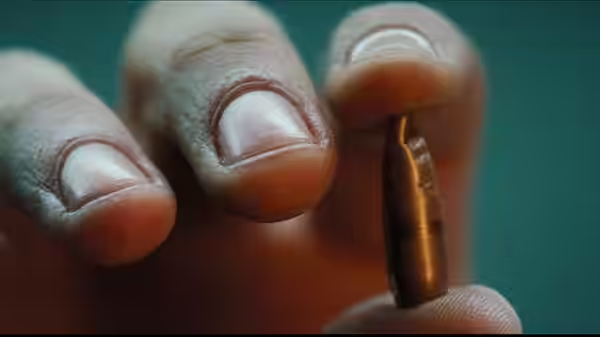
The opening follows a bullet from manufacture to its victim. We were horrified by it, because we have been encouraged to follow the bullet as a product before being confronted with the person it reaches. Zach Staenberg’s editing makes the distance between production and harm seem short, and the sequence makes its point with a directness the dialogue seldom matches. That is a difficult standard for the rest of the film to meet, and Niccol keeps trying to improve on it with more information.
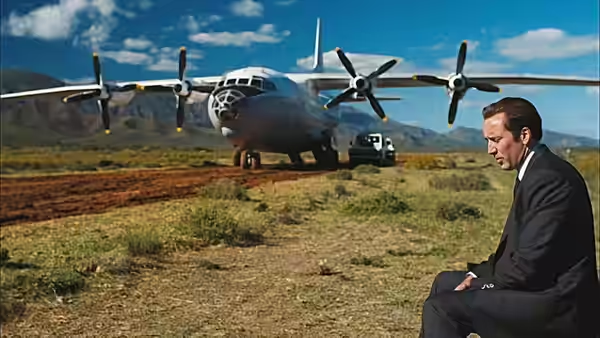
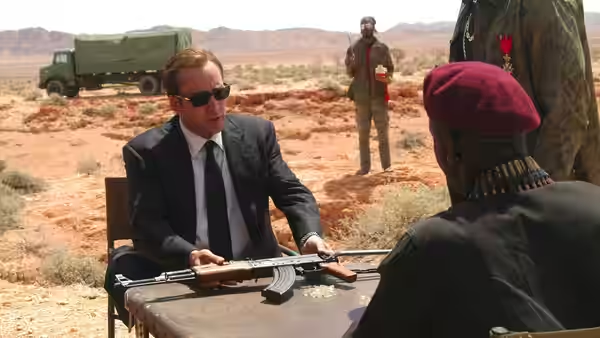
Cage’s persuasive ease is the film’s most reliable pleasure. Yuri can be amusing without becoming someone we admire, and the performance allows us to understand the appeal of a man whose work ought to repel us. Niccol does not have to make him likeable, but he does need to find something beyond the self-interest established at the outset. Too often Yuri seems to have been retained to present the research, with his character left much where we first found it.
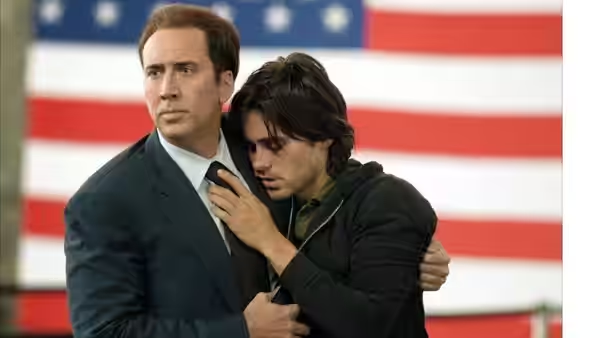
The supporting work from Jared Leto as Vitaly Orlov and Bridget Moynahan as Ava Fontaine Orlov is welcome, but neither character makes Yuri much more interesting. Ethan Hawke gives Jack Valentine useful firmness, though the film remains organised almost entirely around its leading man’s appeal. Each encounter seems to arrive with a point to make about Yuri, leaving too little room for anyone else to surprise us. The international reach of the story cannot disguise how narrowly it draws these people.
Amir Mokri’s cinematography gives the business an attractive polish, and the danger of enjoying the images is part of the film’s appeal. Jean-Vincent Puzos’s production design reinforces that gloss, though Niccol sometimes seems too pleased with how good the whole enterprise looks. Antonio Pinto’s music leaves less of an impression; it cannot provide the emotional involvement missing from the thinner dramatic passages. The second half is less involving, however briskly Staenberg tries to move it along.
The film is on firmer ground when it points to the complicity of powerful countries in the arms trade. That gives its anger somewhere useful to go beyond one man’s conduct, although the insistence with which Niccol presses the case can become tiring. A crime satire is allowed to make a crook entertaining; the more serious weakness here is how often we are told what to think after the images have already done the job. Choose it for Cage and the uncomfortable humour if the subject interests you, but expect the lecture too.