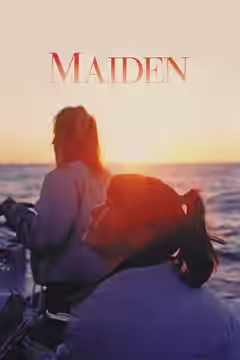
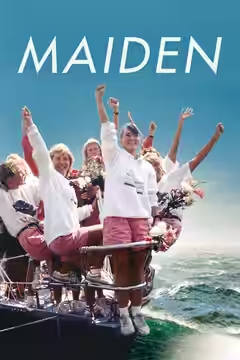
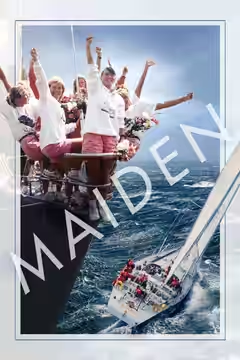
Alex Holmes makes a gripping sailing documentary from candid interviews and the crew’s own footage. The rush through their lives leaves questions unanswered, but the women’s skill and stubbornness give the familiar underdog story its force.
Maiden is a gripping documentary whose strongest material is the sailing, with enough character in its interviews to make the familiar underdog story matter. Alex Holmes follows Tracy Edwards and the women who face resistance to their participation before they can get on with competing. The sexism gives the film an obvious subject, but Holmes is sensible enough to leave plenty of space for the crew’s work. We do not need to know much about sailing to understand what is being demanded of them.
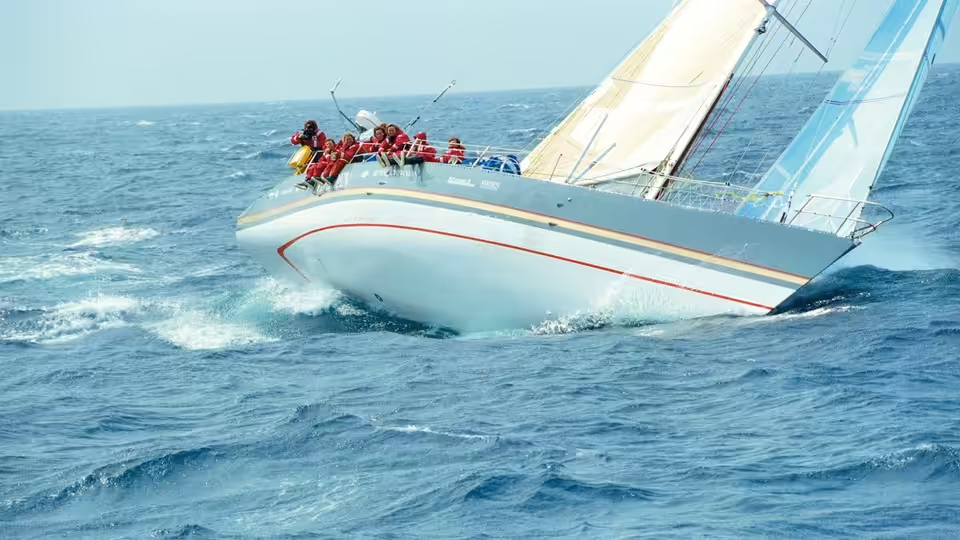
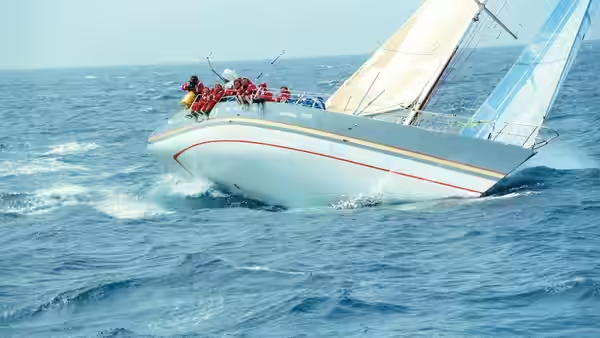
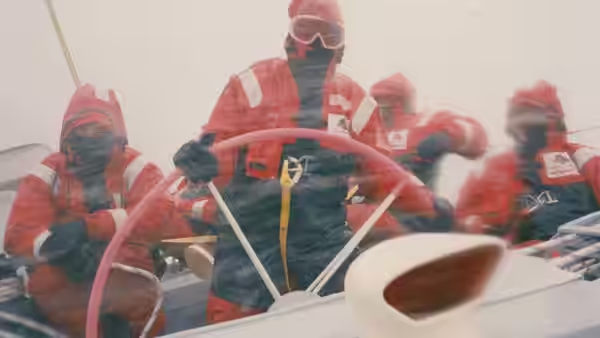
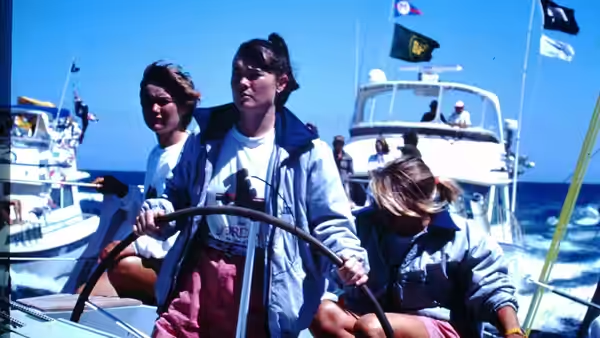
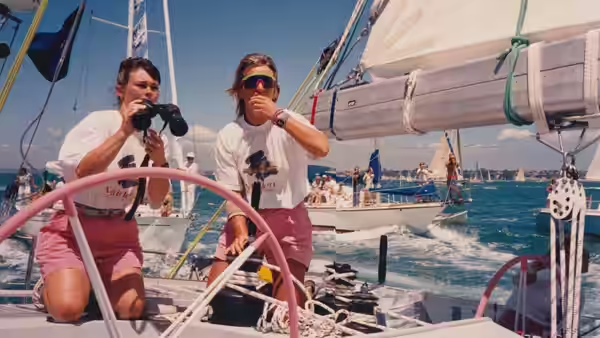
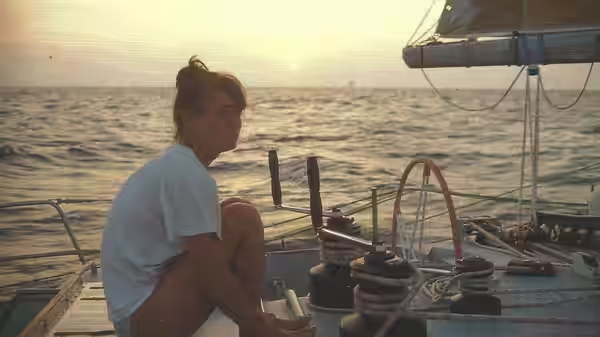
The archive is the reason to see it. The crew’s own footage brings us aboard without the reassuring distance of an interview recorded after the event, and the danger does not need much explaining. We were frightened watching it, because the women recording these images are also the women at risk. Holmes lets that material carry the excitement, rather than relying entirely on people telling us how exciting it was.
Katie Bryer’s editing makes the race intelligible and urgent without requiring a separate enthusiasm for boats. Her movement between recollection and archive keeps the people speaking connected to the people doing the sailing, so the interviews seldom feel like an interruption. There is a cost to that speed, which becomes clearer when we want to know more about individual crew members. Moment by moment, though, the film has a sure sense of what will hold our attention.
Edwards is good company because the film does not insist on making her exemplary. Her candour, and the space Holmes allows for her flaws, give us someone more interesting than a figurehead for an achievement. Jo Gooding and Angela Heath appear as themselves among the contributors, and the wider crew brings an appealing directness to the recollections. Their willingness to speak plainly helps the interviews avoid the respectful dullness that can settle over accounts of remarkable people.
Chris Openshaw is credited with the cinematography, though it is the crew’s own footage that gives the film its strongest images. The interviews serve their purpose without competing with the archive for attention. Samuel Sim and Rob Manning’s music does its job, although the race supplies enough tension without much assistance from the score. We would happily have had less musical encouragement during a story whose difficulties are already clear.
The substantial reservation is how little we learn about some of those sailors. Edwards’s sailing expertise needs more explanation, and the crew’s separate roles and relationships receive less attention than the scale of their undertaking warrants. At 93 minutes, the film is admirably unwilling to dawdle, but a little more time spent establishing who does what would have made the teamwork more rewarding to watch. Several of the women deserve room to become as distinct to us as Edwards.
That limitation is familiar in sporting documentaries organised around a competition: the race keeps taking precedence over the people. Holmes gets away with it much of the time because the women are such candid participants, and because Bryer keeps their recollections closely connected to the archive. No interest in sailing is required, though some tolerance for unanswered biographical questions will help. Watch it for the crew, even if the film leaves a few of them deserving a longer conversation.