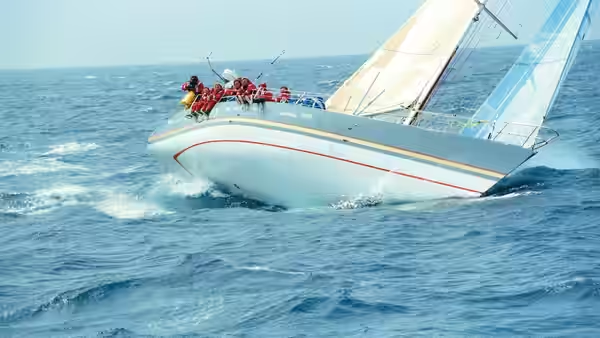
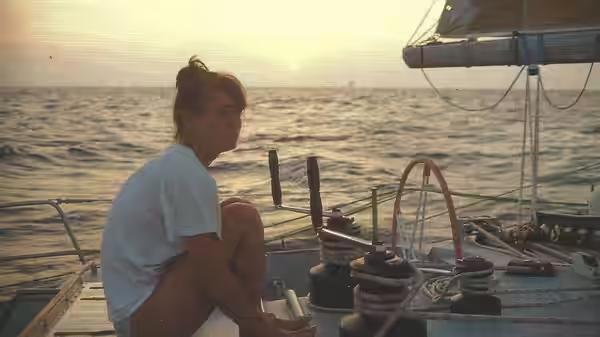
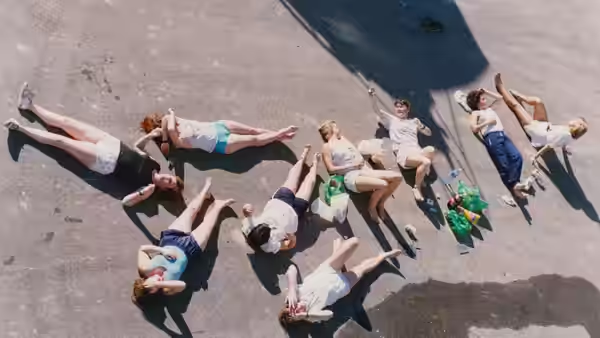
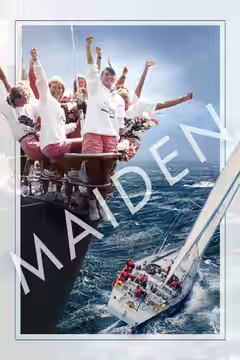
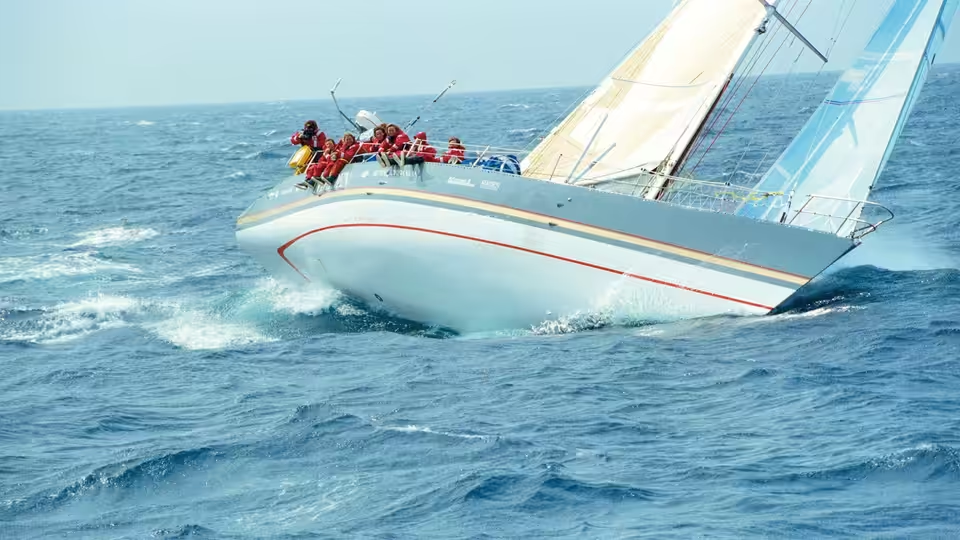
A crew of sailors leans over a yacht’s rail as it cuts through choppy water
Film review

Maiden

2019 · Directed by Alex Holmes · 1h 33m

In a sentenceThe women have a race to sail and a tiresome number of men to persuade

Tracy Edwards, Jo Gooding and Angela Heath appear as themselves in an account of a women’s sailing crew preparing to race at sea. Edwards sets about assembling the sailors and finding sponsorship, while confronting the assumption that women do not belong in the competition. Interviews and archive footage follow the work behind the venture and the sexism surrounding it. The crew’s own recordings bring life aboard into view, alongside the women’s recollections of what the undertaking demands. Edwards wants her crew taken seriously as competitors; getting the people and support together is the first task.

Plays from YouTube when you press play; nothing loads from them until then.

Fi1m review

Alex Holmes makes a gripping sailing documentary from candid interviews and the crew’s own footage. The rush through their lives leaves questions unanswered, but the women’s skill and stubbornness give the familiar underdog story its force.

Maiden is a gripping documentary whose strongest material is the sailing, with enough character in its interviews to make the familiar underdog story matter. Alex Holmes follows Tracy Edwards and the women who face resistance to their participation before they can get on with competing. The sexism gives the film an obvious subject, but Holmes is sensible enough to leave plenty of space for the crew’s work. We do not need to know much about sailing to understand what is being demanded of them.

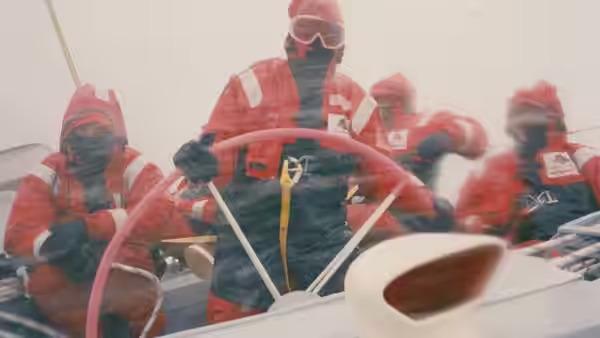
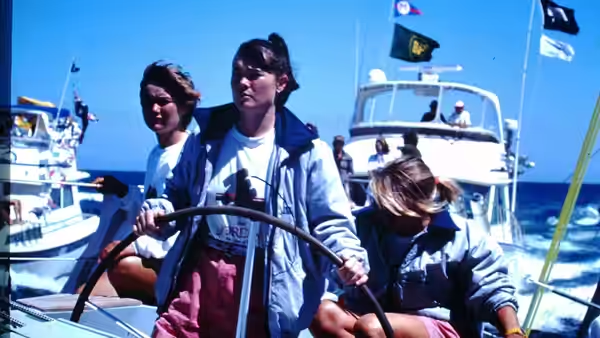
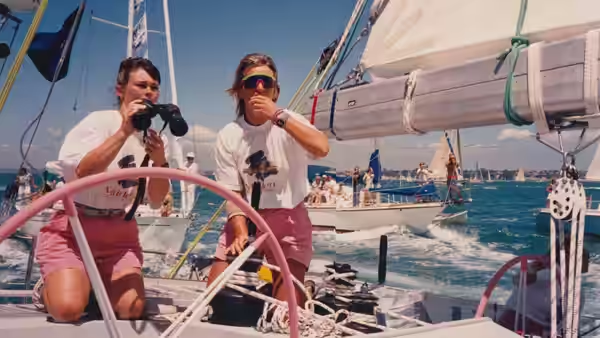
The archive is the reason to see it. The crew’s own footage brings us aboard without the reassuring distance of an interview recorded after the event, and the danger does not need much explaining. We were frightened watching it, because the women recording these images are also the women at risk. Holmes lets that material carry the excitement, rather than relying entirely on people telling us how exciting it was.

Katie Bryer’s editing makes the race intelligible and urgent without requiring a separate enthusiasm for boats. Her movement between recollection and archive keeps the people speaking connected to the people doing the sailing, so the interviews seldom feel like an interruption. There is a cost to that speed, which becomes clearer when we want to know more about individual crew members. Moment by moment, though, the film has a sure sense of what will hold our attention.

Edwards is good company because the film does not insist on making her exemplary. Her candour, and the space Holmes allows for her flaws, give us someone more interesting than a figurehead for an achievement. Jo Gooding and Angela Heath appear as themselves among the contributors, and the wider crew brings an appealing directness to the recollections. Their willingness to speak plainly helps the interviews avoid the respectful dullness that can settle over accounts of remarkable people.

Chris Openshaw is credited with the cinematography, though it is the crew’s own footage that gives the film its strongest images. The interviews serve their purpose without competing with the archive for attention. Samuel Sim and Rob Manning’s music does its job, although the race supplies enough tension without much assistance from the score. We would happily have had less musical encouragement during a story whose difficulties are already clear.

The substantial reservation is how little we learn about some of those sailors. Edwards’s sailing expertise needs more explanation, and the crew’s separate roles and relationships receive less attention than the scale of their undertaking warrants. At 93 minutes, the film is admirably unwilling to dawdle, but a little more time spent establishing who does what would have made the teamwork more rewarding to watch. Several of the women deserve room to become as distinct to us as Edwards.

That limitation is familiar in sporting documentaries organised around a competition: the race keeps taking precedence over the people. Holmes gets away with it much of the time because the women are such candid participants, and because Bryer keeps their recollections closely connected to the archive. No interest in sailing is required, though some tolerance for unanswered biographical questions will help. Watch it for the crew, even if the film leaves a few of them deserving a longer conversation.
Critical consensus AI synthesised

78
Positive
12
Mixed
2
Negative
0

Most critics find Maiden an absorbing, stirring documentary whose appeal extends beyond sailing enthusiasts. Praise centres on the archival footage, particularly the crew’s own material, which gives the race an immediacy and danger that the editing sustains. The candid interviews also draw consistent approval, bringing out the women’s personalities and the effort behind their achievement. The reviews generally welcome the way the film connects the voyage’s practical challenges with the sexism the sailors face.

Reservations concern what the brisk storytelling leaves unexplored, rather than its ability to hold attention. Several critics want more biographical context for Tracy Edwards or fuller accounts of the crew. Slant Magazine offers the clearest dissent, finding an inspiring story frustratingly simplistic and short on camaraderie. The Guardian wants greater clarity about Edwards’s views on feminism. The spread is largely positive, with disagreement over how much the omissions matter.

Empire
7 March 2019 · David Parkinson
90*

The review praises the documentary as an inspiring and riveting account of a remarkable achievement. It singles out the precision and potency of the archival footage and editing.

Read the full review →
Los Angeles Times
27 June 2019 · Kenneth Turan
88*

Turan calls the documentary a heartening, thrilling story of grit and determination. He particularly praises its assembled archival footage and candid interviews with the skipper and crew.

Read the full review →
The Hollywood Reporter
21 January 2019 · Caryn James
85*

James finds the documentary gripping, suspenseful and socially resonant, calling it a rousing feminist adventure. She especially praises the crew’s firsthand footage of the dangerous race, while noting that the film leaves gaps about Edwards’s sailing expertise and the crew’s later lives.

Read the full review →
Variety
21 September 2018 · festival review · Dennis Harvey
85*

Harvey finds the documentary exciting and inspiring, with enough human drama to engage viewers beyond sailing fans. He especially praises the vivid archival footage and the suspenseful pacing of the onboard material.

Read the full review →
Little White Lies
8 March 2019 · 3/4/3 · Josh Slater-Williams
80

The review finds the documentary exciting and inspiring, though its breakneck pace leaves gaps in biographical context. It praises the evocative archive footage and lively editing, which make the voyage compelling moment to moment.

Read the full review →
Time Out
8 March 2019 · ★★★★ · Phil de Semlyen
80

The review finds the documentary inspiring and deftly balanced. It praises how the film pairs the crew’s adventure with the sexism they faced.

Read the full review →

Straight answers AI written, from our review

Is Maiden worth watching?
Maiden is worth watching for its gripping sailing footage and candid interviews, and we score it 80 out of 100. We recommend it even without an interest in boats: the crew’s skill and stubbornness hold our attention, though the brisk account leaves several sailors’ lives and relationships underexplored.
How long is Maiden, and what is it rated?
Maiden runs 1h 33m. It is a documentary film.
Where can I watch Maiden in Poland?
Maiden is not on any streaming or rental service in Poland at the moment. It is available in 21 other countries; change your country at the top of the page to see where. Availability is checked daily.
How violent or frightening is Maiden, and is it suitable for children?
Maiden has a UK 12A certificate, and its real danger at sea can be frightening; children under 12 need an accompanying adult at the cinema. We were frightened by the crew’s own footage because the women filming are also at risk, so that tension deserves consideration for younger or sensitive viewers.
How does Maiden compare to Hoop Dreams?
Maiden offers a brisk, gripping account of sporting determination, but we recommend Hoop Dreams more strongly for its richer attention to the lives surrounding the sport. Choose Maiden for the immediacy of the crew’s sailing footage; Hoop Dreams rewards a longer evening with patient attention to school and family, without requiring any interest in basketball.
What should I watch after Maiden?
After Maiden, try Hoop Dreams (1994, Fi1m 92): A longer, richer account of the lives that sporting ambition can consume. Then Wadjda (2012, Fi1m 80): A girl’s wish for a bicycle meets rules designed to keep her still; and Free Solo (2018, Fi1m 82): For the same discomfort of watching people choose a danger we would decline.

Cast

If you liked this, try…

  1. Hoop Dreams (1994, Fi1m 92)A longer, richer account of the lives that sporting ambition can consume.

  2. Offside (2006) · not reviewed yetWomen confront sporting exclusion with wit, persistence and little patience for official explanations.

  3. Wadjda (2012, Fi1m 80)A girl’s wish for a bicycle meets rules designed to keep her still.

  4. Free Solo (2018, Fi1m 82)For the same discomfort of watching people choose a danger we would decline.

  5. The Endless Summer (1966) · not reviewed yetMore sea air and sporting obsession, with considerably less interest in proving anyone wrong.