Josh Safdie’s table tennis film is loud, fast and built around Timothée Chalamet, who is up to it. It runs half an hour too long and loves its hustler more than we could, but the matches alone are worth the ticket.
Marty Supreme is the first film Josh Safdie has directed without his brother Benny, and it moves the way their films together moved: fast, loud, and always about a man who owes somebody money. Marty Mauser wants to be the best table tennis player in the world and is prepared to lie to nearly everyone to get there. Our verdict is that this is a good, exhausting film with a great deal of nerve, and we recommend it with two caveats. At 150 minutes it is longer than it needs to be, and it likes Marty a good deal more than we managed to.
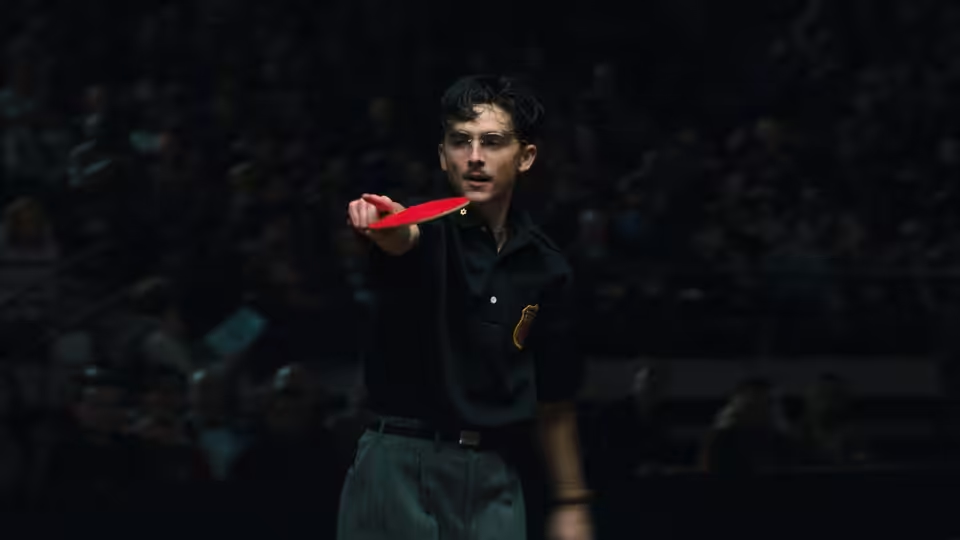
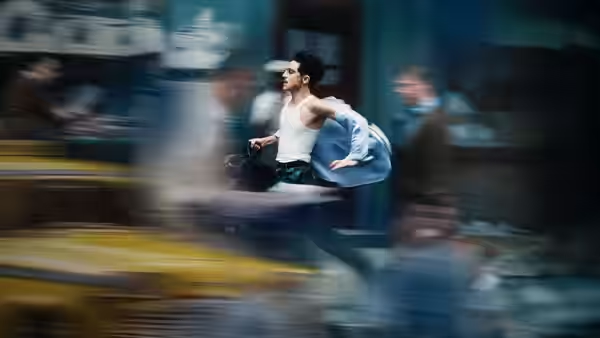
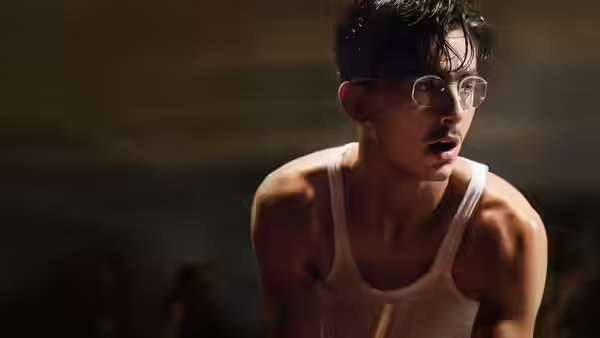
Nothing in it works without Timothée Chalamet, who also produced, and he carries it. He plays Marty with his chin up and his mouth going, and he does something harder than being charming: he lets us see Marty deciding how much charm to spend. There is a moment with a pair of glasses that we will not describe and that tells you everything about the man in a few seconds. He is almost never still. When he does stop, late on, the film finds its best two or three minutes.
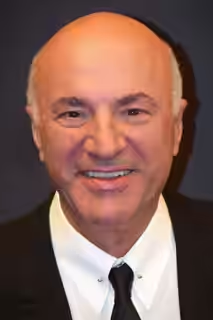
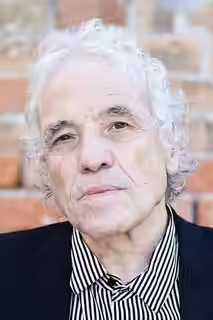
Gwyneth Paltrow, as Kay Stone, is the surprise. She has been away from the screen long enough that her stillness reads as news, and she uses it, looking at Marty as a woman who has met this type before and is deciding whether to be bored. Odessa A’zion, as Rachel Mizler, gets the rawest scenes and is good in them. Kevin O’Leary plays Milton Rockwell as a man who has never been told no, and is about right for it. Fran Drescher as Rebecca Mauser and Abel Ferrara as Ezra Mishkin are given faces rather than parts. That is Safdie’s manner: he casts people you believe on sight and hands each of them a line or two.
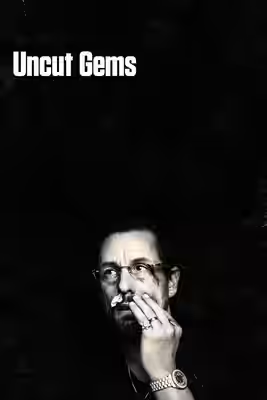
Darius Khondji shoots on long lenses from far back, so the frames fill with heads and the city presses in behind whoever is talking. You rarely see anyone’s whole body, and never for long. Jack Fisk’s production design gives Marty low ceilings, brown rooms and tables played on until the paint has gone, and Miyako Bellizzi dresses him a little above his means and everyone else exactly at theirs. Daniel Lopatin, who scored Uncut Gems, supplies synthesisers that do not belong to the decade, and the songs on the soundtrack do not either, which works better than it should. Ronald Bronstein and Safdie cut every conversation so that nobody is allowed to finish.
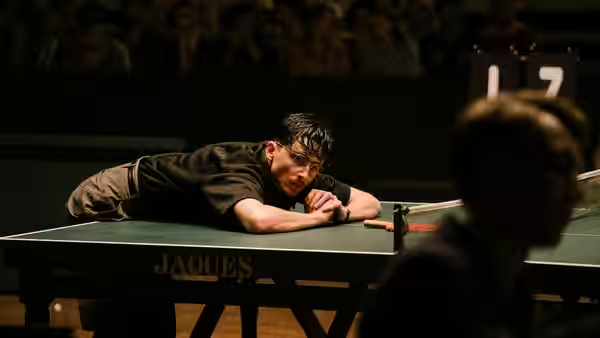
We did not expect to care about table tennis, and around the halfway point we found our shoulders up by our ears. The reason is how the matches are cut. Bronstein and Safdie stay tight on the players’ faces and let the sound of the ball tell us the score, so we are reacting to Marty’s reaction rather than the game, which is what it is like to watch someone you have money on. These are the best sports sequences we have seen in some time, and there are not enough of them.
The problems are ones of size. The film has one hustle too many, and the stretch before the last act, where Marty’s debts stop being funny and start being a list, is where several critics have felt it slow and where we did too. The larger question is Marty himself. Uncut Gems (2019) asked us to watch a man ruin himself and made the watching unbearable. This film asks us to watch a man nearly ruin everyone around him and keeps assuring us he is worth it. We were not always assured. The reviews so far have been close to unanimous in their delight, and we sit a notch below them: it is a fine piece of work that treats its hero’s appetite as a virtue.
See it in a cinema if you can, with the sound loud, because the matches need a big screen and a crowd. It carries a 15 certificate, and Marty is personally responsible for most of the language. Do not take anyone who owes you money.