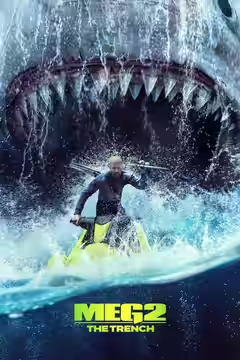
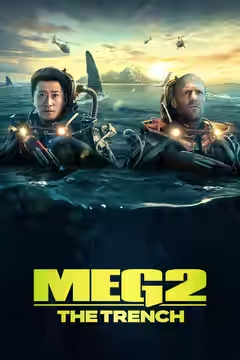
Ben Wheatley spends an hour in the dark on a mining conspiracy before remembering he was hired to let sharks loose. The last half hour is the silly, cheerful film everyone came for; the rest is a long swim to reach it.
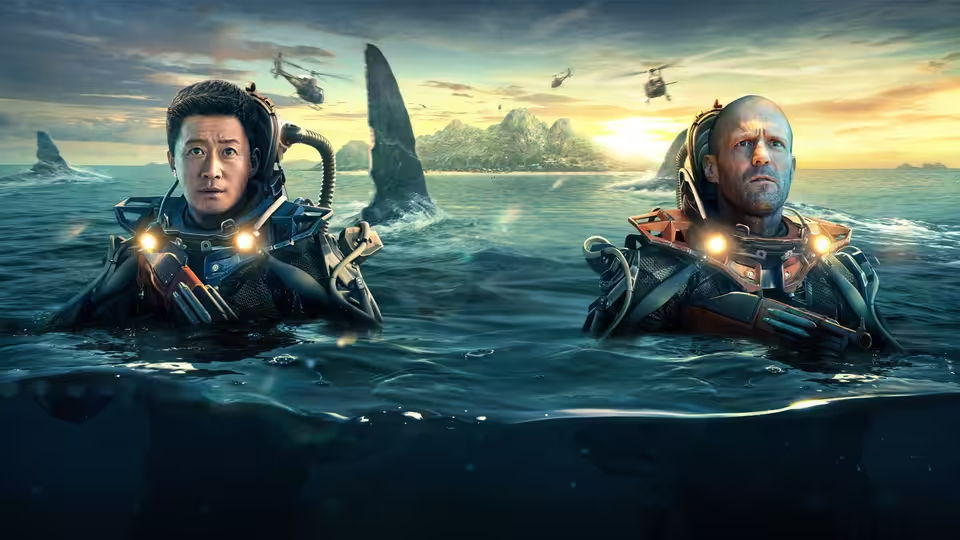
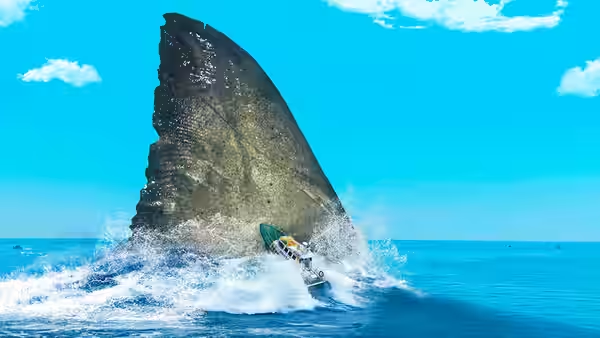
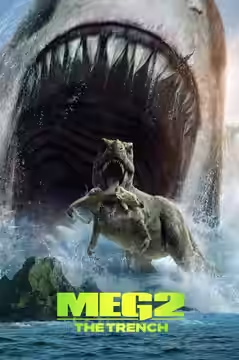
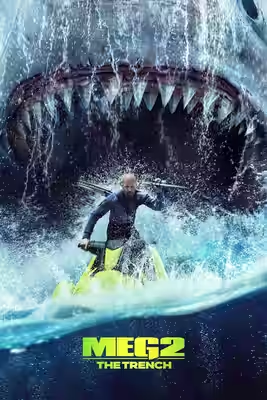
Ben Wheatley made Kill List and Sightseers for almost nothing, and here he has been given 116 minutes and a shark the size of a submarine. The Meg, from 2018, was a holiday film: bright water, a big fish, Jason Statham looking put out. This one opens with a prologue in the Cretaceous, in which the megalodon establishes its place at the top of the menu, and then goes down into the dark and stays there for the better part of an hour. It is talking, mostly, about mining.
Jonas Taylor (Statham) has become a freelance environmental enforcer, boarding ships that dump waste and beating up the crews. His partner in this is Jiuming Zhang (Wu Jing), who runs the research station and has raised a megalodon of his own in a tank. A dive into the trench finds a mining operation already down there, run by Montes (Sergio Peris-Mencheta), and the submersibles are wrecked. The crew have to walk. Jon Hoeber, Erich Hoeber and Dean Georgaris then spend forty minutes on pressure suits, oxygen counts, a leak in the station and a lot of people at control panels saying that something is wrong.
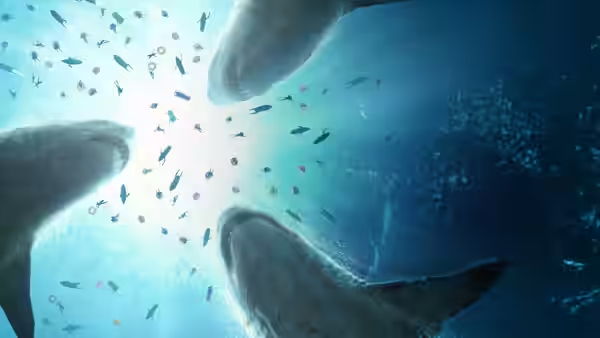
Haris Zambarloukos shoots the sea floor in a brown-black murk lit by helmet torches, and the figures in identical suits cannot be told apart. When one of them is taken we had to wait for the survivors to tell us who it was. Jonathan Amos cuts between the trench, the station above and Montes’s rig, and none of the three strands builds any pressure, because each cut lets the air out of the last. We were bored, and then we were annoyed about being bored, because the film kept reminding us that three prehistoric sharks were loose somewhere in the dark and kept cutting away to a man reading a gauge.
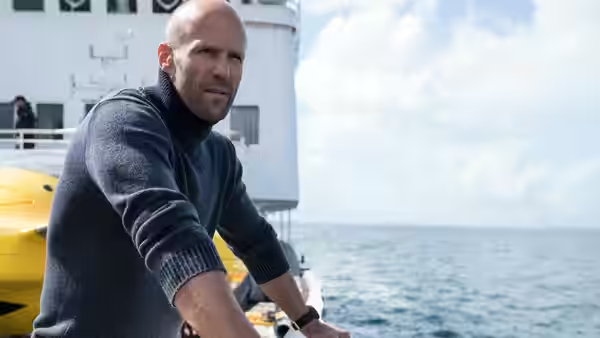
Statham does what he does. He delivers lines as if leaving a pub, and there is a quiet pleasure in watching him refuse to be impressed by anything, including a shark longer than his boat. Wu Jing is better than that, because he seems to know what film he is in. He grins, he climbs things, he treats the giant shark as a pet that has let him down, and when the two men are put together the film has something like a pulse. Cliff Curtis and Page Kennedy are back as Mac and DJ, and Kennedy gets the only jokes in the first hour that land.
The second half goes where the trailer promised, and we will not describe it except to say it is the film everyone paid to see. Wheatley finally gets to the black comedy he was hired for, and Statham finally gets something to hit. We laughed, out loud and without shame, more than once in the last half hour, and then wondered why it had taken ninety minutes to get there. Harry Gregson-Williams’s brass, which has been marking time, at last has something to play over.
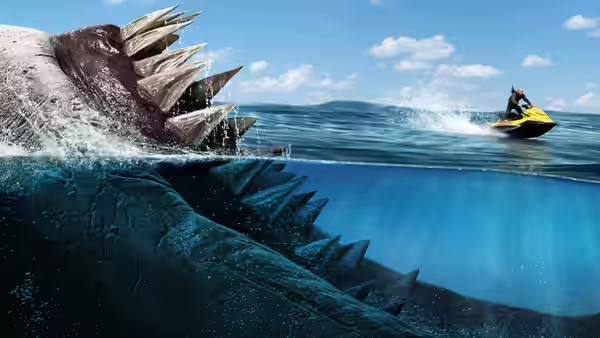
The 12A keeps the blood off the screen, so the deaths are quick and dry, a splash and a gap where a person was. Chris Lowe’s production design gives the station clean grey corridors and everything above the waterline a cheerful, flimsy look that exists to be smashed. The sharks themselves are shiny and weightless. Lindsay Pugh dresses the mercenaries in the black gear that tells you they are mercenaries and leaves Statham in a wetsuit, which is all anyone wanted.
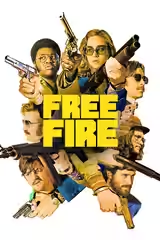
Wheatley’s Free Fire kept a dozen people in one warehouse for ninety minutes and never once lost track of who was standing where. Here he loses six people on a sea floor within ten minutes. The last act is plainly the work of a man having a good time. Everything before it is a hired job that looks like one.
Most critics have landed near where we have, mixed and a little tired, and we can see why the reviews run from a shrug to a scowl. Watch it at home, do something else for the first eighty minutes, and come back for the last half hour. You will have missed nothing the film itself seems to have cared about.