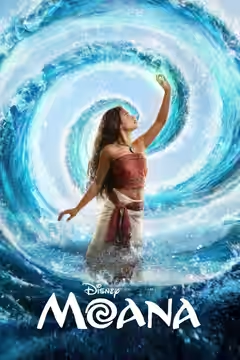
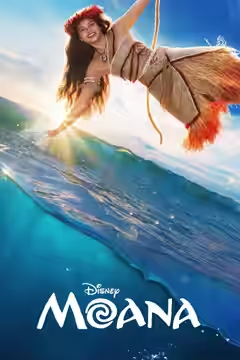
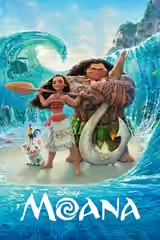
Thomas Kail’s live-action Moana follows the 2016 cartoon closely enough to make you wonder why anyone bothered. Catherine Lagaʻaia sings it well and the songs still land, but the sea is a tank, the island a screen, and the adventure has gone.
Ten years after the cartoon, Disney has remade Moana with people in it. Thomas Kail directs from a script by Dana Ledoux Miller and Jared Bush, and the script follows the 2016 film closely enough that anyone who has seen it will know the next line before it arrives. That is the verdict in short: this is a careful, well-sung copy of a good film, and a copy is what it remains for 115 minutes. If you have never seen the original, it is a passable way to meet the story. If you have, it is a long afternoon of recognising things.
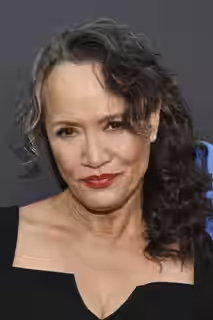
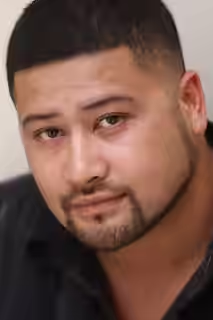
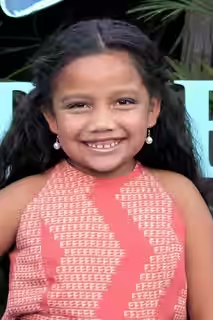
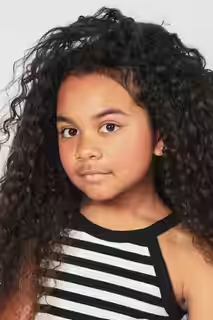
Catherine Lagaʻaia is the reason it is passable. She plays Moana without the bounce the drawn version had, as a serious girl who has been told what her job is and would rather it were a different one, and when she stands on the beach and sings about the line where the sky meets the sea, the voice does what it needs to and the face does more. Rena Owen is her match as Gramma Tala. The two of them on the sand at night gave us the one stretch of the film in which we forgot the original existed, and we were moved by it, more than we expected from a picture we had already half written off. The reason is simple: two actors and a script that, for once, is happy to be quiet. John Tui and Frankie Adams, as her parents, are given less and do it well.
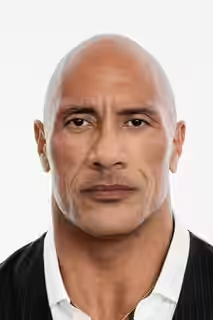
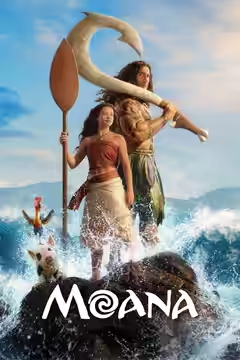
Dwayne Johnson voiced Maui in 2016 and here has to play him with his whole body, and the body is the problem. The demigod’s torso has been built and inflated on a computer until Johnson looks like a man wearing an approximation of himself, and the eye goes to the join every time he turns. When he is allowed to sing, he is fine; “You’re Welcome” is staged as a proper number and is the most fun the film has. Between numbers he does the grin and the eyebrow and not a great deal else, and the film has nothing to fill the gap.
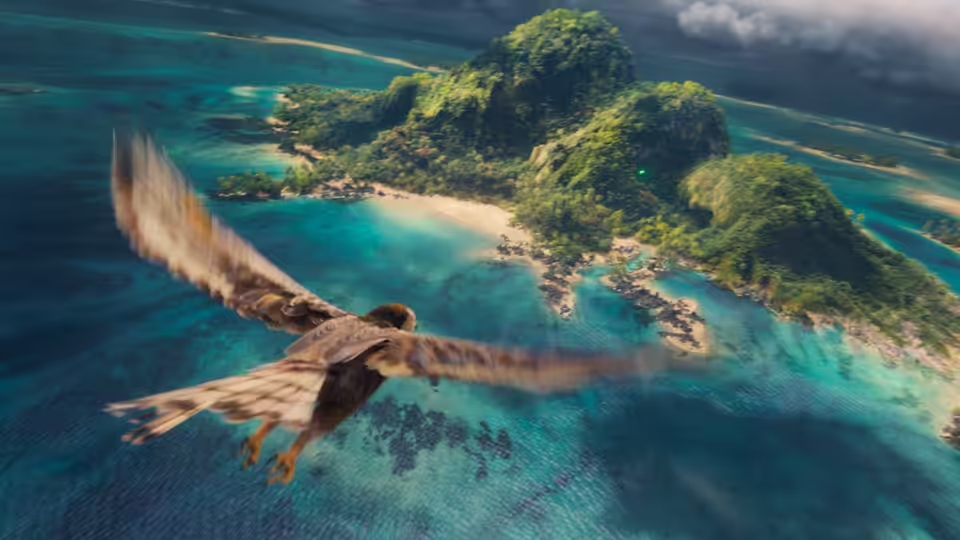
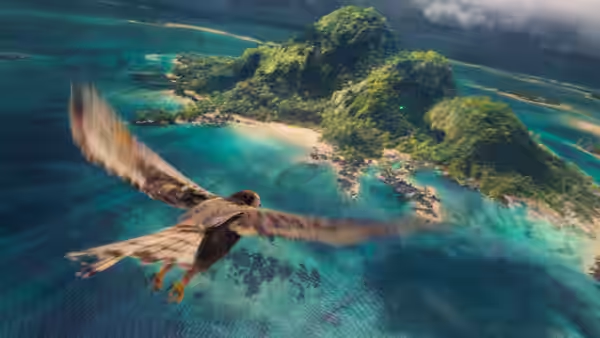
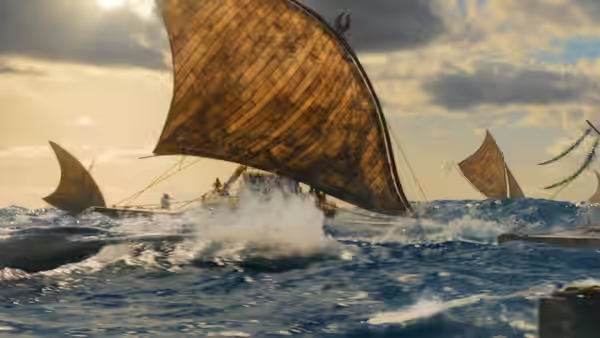
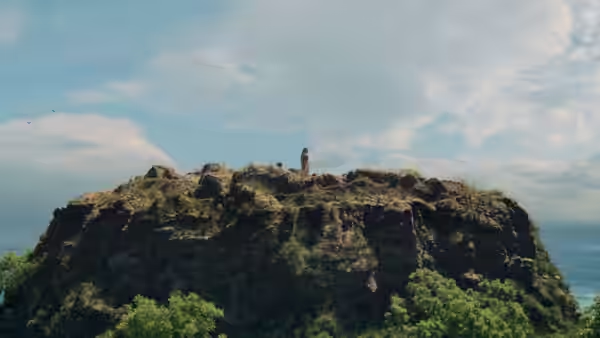
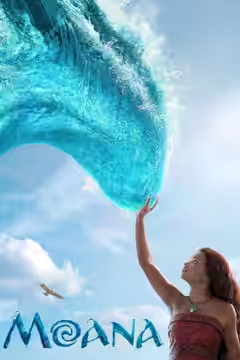
The real loss is the sea. In the cartoon the ocean was a character, a blue hand that pushed and sulked. Here it is water in a tank with a green screen behind it, and Óscar Faura shoots the voyage in close-ups with the horizon out of focus, so that the biggest journey in the story looks like two people on a raft in a shed. John Myhre’s Motunui is better: a village that feels lived in, full of dancers who are plainly people and not a crowd simulation, and Liz McGregor’s costumes have wear on them. But every time the canoe leaves the reef, the film shrinks. Somewhere in the middle of the crossing we were bored, and then we were annoyed at being bored by a story that had held us a decade ago.
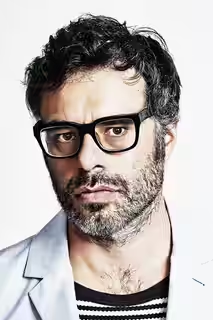
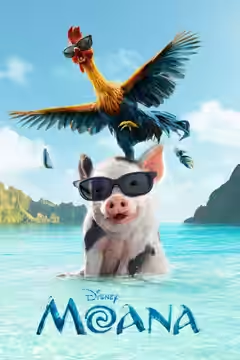
Melanie Oliver cuts to the rhythm of the original, beat for beat, which is faithful and also the trouble: the animated film could move a camera through a wave and land a joke in the same second, and the live one has to stop and set up. Mark Mancina, who scored the cartoon, returns, and the songs are still the songs. They survive the transfer better than anything else in the film. There is one new number, which we could not have hummed for you by the time we reached the car park. Jemaine Clement is back as the voice of Tamatoa, the giant crab, and is the only performer who seems to know the whole enterprise is a bit silly.
Disney has been doing this for a while now, and the results range from the honourable to the embalmed. This one is nearer the second. It is not lazy in any way you could point to; the singing is good, the village is handsome, nobody has phoned it in except possibly the demigod. But nothing here improves on the 2016 film, so the only argument for this version is that it exists.
Take the children if they insist and you will get a decent sing-along and a good lead. Otherwise put the cartoon on instead; it is funnier, and the sea is wet.