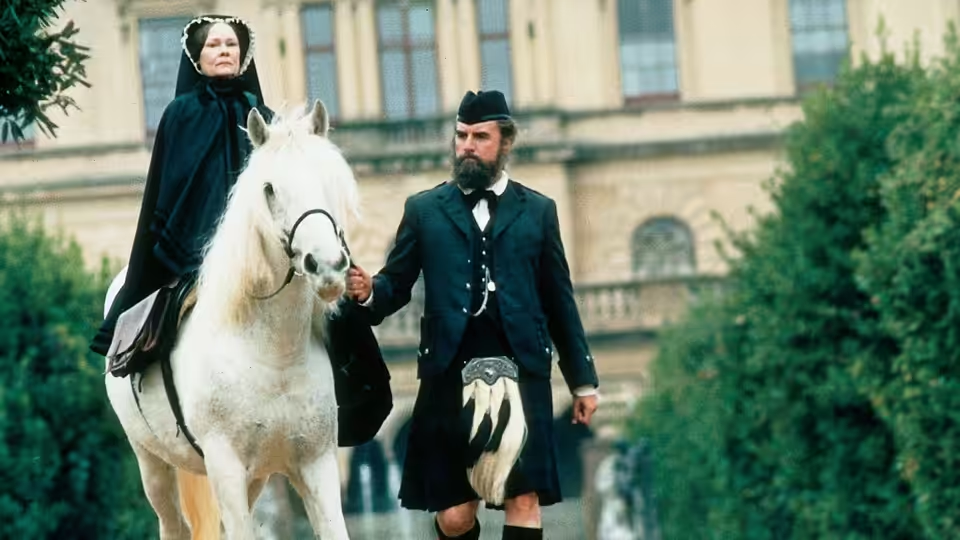
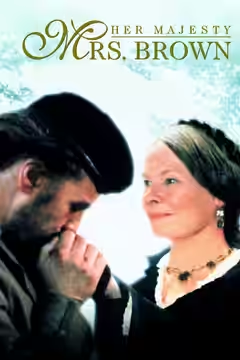
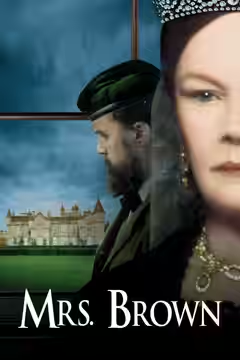
John Madden’s account of the widowed Victoria and her Highland servant is small, plainly shot and often static, and none of that matters much, because Judi Dench and Billy Connolly do the whole thing between them with their faces.
John Madden’s film takes a story everybody half knows and tells it at the size of a drawing room. Jeremy Brock’s script covers the years after Prince Albert’s death, when Queen Victoria withdrew from public life and let a Highland servant become the only person allowed to tell her the truth. There is no grand design and little that could be called an event. It is a film about two people learning how to be in a room together, and for 105 minutes that is enough, because the two people are Judi Dench and Billy Connolly.
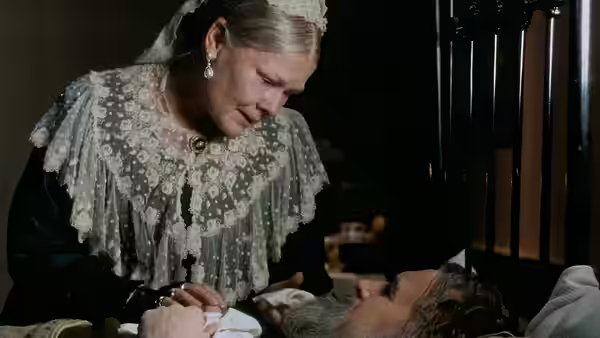
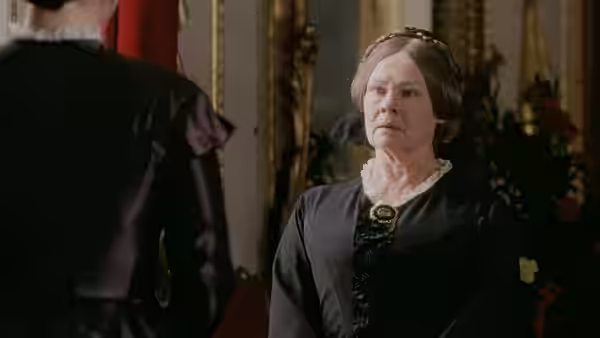
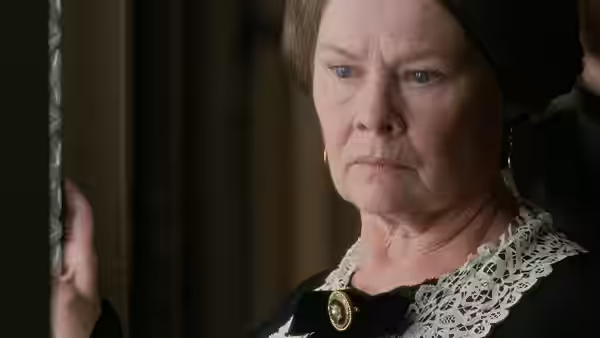
Dench plays Victoria as a woman who has made grief her occupation. She sits in black in dark rooms, signs what she is given, and treats every suggestion that she go outside as an impertinence. What the performance does, slowly, is let us see how much the stillness costs her. A line of the mouth gives way; a hand that has been clenched in a lap opens. By the time she laughs, properly, at something Brown has said, we had been waiting an hour for it, and so, you feel, had she.
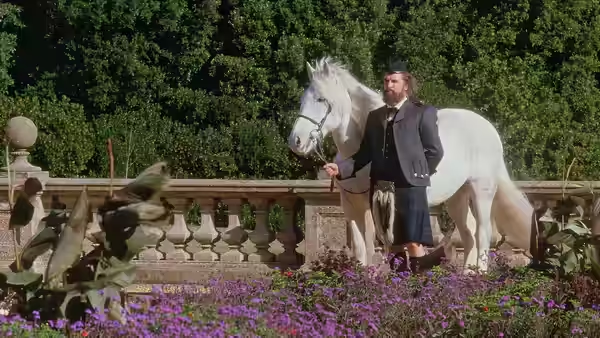
Connolly has the harder task, because Brown could so easily be a turn, the rough servant with the good heart. He plays him instead as a man who is right about the Queen and insufferable about nearly everything else, loyal to the point of mania and drunk when it suits him. The bluntness, the ‘woman’ he addresses her as, works because he does not seem to be enjoying the shock it causes. He is simply talking. Connolly is also funny, in the way he is funny on stage, but Madden rations it, and the rationing helps.
Richard Greatrex shoots the whole thing as if the weather were in mourning too. Interiors are candle and lamp, the Queen a small black shape against drapes a shade darker; the Scottish exteriors are grey water and wet heather. Martin Childs fills the rooms with Albert, his portraits and busts and the chair nobody sits in, so the dead man is on screen more than most of the living. Deirdre Clancy keeps Dench in crape from the first frame to the last and lets the rest of the court glitter around her, which makes the point without a line of dialogue. Stephen Warbeck’s score is mostly strings, quiet and plain, and knows when to stop. Robin Sales cuts at the pace of the household, which is to say slowly, and for long stretches that is right.
We were moved at a point we did not expect: not by a speech, but by the first ride, when Brown gets her up on the pony at last and the household watches from the windows, and Dench lets her face do something it has been forbidden to do for three years. It is over in seconds and we found ourselves blinking. The film does not have many such moments and knows it, and so it pads. The scenes with Antony Sher’s Disraeli, in London, explaining to anyone who will listen that an invisible Queen is bad for the monarchy, are brisk and well played and belong to a livelier, more cynical picture. Each time we cut to Westminster the air changes, and each time we cut back it takes a scene to settle.
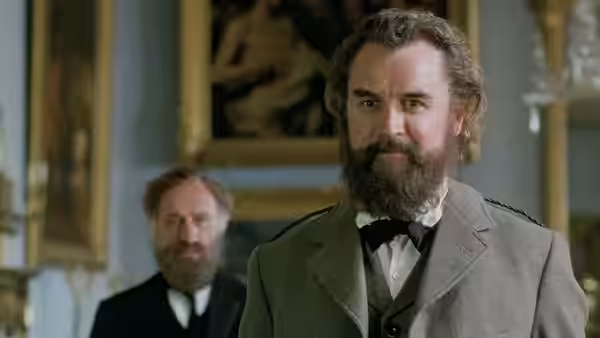
The second half becomes a run of episodes rather than a story, and we will not describe where it goes. Geoffrey Palmer’s Ponsonby is the film’s quiet asset, a man who disapproves of Brown on principle and keeps him on in practice, and Palmer does the whole thing with his eyebrows. Gerard Butler, as Brown’s brother Archie, is mostly there to be shouted at. David Westhead’s Bertie is a sulk in a waistcoat, and Richard Pasco’s Doctor Jenner hovers with a bag.
Set beside The Madness of King George (1994), the obvious comparison, this is the smaller and the slower film; Hytner’s had a plot, and this has a situation. Madden made Shakespeare in Love the following year, and you can see the same ease with actors and the same lack of interest in the camera doing anything on its own. That is a limitation. It is also why the two faces at the centre are never upstaged. See it for them, on a wet evening at home, where its scale feels natural and its silences do not.