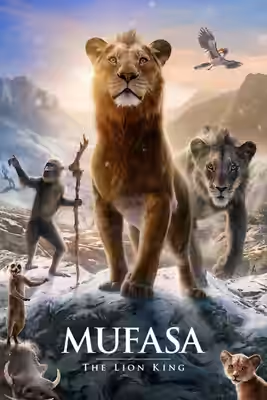
Barry Jenkins puts a real film-maker’s eye behind the photoreal lions, and for stretches it shows: a flood, a brotherhood, a villain with Mads Mikkelsen’s voice. But the songs are forgettable and the framing device keeps stopping the story to make jokes.
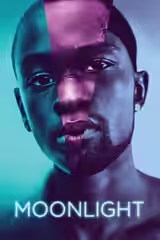
Barry Jenkins made Moonlight (2016) and If Beale Street Could Talk (2018), two films about faces held close in coloured light. He has now made a prequel to Jon Favreau’s photoreal The Lion King (2019), in which everything on screen is computed. The job is to show how Mufasa became king and how his brother Taka became the lion we know from the 1994 film, and everyone in the cinema already knows where that ends. The question is whether Jenkins can make the road there worth 118 minutes. The answer is about half of it.
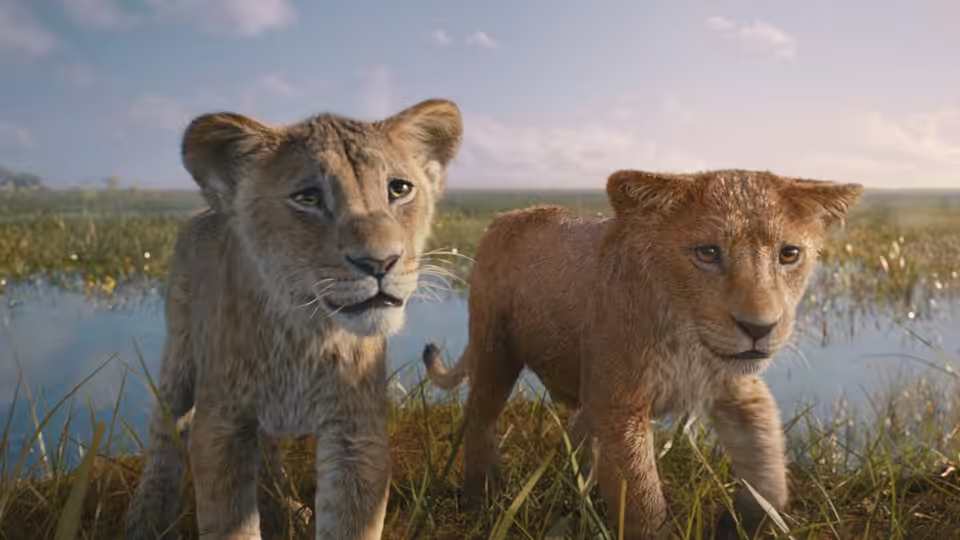
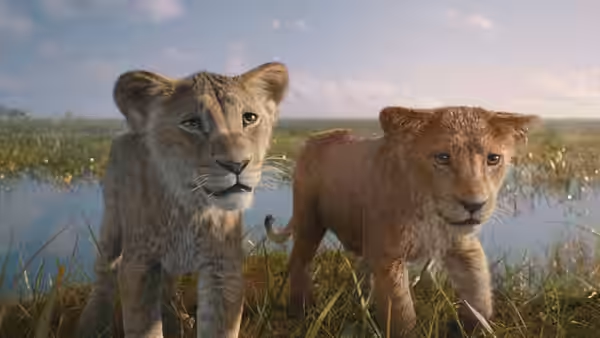
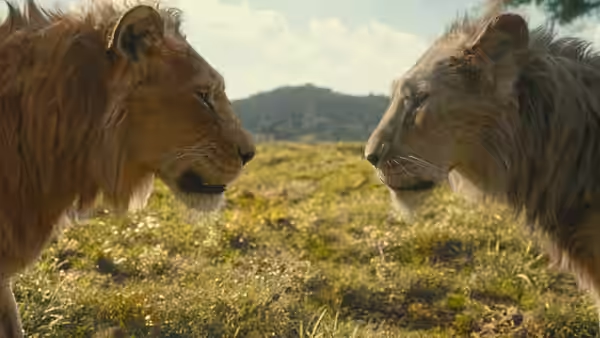
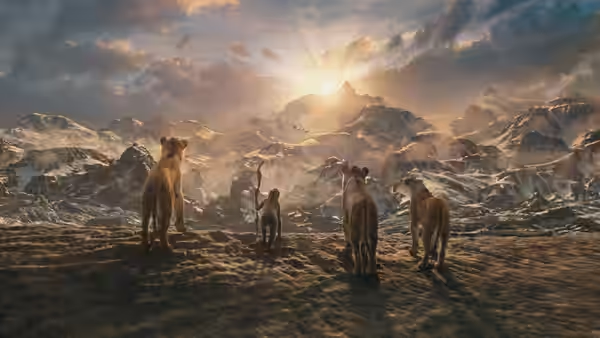
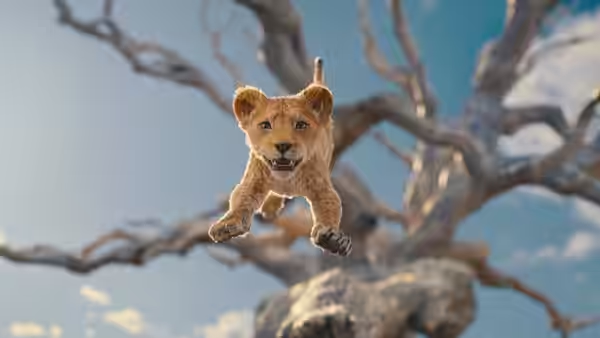
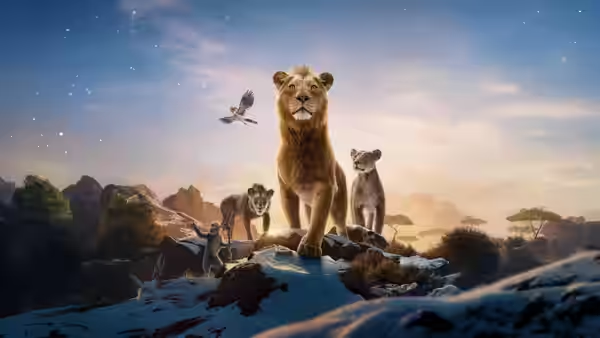
The half that works comes first. A cub is playing with his parents when the rains arrive, and James Laxton’s camera goes into the flood with him, under the brown water and up again past tumbling trees, for longer than we expected. It is the best sequence in either of these photoreal films, because for once the technology puts us somewhere a real camera could not go instead of imitating one. Mark Friedberg’s landscapes are the other standing asset: a flooded valley, a pride rock lit from below by a low sun, a mountain pass of snow the lions have never seen before. Jenkins keeps the camera at cub height and circles the animals as they talk, so the film moves in a way the 2019 one never did.
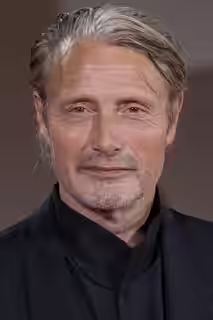
Aaron Pierre gives Mufasa a low, careful voice, a lion who never forgets he is a guest. Kelvin Harrison Jr. is better still as Taka, a prince who is generous, spoilt and afraid of his father in roughly equal parts, and the scenes where the two cubs race and squabble and cover for each other have real affection in them. Lennie James’s Obasi never quite looks at the orphan; Thandiwe Newton’s Eshe is the one who does. Then Mads Mikkelsen arrives as Kiros, leader of a pride of white lions, and delivers every threat with the patience of a man ordering dinner. His is the only voice that makes a lion’s face seem to be thinking.
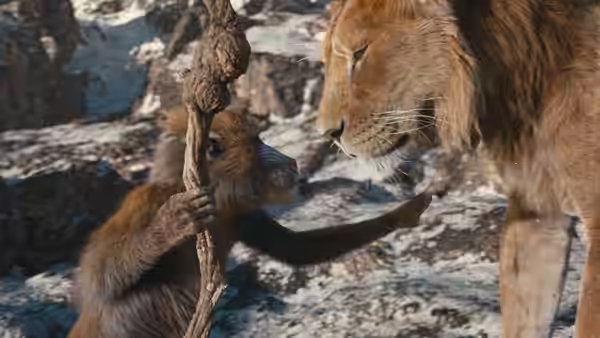
The trouble is everything the film stops for. Jeff Nathanson’s script has Rafiki telling the story to a cub, with Timon and Pumbaa on hand to interrupt, so each time the brothers’ journey gathers weight we cut back to a cave for a joke about how long this is taking. We laughed once. The other dozen times we sat waiting for the film to start again, and by the fourth interruption waiting had become irritation, because the story it kept leaving was the one we had come for.
The songs are the other problem. Lin-Manuel Miranda wrote them, the lions stand still while the words happen, and we could not hum one to you on the walk to the car. Hans Zimmer’s themes from 1994 return at intervals, and each time they do the new score around them, by Zimmer, Dave Metzger and Lebo M., sounds smaller. Joi McMillon has cut it all at a steady clip and her joins are clean; the film is simply built so that nothing runs for more than a few minutes before something else has a turn.
The format has not been fixed either. A photoreal lion can widen its eyes and lower its head, and that is roughly the range. When the script asks for grief or shame we get a lion looking at the ground while a voice does the work, and Pierre and Harrison do it well, but it is radio drama with expensive fur. Jenkins, whose gift is for what a face does when it is not speaking, has been given faces that cannot do that.
Against the 2019 film this is plainly the better one: it moves, it has a villain, it has two characters who want different things. Against Jenkins’s own work it barely registers as his. Families with children of the right age will have a fine afternoon, and there is a flood and a brotherhood here that a stronger film could have been built around. It carries a PG and runs 118 minutes, several of which are a warthog.