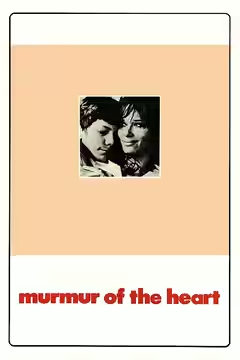
Louis Malle’s comedy-drama is warmly observed and finely acted by Benoît Ferreux and Lea Massari. Its affection for the characters becomes a serious weakness when their behaviour needs a harder look.
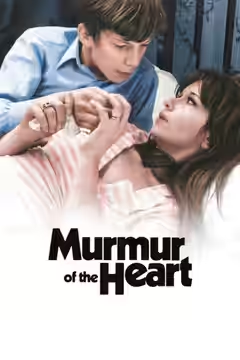
Murmur of the Heart is warmly performed and frustratingly unwilling to question the people it makes us like. Louis Malle, who writes and directs, is good at making his characters worth our attention before asking us to consider their behaviour. The warmth matters, and so does the sharpness of his observation. But when the film needs to examine what they have done, he becomes too willing to leave them comfortable.
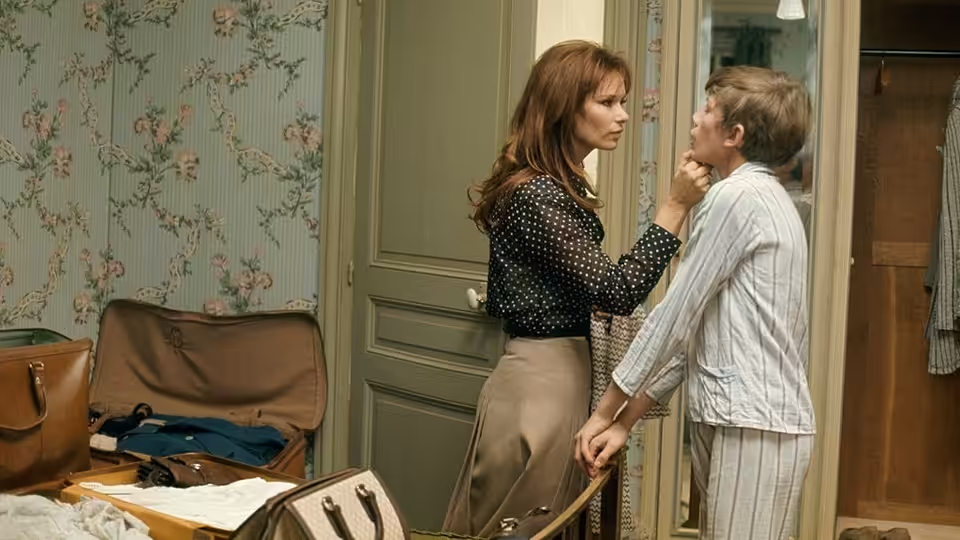
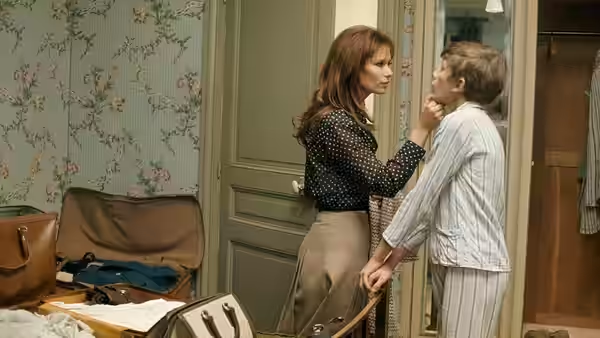
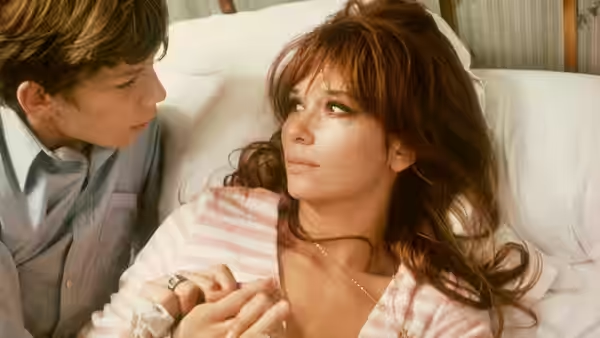
Benoît Ferreux gives Laurent Chevalier enough individuality to keep him from becoming an illustration of a difficult subject. We can attend to him without feeling that every detail has been arranged to make a point. Lea Massari’s Clara Chevalier is equally persuasive, and the two performances do much of the work that the writing leaves undone. We were touched by their ease together: Ferreux and Massari make affection feel ordinary enough that it does not require a declaration.
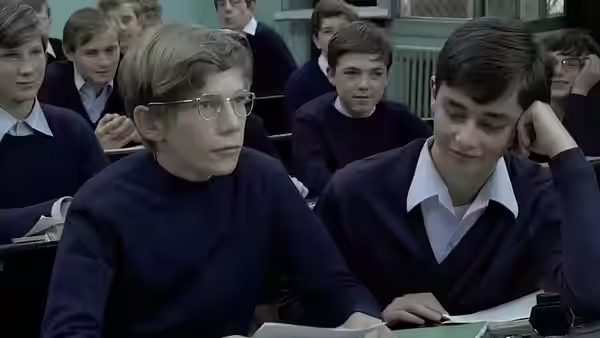
The supporting cast includes Daniel Gélin as Charles Chevalier and Michael Lonsdale as Father Henri, but Ferreux and Massari hold our attention most firmly. Malle’s humour benefits from his interest in people beyond their immediate usefulness to the story. He allows them to be engaging without requiring them to be exemplary, and that generosity gives the comedy much of its appeal. It also makes the script’s later reluctance to scrutinise their behaviour more disappointing, because the observation elsewhere is so attentive.
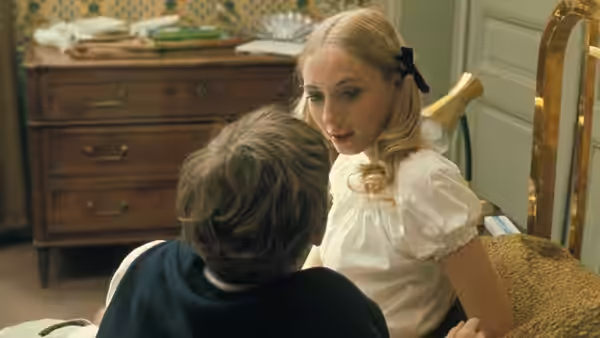
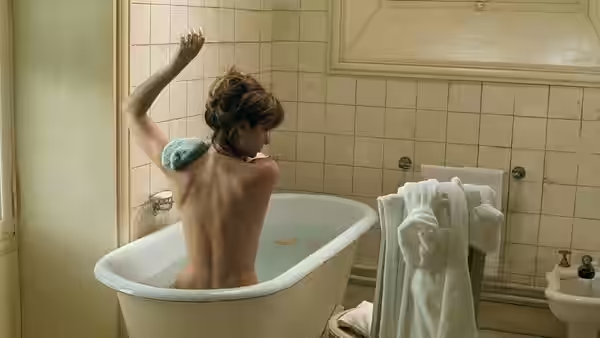
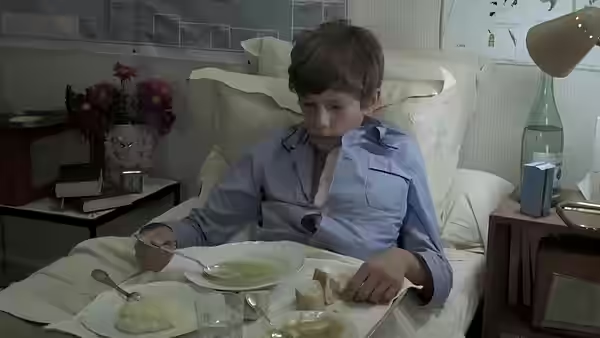
Ricardo Aronovich’s cinematography and Jean-Jacques Caziot’s production design contribute to the film’s inviting manner. The visual detail is elegant without competing with the performances, and the care taken over the characters’ surroundings helps make their company pleasurable. Neither contribution feels anxious to announce itself. Yet that elegance also contributes to our reservation: the film’s pleasant appearance can make its treatment of troubling behaviour seem more satisfactory than it is.
Suzanne Baron’s editing is sympathetic to the performances, giving their warmth time to register. The continuity of tone works well for the comedy, although it becomes less helpful when the material calls for greater discomfort. At 118 minutes, the film has ample opportunity to question the impression it has created. The problem is in Malle’s writing, which relies too heavily on our affection for the characters to carry us through the difficult material.
There is a pivotal incident we will not describe. Our objection is to how little consequence the film allows it, leaving the actors to persuade us that its gentle treatment is sufficient. That is a considerable demand to make of two performances, however persuasive they are. Malle has made us interested in these people, so we want him to look harder at what their behaviour means for them; the film’s reluctance to do so feels like unfinished work.
A comedy-drama need not punish its characters, and adding a few solemn speeches would solve nothing here. Malle could, however, allow more difficulty to survive his affectionate handling of them. That reservation makes this a qualified recommendation for those interested in a film whose performances are more convincing than its treatment of its central problem. Watch it with someone prepared to disagree about what Malle lets pass.