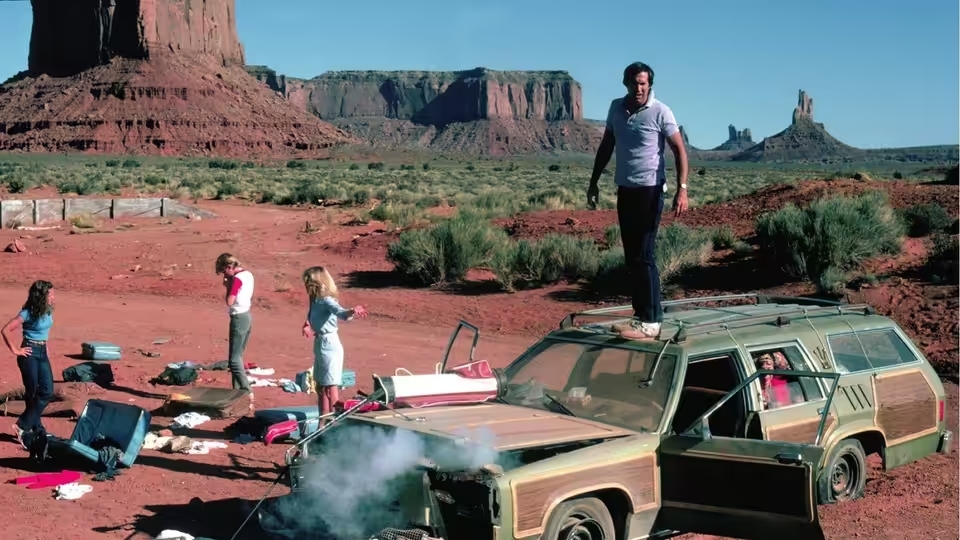
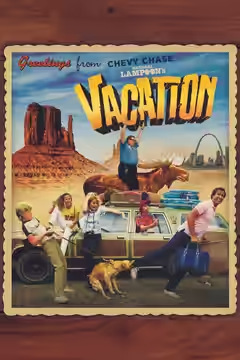
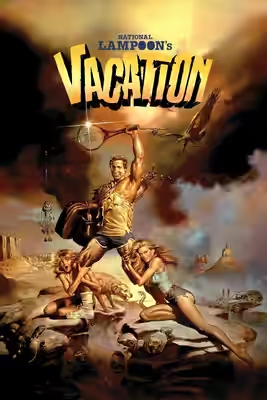
Chevy Chase makes an awkward family holiday worth joining. National Lampoon’s Vacation is good, uneven farce, with a sharp supporting cast and a screenplay that gives its father rather more freedom than its mother.
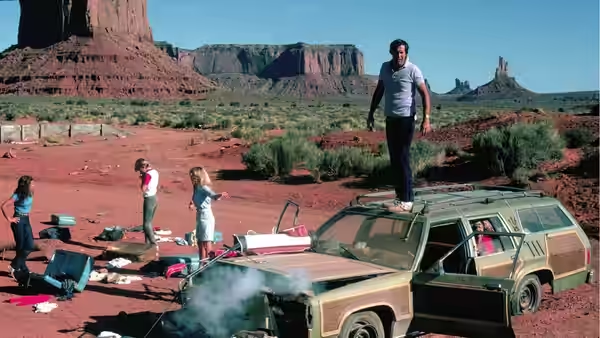
Harold Ramis makes a family holiday into a succession of tests for a father who has confused organising the trip with guaranteeing everyone’s pleasure. National Lampoon’s Vacation is good, uneven farce, carried by Chevy Chase through stretches that John Hughes’s screenplay does not quite join together. Its useful insight is that a holiday can become hard work once somebody insists it must be enjoyable. Clark Griswold supplies enough of that insistence to keep the comedy going, though the film is less attentive to the people travelling with him.
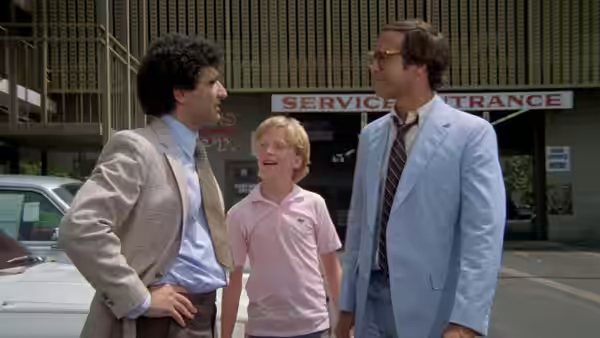
Chase understands how irritating Clark can be without making him impossible company. We laughed at the new-car business because his confidence is so ill-suited to the practical task in front of him. Eugene Levy, as the car salesman, gives him someone useful to play against, and the scene establishes the pleasure of watching Clark struggle to remain the man in charge. Chase is particularly good at making self-satisfaction seem fragile; we can enjoy Clark’s discomfort without needing him to be punished.
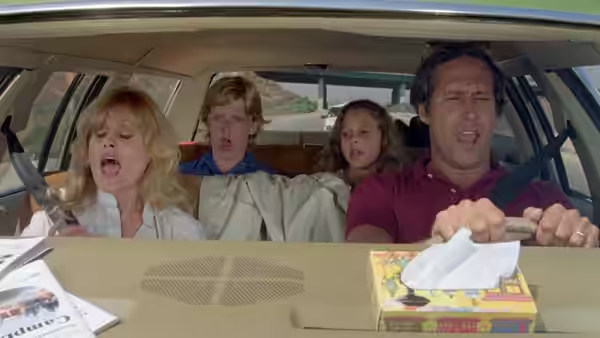
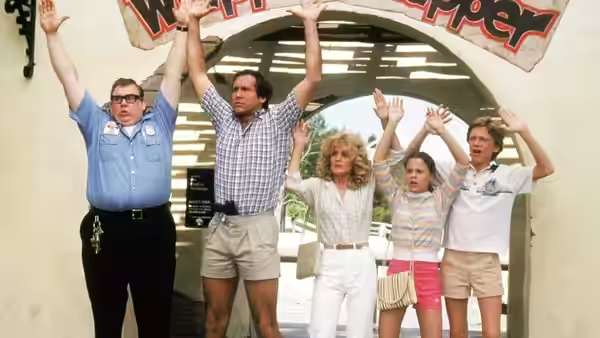
The supporting cast is often sharper than the material it is given. Randy Quaid’s Cousin Eddie has an unembarrassed manner that lets an awkward encounter become uncomfortable without any great announcement that a joke is arriving. Anthony Michael Hall and Dana Barron, as Rusty Griswold and Audrey Griswold, give the travelling party some credibility as a family. They deserve more to do, particularly when the script starts relying on our familiarity with Clark’s behaviour.
Victor J. Kemper’s cinematography is effective in its unobtrusive handling of the performers: the jokes remain easy to read. Jack T. Collis’s production design is most useful in the new-car business, which gives Clark’s confidence something solid to attach itself to. Buying a car is a credible first task for someone who hopes a holiday can be organised into perfection. The physical preparations keep the comedy close to the everyday frustrations that make this particular sort of family farce work.
Pembroke J. Herring’s editing keeps the individual mishaps moving, but the succession of them begins to feel arbitrary. A brisk pace helps a joke land; it cannot make every new difficulty equally interesting. Ralph Burns’s music provides an agreeable push without doing much to distinguish one stretch of silliness from the next. As the film goes on, the lack of development matters: Clark can be relied upon to generate trouble, but we start to anticipate the shape of the next joke.
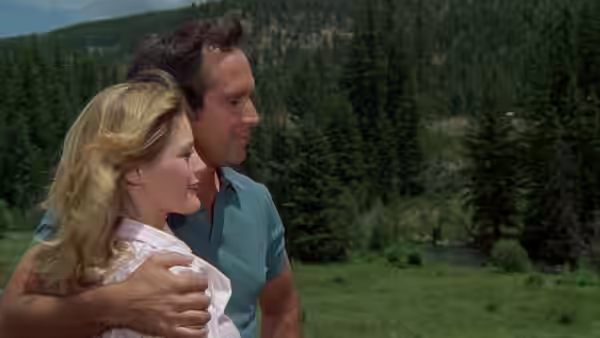
The greater reservation is Ellen. Beverly D’Angelo makes her credible company, yet Hughes gives too little attention to what it means for her to share this trip with Clark. There is a sourness in asking us to indulge his behaviour while allowing her so little scope beyond responding to it. A family comedy can be cruel, but when the father gets most of the comic freedom and the mother gets the consequences, the writing starts to seem lazy.
At 99 minutes, it remains a manageable evening, and the better performances earn it some patience. We recommend it to anyone who enjoys a family farce and can tolerate stretches that depend heavily on affection for its leading man. Those looking for much warmth between the Griswolds should be more cautious. Perhaps do not make it compulsory family viewing.