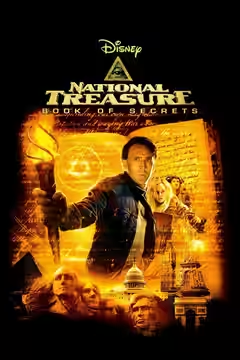
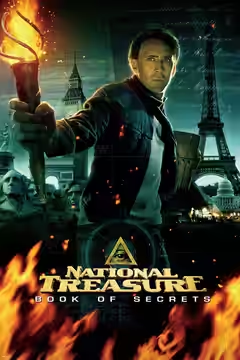
Nicolas Cage and a willing supporting cast make this historical treasure hunt intermittently amusing. The weak puzzles and perfunctory character writing matter more as it goes on, despite the effort spent keeping everyone moving.
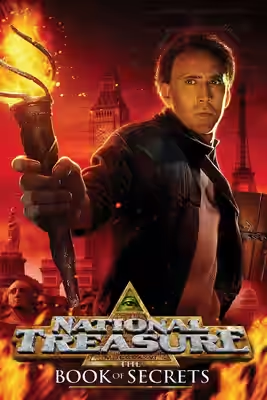
Jon Turteltaub approaches National Treasure: Book of Secrets as an adventure in which another clue should always be enough to keep us interested. For a while, the cheerful absurdity and a willing cast make that seem reasonable. It is intermittently funny, but too thin as a mystery and too repetitive as an adventure to recommend with much confidence. A treasure hunt needs to make finding the next answer feel worthwhile, and this one too often settles for getting there quickly.
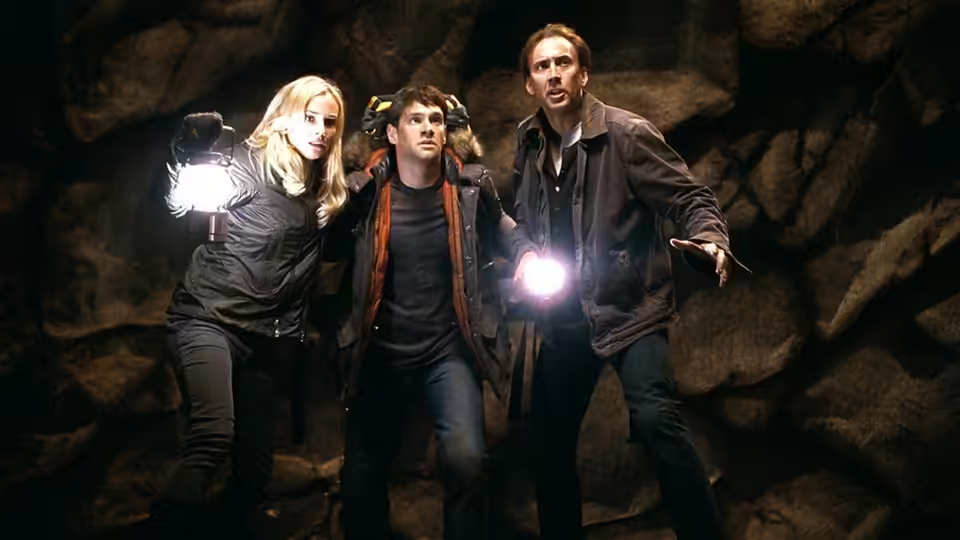
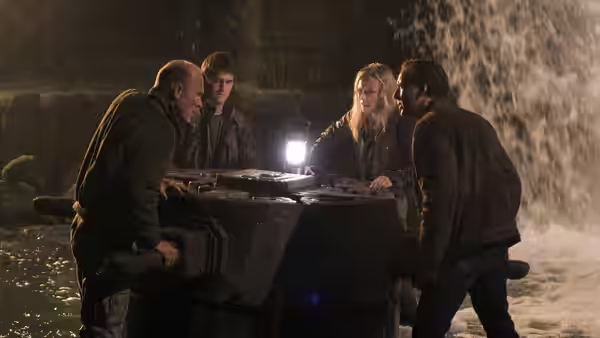
Nicolas Cage supplies much of the entertainment as Ben Gates, particularly when his comic playing becomes excessive. We laughed at his overemphatic delivery, because the force he gives the material makes its absurdity harder to overlook. Justin Bartha provides a useful contrast as Riley Poole, getting some pleasure out of throwaway remarks without making each one an event. Between them, they suggest how much more enjoyable the film might have been if it had trusted its comedy a little further.
The screenplay by Cormac Wibberley and Marianne Wibberley keeps introducing complications without making the underlying puzzles especially rewarding. Implausibility is hardly disqualifying in this kind of adventure; the difficulty is that the answers seldom justify the attention demanded by the questions. The treatment of history is cursory, and the characters are too lightly written to give the search much emotional importance. Once the novelty wears off, there is little reason to care beyond the reasonable wish to discover what happens next.
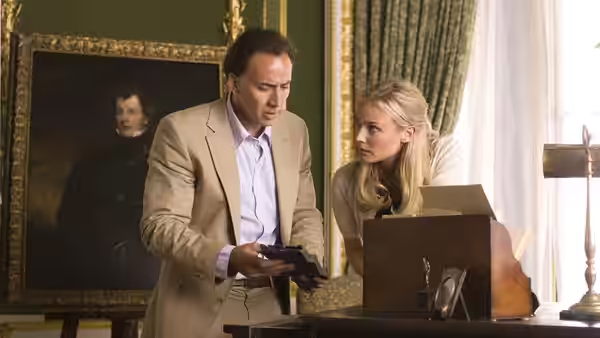
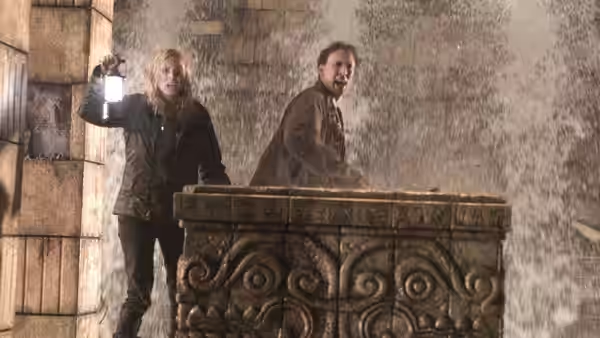
The cinematography by John Schwartzman and Amir Mokri gives the changing locations an appealing polish, although the sightseeing becomes part of the problem. Dominic Watkins’s production design makes the historical surroundings persuasive enough for this sort of escapism. These departments do their work more convincingly than the script does its own. But an attractive destination cannot keep renewing our interest when the business conducted there feels so familiar, and the film asks its surroundings to do rather a lot.
Editors David Rennie and William Goldenberg maintain a brisk pace through material that could easily become laborious. That helps within individual stretches, though the cumulative effect is tiring: another complication needs processing before the previous one has proved particularly interesting. Trevor Rabin’s music is similarly determined to keep the adventure moving, with an insistence that becomes wearing. The film rarely seems short of energy, but it becomes increasingly difficult to share its enthusiasm for the next development.
Helen Mirren brings welcome comic assurance to Emily Appleton, while Ed Harris gives Mitch Wilkinson a seriousness the writing does not always support. Both are useful additions to an adventure that needs its actors to hold our attention through the weaker passages. Yet recognisable faces cannot make the character interactions feel less mechanical, and the supporting company gets too little worth playing. Their presence improves the experience without solving the reasons it begins to drag.
At 124 minutes, the film gives its modest pleasures more space than they can comfortably fill. Family adventure can accommodate unlikely history, broad acting and improbable escapes, provided the clues are satisfying or the company becomes dear to us. Here, the occasional laugh keeps that possibility alive longer than the plotting deserves. If working out the mystery is the attraction, choose something with better puzzles.