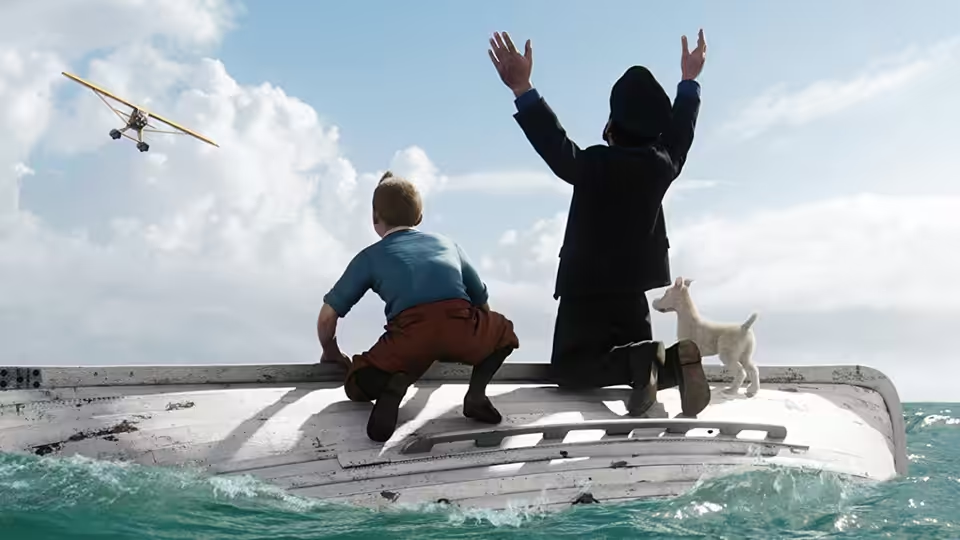
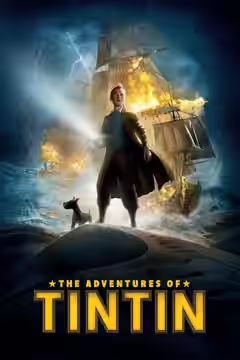
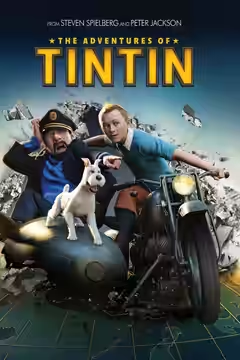
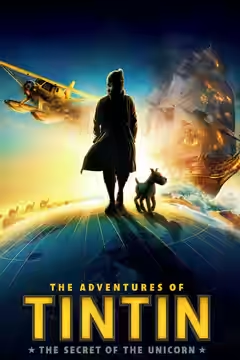
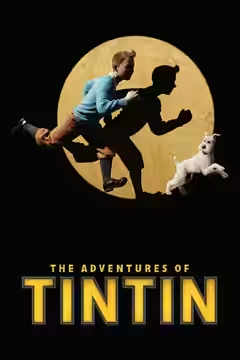
Steven Spielberg makes a nimble animated adventure, with clear, inventive action and a warmly unruly Captain Haddock. We recommend it for the chases, though Tintin himself is harder to care about.
The Adventures of Tintin is a good, busy adventure whose chief pleasure is watching Steven Spielberg organise a chase. He gives the animation a freedom that suits his appetite for movement, while keeping the action readable even when almost everything seems to be moving. We would happily spend its 107 minutes with Captain Haddock; Tintin himself takes a little more patience. The treasure mystery gets everyone going, but the film is much more interested in what happens on the way.
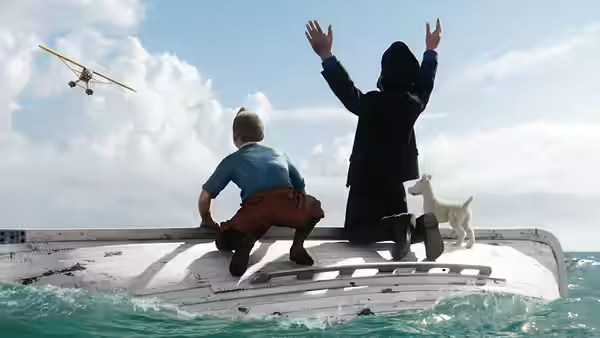
The extended chase is the clearest example of what works. The camera keeps travelling through the action without an apparent cut, yet we can still tell what Tintin is trying to do. We grinned at the sheer persistence of that chase, because each new complication remains easy to follow. Steven Spielberg makes the continuous movement feel like part of the joke, and that matters when physical danger seldom seems likely to stop his hero.
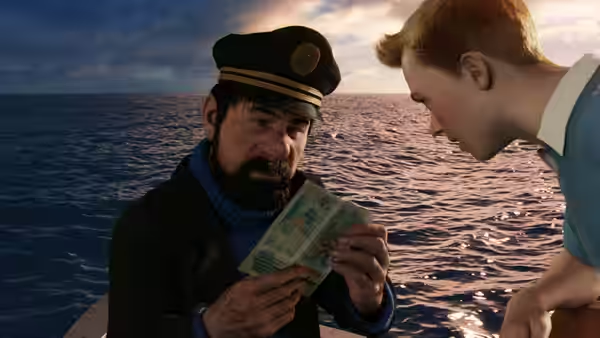
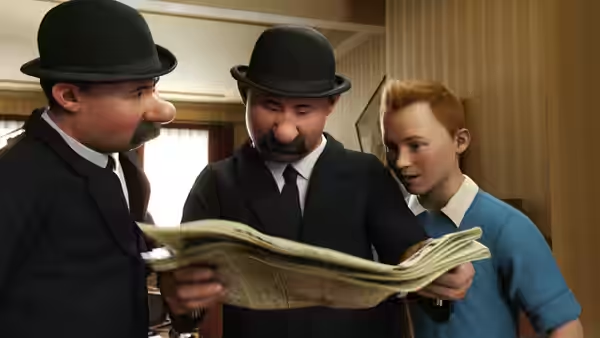
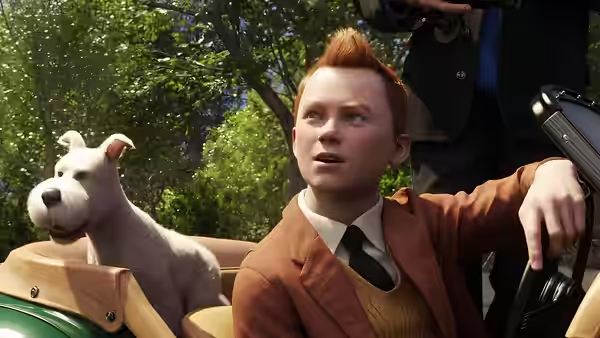
Janusz Kamiński uses light and shadow to give the animated spaces depth, and the detail is often more persuasive than the faces. The characters can look disconcertingly waxy; a face meant to invite sympathy sometimes has us studying its surface instead. That problem does not spoil the action, where posture and movement do much of the work, but it makes quieter encounters less welcoming. The settings reward attention even when the people standing in them seem slightly difficult to approach.
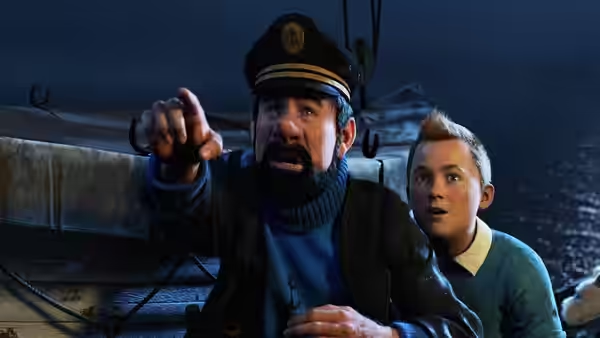
Jamie Bell gives Tintin the brisk confidence the adventure needs, though the character’s competence leaves little room for surprise. Andy Serkis has more to play with as Captain Haddock, whose comic disorder makes him welcome whenever the film threatens to become too tidy. Andy Serkis makes the captain funny without treating him as a nuisance, and gives the humour enough warmth to suggest a companion worth keeping. Their contrasting temperaments provide the film’s most dependable human interest, even through the peculiar faces.
The screenplay by Steven Moffat, Edgar Wright and Joe Cornish supplies plenty of business, but the treasure hunt rarely makes us care much about the treasure. Tintin’s ability to weather almost anything also limits the suspense, however ingenious the next predicament may be. A little more uncertainty in the hero would have helped; resourcefulness is engaging until it begins to look guaranteed. The film can find another complication more readily than it can find a reason to pause with the people caught up in it.
Michael Kahn’s editing keeps the adventure brisk between the larger set pieces, although the pace sometimes leaves too little time to enjoy a joke before another event arrives. John Williams’s score encourages the bustle, with an eagerness that suits the playful action. It works, but offers little relief when the pictures are already doing quite enough. Both contributions keep things moving, sometimes through moments that would have benefited from a little more time.
Adventure films need not give every hero a troubled past, and we would not want this one halted for a solemn explanation of Tintin. They do need to make the possibility of failure felt, which is where Steven Spielberg’s confidence becomes a limitation. There is enough pleasure here to forgive that, provided an intricate chase can hold our attention without making us fear for anyone. Choose it for a light evening, rather than one that requires the adventure to feel dangerous.