Franklin J. Schaffner’s 189-minute account of the last Romanovs is finely built and finely acted, and it keeps the revolution offstage in favour of the nursery. Janet Suzman is worth a large part of the sit; the film around her is not.
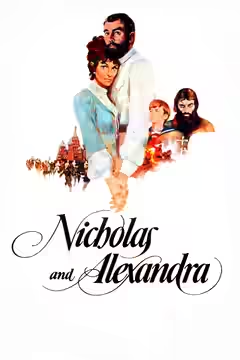
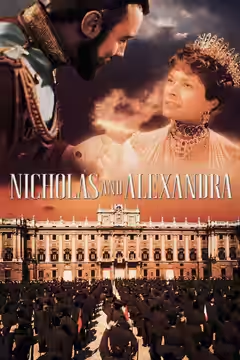
Franklin J. Schaffner’s film of the last Tsar and his wife runs 189 minutes, opens in 1904 and does not stop for breath until the Romanovs have run out of country. James Goldman’s screenplay works from Robert Massie’s book, and Sam Spiegel has paid for palaces, trains and cathedrals. It is handsome, it is carefully acted, and it keeps the Russian Revolution almost entirely offstage.
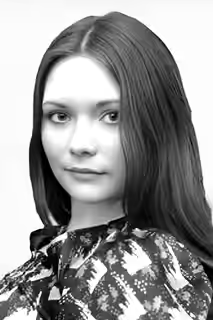
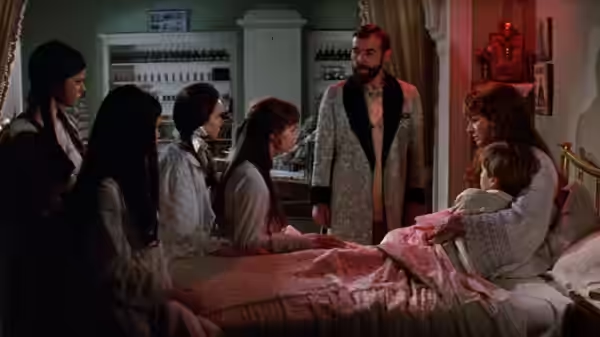
The two leads are the reason to stay. Michael Jayston plays Nicholas as a polite, tidy man who signs whatever is put in front of him and then looks faintly surprised that it mattered. He never raises his voice, and Jayston makes the quietness read as weakness rather than calm. Janet Suzman’s Alexandra is the harder part and the better performance. She is stiff in public, frantic in the nursery, and she looks at anyone who doubts Rasputin as if they had spat in church. When she tells Dr. Botkin (Timothy West) that prayer has done what his medicine could not, Suzman lets you see a woman who knows how it sounds and cannot help it.
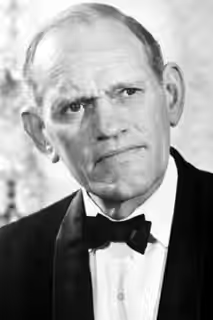
The people around them are mostly good British actors given a line and a decoration each. Harry Andrews, as the Grand Duke Nicholas, gets to shout. Irene Worth, as the Tsar’s mother, gets to disapprove, and does it superbly for the ten minutes she is on. Tom Baker’s Rasputin arrives with a beard, a stare and a voice pitched somewhere between a priest and a drunk, and the film is livelier whenever he is in it, which is not often enough.
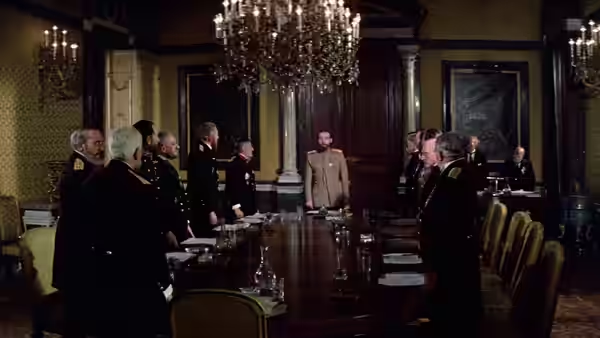
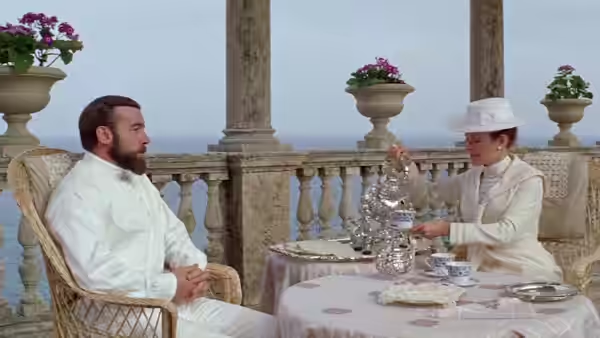
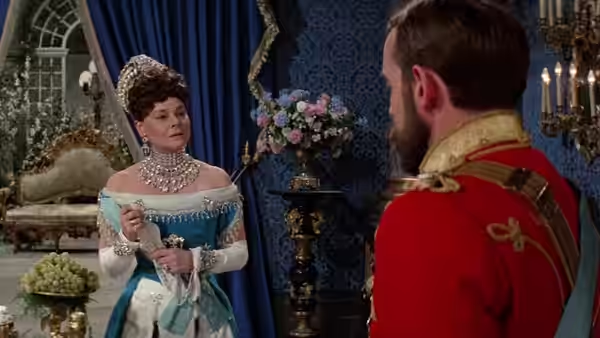
Freddie Young shoots the palaces in long, even light, gold indoors and flat white outside, and keeps the rooms in focus behind the people. John Box, Gil Parrondo, Jack Maxsted and Ernest Archer have built those rooms with too many photographs, too many icons and chairs nobody is allowed to sit in. Yvonne Blake, Antonio Cánovas del Castillo de Rey and Anthony Powell dress the court in white and gold and the family, at home, in plainer, softer things, which tells you what these people wanted better than any speech. Richard Rodney Bennett’s score is strings and one slow theme, brought back whenever the family is together and held back often enough that it still works late on.
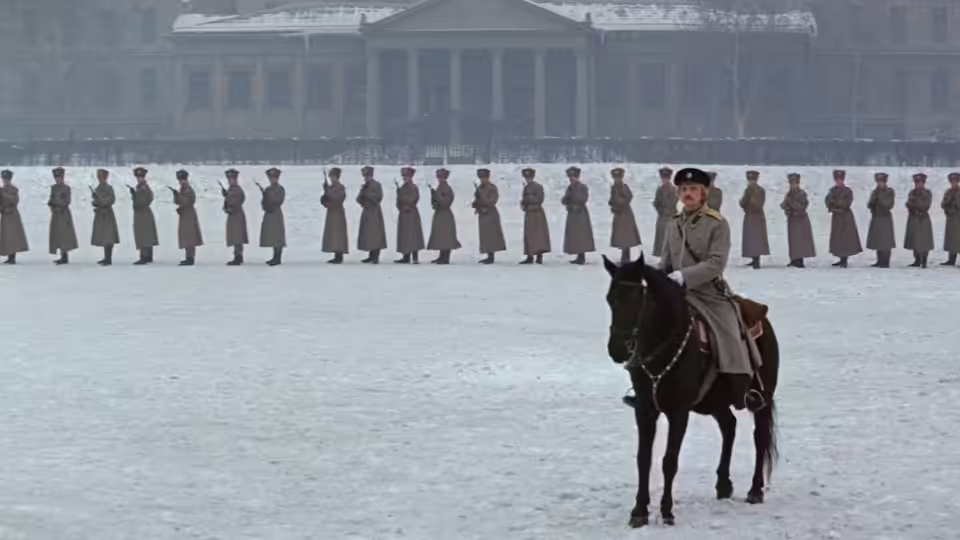
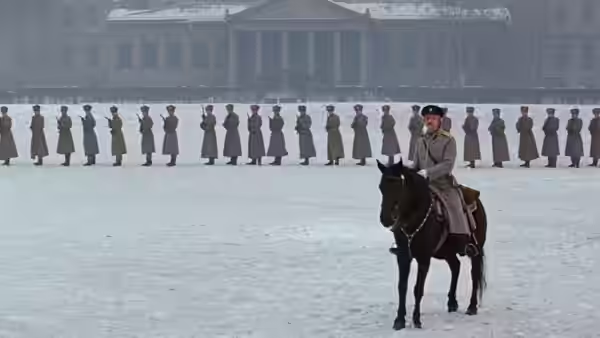
What does not work is everything outside the walls. Goldman writes the politics as a series of ministers being announced, saying their piece and being dismissed, and Ernest Walter cuts from one to the next as if turning pages. We hear that there is a war, a strike, a famine, a mutiny; we see a square of snow and a line of soldiers, once, and then we are back indoors. We were bored through the middle hour, and then a little ashamed of being bored, since a country was coming apart just out of shot. The film has decided the Romanovs did not understand what was happening to them, and it has made sure we do not either.
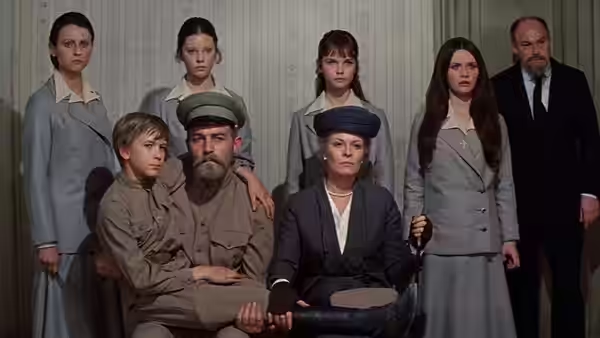
The second half is smaller and quieter, and it is where the film comes good. Once the ceremony is stripped away and the family are in ordinary rooms, the four daughters (Ania Marson, Lynne Frederick, Candace Glendenning and Fiona Fullerton) stop being a row of hats and turn into people. There is a scene of them all at a table, passing plates, that moved us more than two hours of coronations had any right to. The ending is a matter of record and the film handles it plainly, which is what the first two hours needed.
Schaffner came to this from Patton (1970), which had a man at its centre who made things happen. Nicholas is a man things happen to, and 189 minutes is a long time to spend watching someone be overtaken. Young and Box had already done Russia for David Lean in Doctor Zhivago (1965), and that film knew that snow and trains and crowds were the point. This one keeps them in the background, like the servants.
Most critics have been harder on it than we are, and the complaint is usually the same: too long, too respectful, too indoors. All true. But Suzman alone repays two of the three hours, and the rooms are worth looking at while you wait for her. Watch it at home, where the length can be broken in two, which is roughly how the film is built anyway.