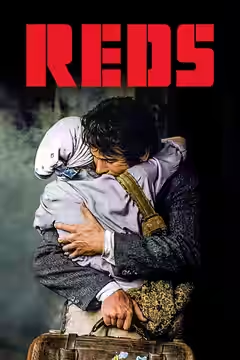
Warren Beatty’s three-and-a-quarter-hour account of John Reed and Louise Bryant is a proper epic, patient, handsome and honest about how revolutions curdle. It also argues in circles, and its best moments belong to the old people it interviews between scenes.
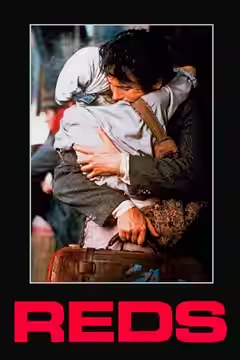
Warren Beatty directs, produces, co-writes with Trevor Griffiths and stars in a 195-minute account of John Reed, the American journalist who watched the Russian Revolution up close and wrote Ten Days That Shook the World, and of Louise Bryant, the writer who went with him. It is a love story and a political history and it declines to pick one. We think it is good: a big, serious, well-made film that earns most of its length and wastes some of it. Whether it is for you depends on how you feel about watching two people argue about socialism in a series of well-dressed rooms.
Beatty’s best decision was made before the script. He filmed old men and women who knew Reed and Bryant, or lived through the same years, and cut their faces in between the scenes, shot against black, lit from one side, with no names on screen. They disagree about dates, correct one another without ever meeting, and apologise for what they have forgotten. This moved us more than anything in the drama proper: it is history as it is actually kept, in the memories of people who are about to stop remembering. Dede Allen and Craig McKay know how long to hold each face, and it is always a beat longer than is comfortable.
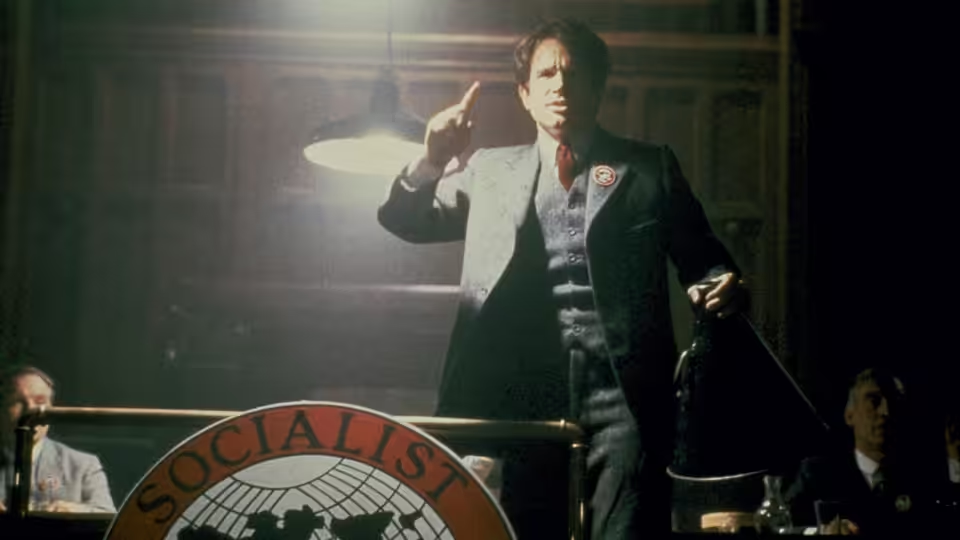
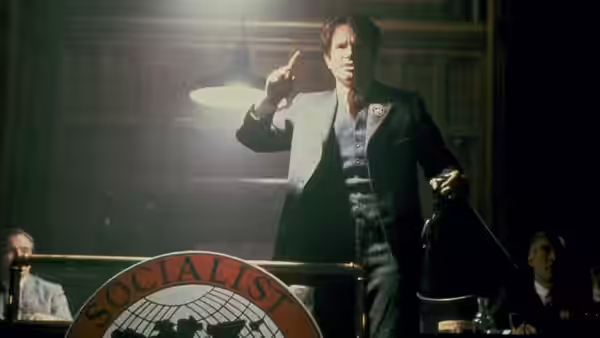
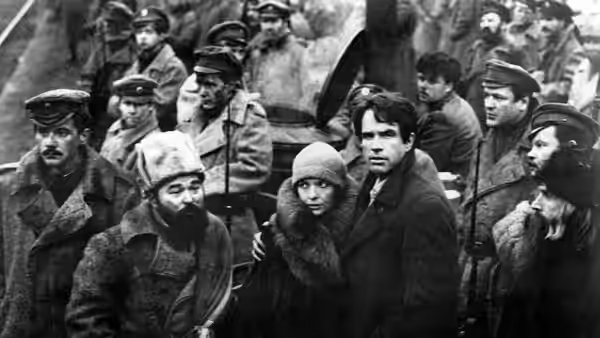
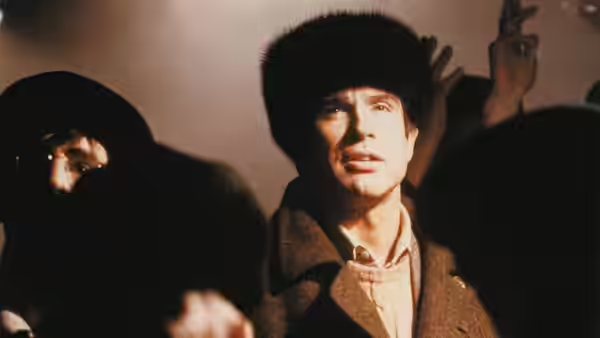
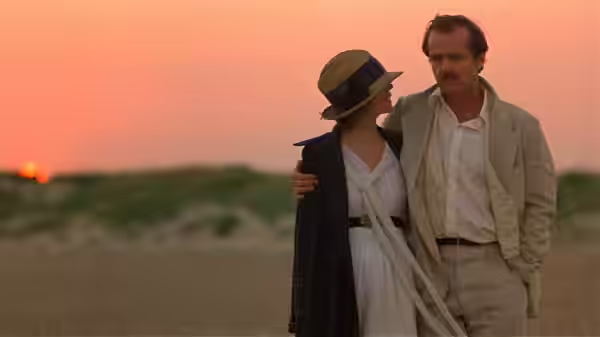
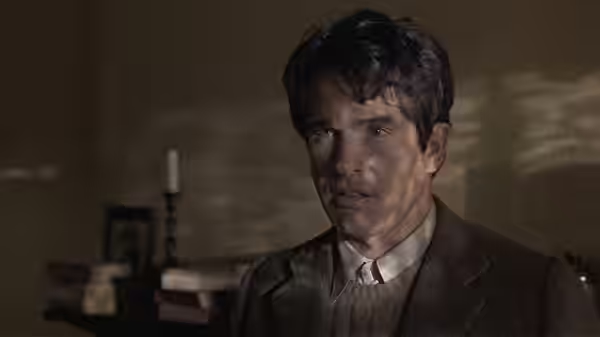
Vittorio Storaro shoots America in browns and amber, lamplight and afternoon sun through net curtains, and Russia in grey and white with the red of the banners the only strong colour in the frame. Richard Sylbert fills the Village rooms with manuscripts and unwashed glasses and gives the Bolshevik halls bare walls and long tables. Shirley Russell puts Keaton in hats and high collars she seems to be fighting, and Beatty in soft shirts that make him look younger than everyone he argues with. The rooms tell you what year it is before anyone speaks.
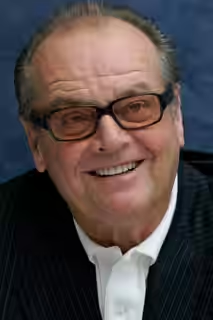
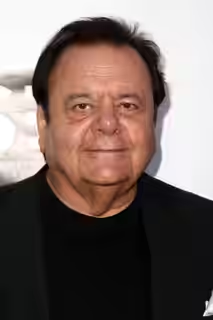
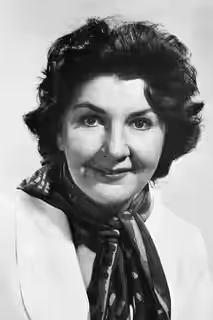
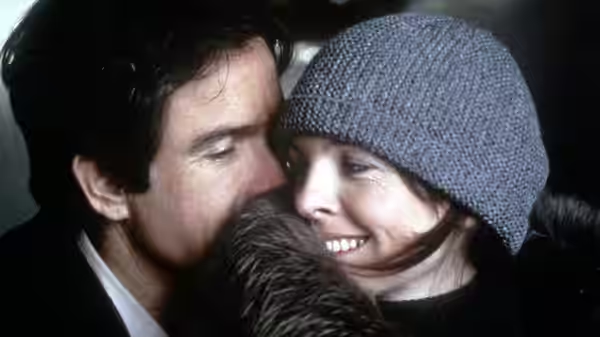
Beatty plays Reed as a boy who cannot stop talking, charming, tireless and slightly exhausting, and the film likes him a little more than we did. Keaton has the harder job. For the first hour Louise is written as shrill and unsure, and Keaton plays it honestly, which does not make it pleasant; once the film reaches Petrograd it lets her be the one who sees clearly, and she is superb. Jack Nicholson’s O’Neill is the best thing in it. He sits at the edge of the parties, drinks, says the one true sentence and leaves, and every scene he is in feels as if a sharper writer had passed through. Maureen Stapleton’s Emma Goldman is gruff and unfooled. Edward Herrmann is a kind, tired Max Eastman; Paul Sorvino’s Louis Fraina argues in a fine loud voice; the novelist Jerzy Kosiński plays Grigory Zinoviev with the patience of a man who knows the committee will outlast the idealist.
The trouble is the arguments. Reed and Louise fight about her writing, then about his politics, then about her writing again, and by the third round in the second hour we noticed we were restless and looking at the wallpaper. The party meetings back in America, where the left splits into factions over a summer, are careful and interminable, and Beatty and Griffiths never find a way to make a procedural vote play as drama. The Petrograd sequence, in which Allen and McKay cut crowds, speeches and the two of them finding one another to “The Internationale”, is the film at its best, and it shows how much of the rest could have gone.
Stephen Sondheim and Dave Grusin share the music. The piano love theme is quiet and a little sad, and it does more for the romance than several of the scenes it plays under; the rest is tactful to the point of vanishing. The tagline compares the film to Gone with the Wind, and against that standard it is a rarity: a costume epic about a revolution that is interested in what the revolutionaries believed and how the belief soured. That it also thinks its hero is wonderful is a smaller fault than it sounds. He may well have been.
It breaks naturally around the halfway mark, and at home it tolerates being watched in two sittings; the meetings are easier with a cup of tea. Stay for every old face between the scenes, because they are worth more than any speech in the film. It runs 195 minutes and carries a 15, and we would defend the length up to about the two-and-a-half-hour mark.