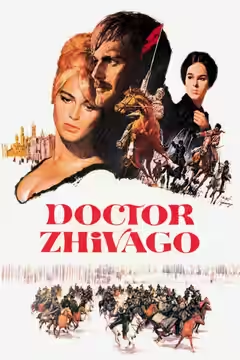
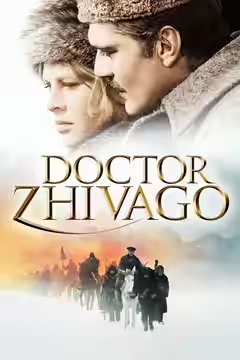
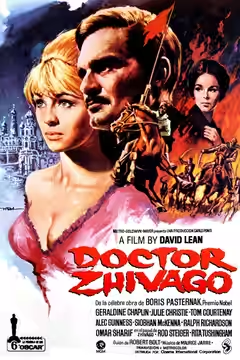
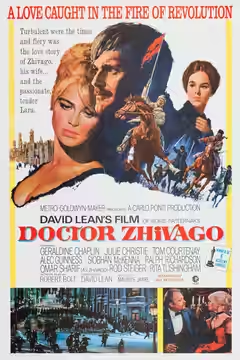
David Lean’s Russian epic is as handsome as anything he made, and it is long, and its hero mostly watches. Julie Christie and Rod Steiger give it the pulse the script does not, and Freddie Young’s camera does the rest.
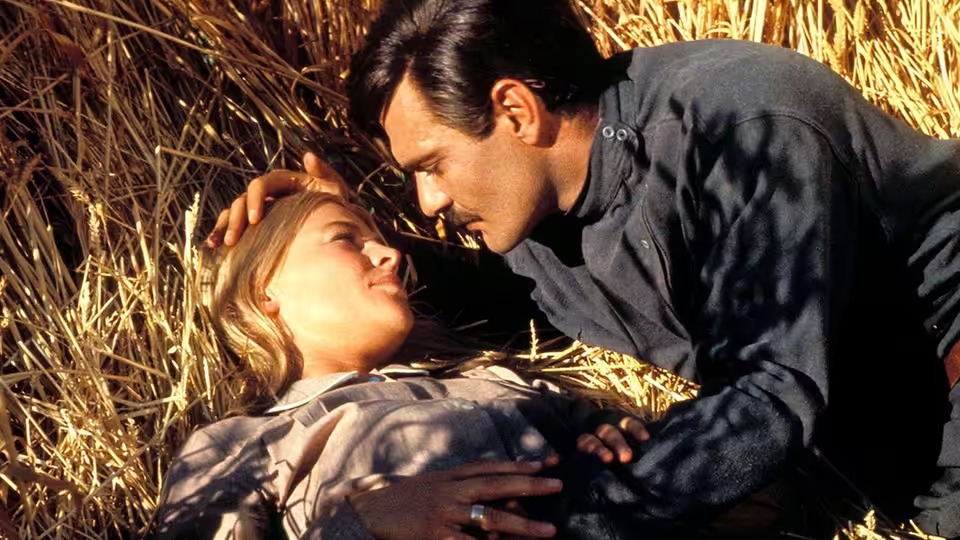
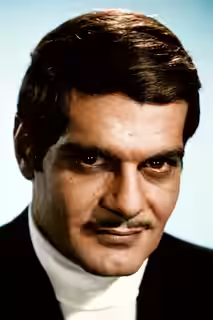
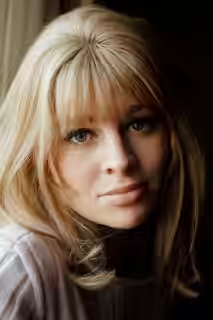
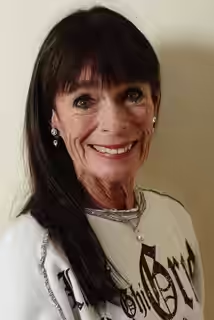
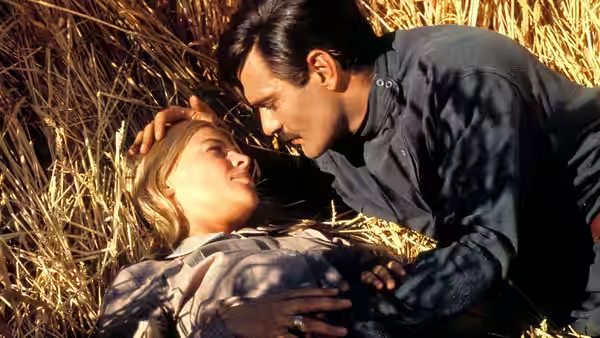
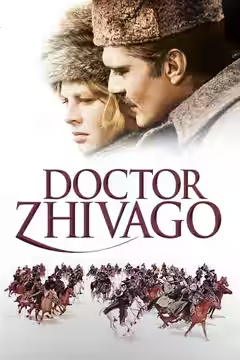
David Lean, having crossed the desert with Lawrence of Arabia, turns to Boris Pasternak’s novel and to snow. Robert Bolt’s screenplay strips the book down to a love story with a revolution behind it: Yuri Zhivago (Omar Sharif), a doctor who writes poems, married to Tonya (Geraldine Chaplin) and pulled across the years towards Lara (Julie Christie). It runs 200 minutes and we felt most of the last eighty. But the first half is as fine a stretch of historical film-making as Lean managed, and the whole thing is a pleasure to look at even when it is not moving.
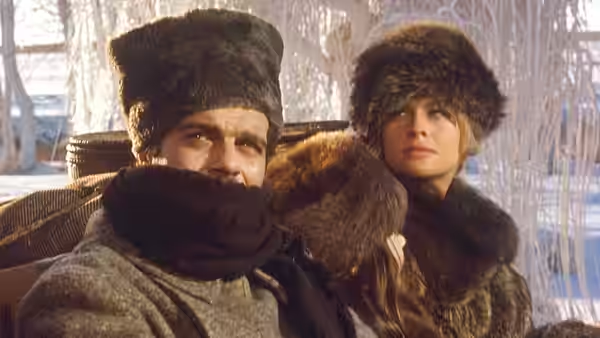
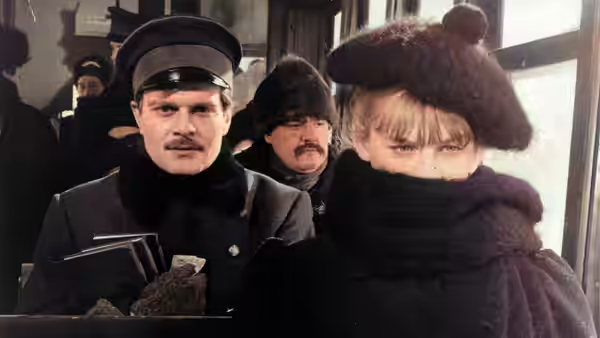
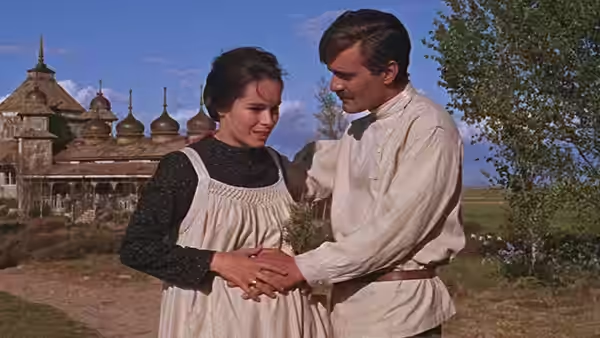
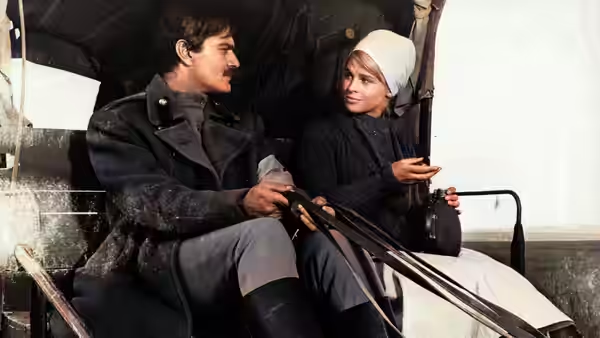
Freddie Young photographs Moscow in gaslight yellows and slush greys, the countryside as a white sheet with one black train drawn across it, and the interiors by candle and stove. John Box builds a Moscow boulevard with trams running down it, and a country house at Varykino in which every surface, chair, chandelier and bedpost, is furred with ice; that house is the image people remember from the film, and it deserves to be. Phyllis Dalton puts Lara in plain wool and Komarovsky in fur collars, the coat of a man who means to be warm whichever side wins. The early set piece is the one that got us. Marchers come singing down a snowy street at night, dragoons ride out of the dark with sabres drawn, and Lean cuts to Yuri watching from a balcony, then to the emptied street with the snow going red. We were shaken. Almost nobody speaks, and it tells you the film’s method: Yuri looks, and the century happens in front of him.
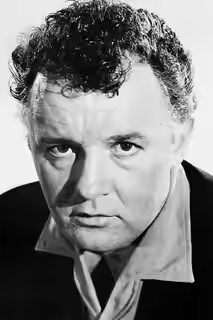
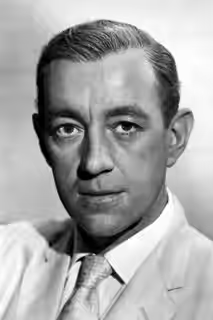
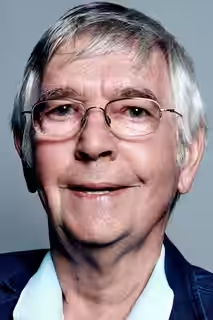
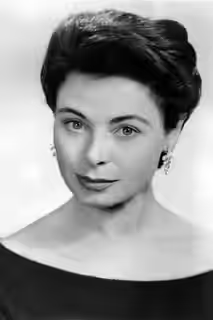
Rod Steiger’s Komarovsky is the best thing in it. He plays the lawyer as a man who enjoys being disliked, taking Lara to a restaurant and ordering for her, telling the truth about himself with a smile because he knows nobody can afford to hear it. Julie Christie gives Lara a hardness under the famous face, and she is never the passive object the plot keeps trying to make her. Tom Courtenay’s Pasha is a schoolboy idealist who turns into something else, and Courtenay lets us see the boy still in there. Alec Guinness narrates as Yevgraf, the half-brother who went over to the Bolsheviks, in a dry murmur that keeps the sentiment from spilling over. Ralph Richardson potters and worries as Tonya’s father and is a pleasure every time he appears.
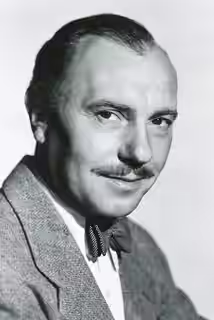
Then there is Sharif. He has a warm, wet-eyed face built for receiving, and the script gives him little else to do. Yuri wants to write, to love whichever woman is in front of him, and to be left alone, and a man who wants to be left alone is a hard thing to hang 200 minutes on. Maurice Jarre’s balalaika theme arrives whenever Lara does and often when she does not; by the third hour we had started counting. Norman Savage cuts the political scenes fast and the love scenes slow, so the film picks up speed whenever it is interesting and settles down whenever it wants to be adored.
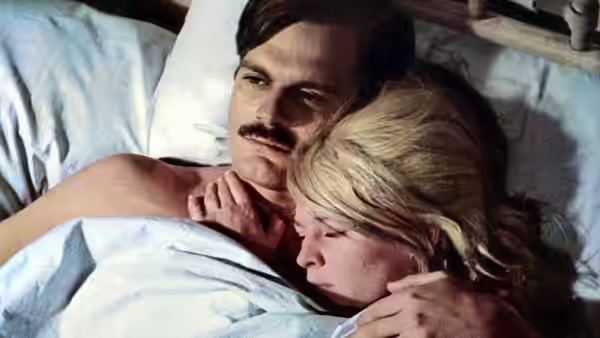
And yet the frozen house got us too. Yuri sits up at night with a candle, writing, while Lara sleeps and wolves call outside, and we were moved more than we had expected to be by a scene of a man doing nothing but hold a pen. It is Young’s light and Box’s ice and Sharif’s stillness all doing the same work at once, and for ten minutes the passivity is the point rather than the problem. We were also, by then, tired, and slightly cross with ourselves for being tired, which is a fair account of the whole second half.
Against Lean’s own record it is the softer film. The Bridge on the River Kwai (1957) and Lawrence of Arabia (1962) were about men who decided things and paid for it. Zhivago is a man things are done to, and Bolt’s script knows it, and has Guinness say as much. Knowing it does not fix it.
See it in a cinema if one near you is showing it, because Young’s frames were made for a wall and shrink badly. At home, take the interval where Lean put it and come back the next night; the second half is kinder in a separate sitting. It carries a PG and opened in Britain on 27 April 1966.