Russell Crowe makes Nuremberg worth considering, especially for those drawn to courtroom drama. James Vanderbilt handles the trial with conviction, but the central exchanges between Douglas Kelley and Hermann Göring never feel searching enough.
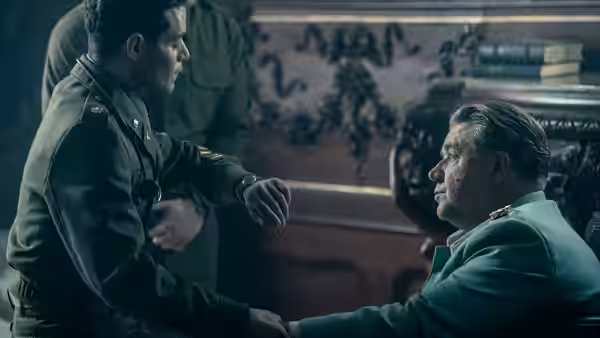
Nuremberg is worth considering for its actors, with a substantial reservation about what they have been given to say. James Vanderbilt approaches the trials as accessible courtroom drama, while the exchanges between Douglas Kelley and Hermann Göring promise a closer look at how such a man thinks. The film is much more assured when it gets into court. Its attempts to turn conversation into psychological discovery are watchable, but too often leave us with the obvious conclusion that a dangerous man can be personable.
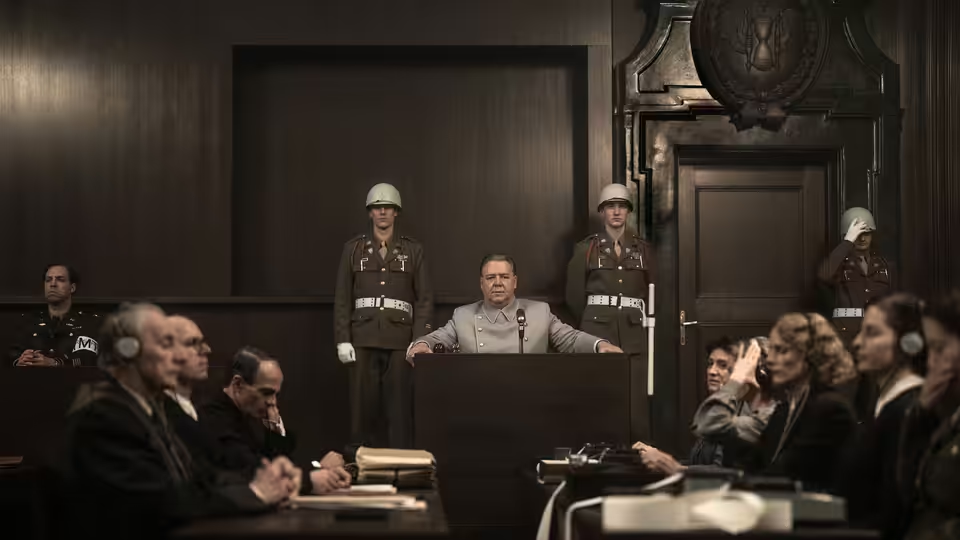
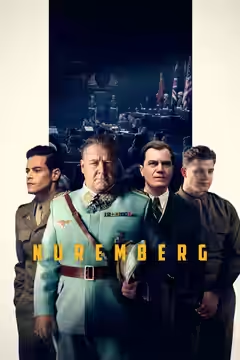
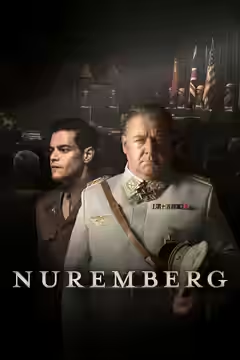
Russell Crowe gives the film its strongest performance. His Hermann Göring has enough charm to hold our attention without letting us forget who is speaking, and that ordinary human appeal is disturbing. We can see why someone might keep listening to him, which gives the conversations a tension the writing does not always sustain. The script keeps returning to his charm when it needs to tell us more about how he uses it.
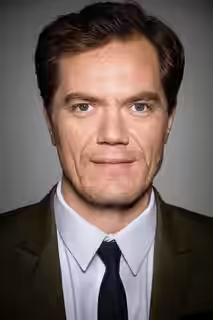
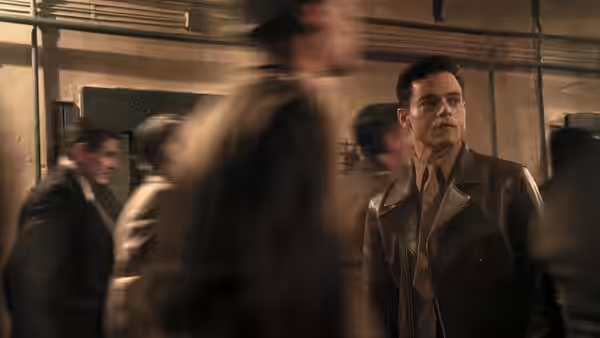
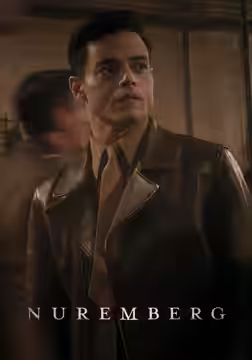
Rami Malek has the harder task as Douglas Kelley, because the film needs their exchanges to feel like a contest between people capable of unsettling one another. Too often, the balance favours Göring before a scene has properly begun. We can follow Kelley’s interest, but the dialogue supplies too little sense of what he discovers through it. Michael Shannon is more securely served as Justice Robert H. Jackson. In the courtroom, an argument has an immediate purpose and an opponent to answer it.
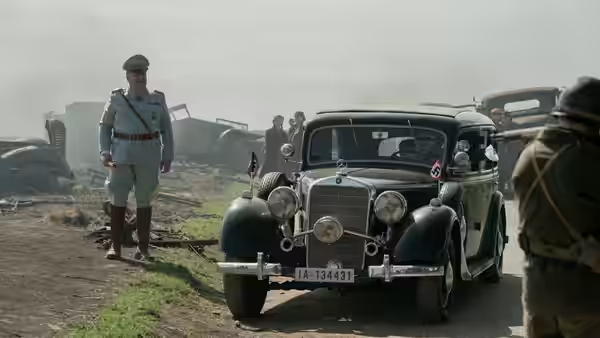
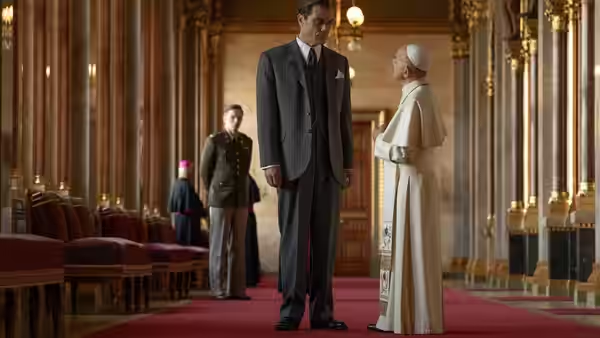
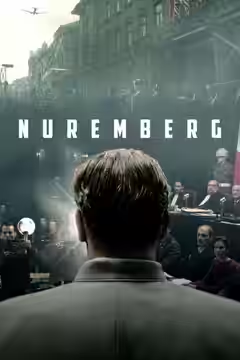
The physical production is much more convincing. Eve Stewart’s courtroom gives the proceedings a credible setting, and Dariusz Wolski photographs the drama with a polish suited to its conventional thriller ambitions. There is pleasure in that care, even when the writing is being over-explicit. Tom Eagles finds more urgency in the trial material than in the approach to it, although the film’s 149 minutes still feel longer than the story requires. Brian Tyler’s score is less helpful, pressing the seriousness of scenes that the actors have already made serious.
We were horrified by the archival footage from the liberated concentration camps. Those images show the human suffering that the conversations about responsibility can keep at a comfortable distance, and the film is right to make space for them. The difficulty comes when the familiar dramatic business resumes and seems thinner than before. The conversations that follow cannot match the force of the footage, and the writing does not become more searching to compensate.
Leo Woodall gives Sergeant Howie Triest a welcome emotional directness, though the writing leans too hard on the character to supply feeling. That is part of a wider habit of insisting on responses the material could earn for itself. A courtroom film has every reason to explain, but its explanations ought to help us understand the case. The political warnings are blunt enough to interrupt our interest in the people delivering them.
There is still a decent historical drama here for anyone drawn to trials and the people who conduct them. The supporting cast helps the formal proceedings hold our attention, despite the script’s tendency to explain too much. We would go for Russell Crowe and Michael Shannon, with expectations kept modest about the promised psychological insight. Allow for the length, and for music that rarely trusts us to recognise a serious moment.