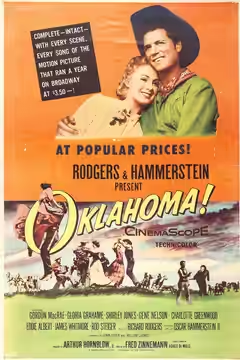
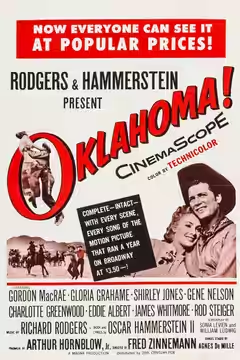
Richard Rodgers’s songs and the opening’s location photography make the film worth an evening for musical lovers. The courtship is less convincing when the singing stops, and 148 minutes allows the stiff patches time to settle.
Fred Zinnemann’s film is worth an evening for anyone who likes a musical to give its songs plenty of room. It is less reliable at keeping the courtship interesting between them. The romantic triangle supplies a straightforward reason for people to sing: longing and pride are difficult enough to express without having to make polite conversation. At 148 minutes, though, the film leaves time to notice which performers can hold our attention without a melody.
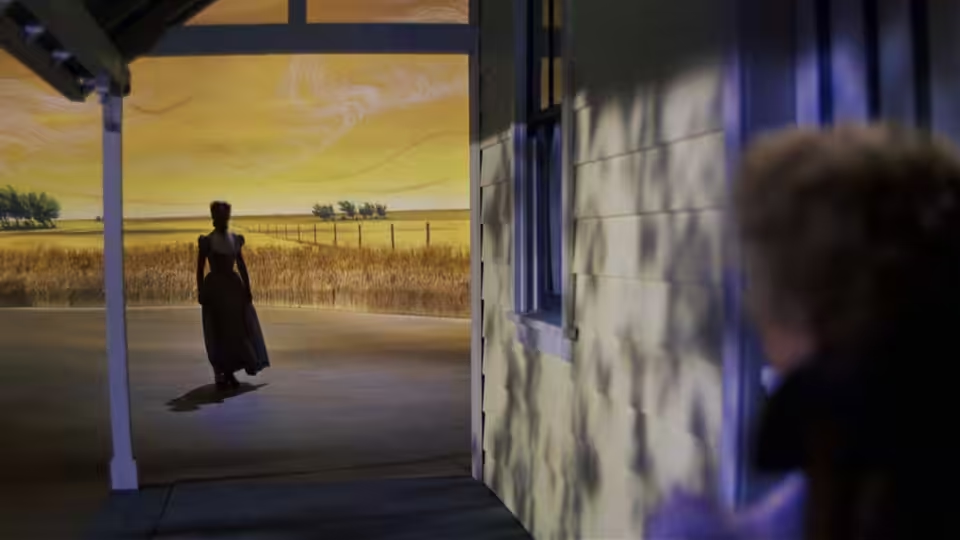
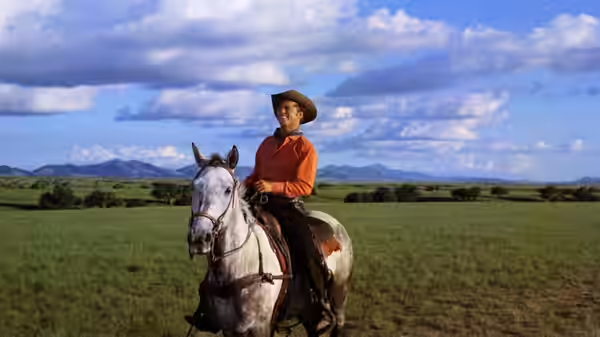
We were cheered by the opening, because Robert L. Surtees lets us enjoy the locations as well as the singing. The space around the performers makes their expansive feelings seem reasonable, and there is time to look beyond the faces. The photography establishes a scale that the more intimate scenes do not always need. Some close-ups feel too large for the small changes of expression they ask us to study.
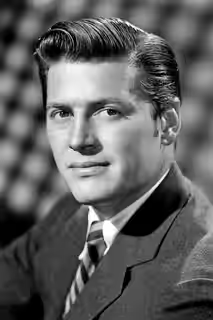
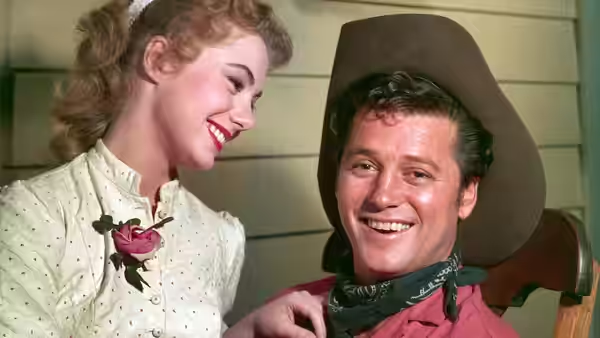
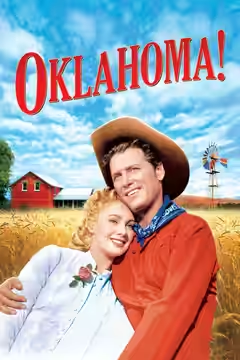
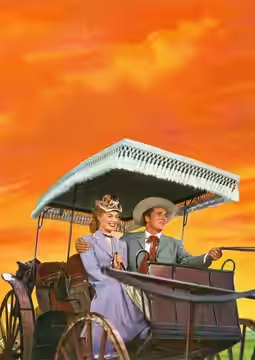
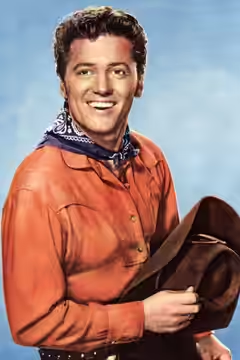
Gordon MacRae, playing Curly McLain, and Shirley Jones, playing Laurey Williams, make a more persuasive couple in song than in speech. Their musical exchanges have a directness that the surrounding scenes struggle to find, and both can seem stiff when the tune stops helping. Rod Steiger brings a heavier presence to Jud Fry, making the differences within the triangle clear enough. The direction does too little to make these contrasting performers seem at ease with one another.
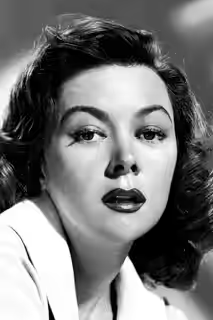
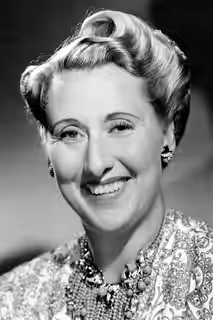
Gloria Grahame is livelier as Ado Annie Carnes. Her comedy has an appealing lack of embarrassment, and she gives the impression of wanting things without first arranging her face into an acceptable expression. Charlotte Greenwood brings a welcome firmness to Aunt Eller, keeping the warmth from becoming too soft. These performances help us enjoy the company rather than simply wait for another number, which is a considerable service in a film this leisurely.
Oliver Smith’s production design is pleasingly orderly, keeping the performers easy to follow without making every corner demand attention. It suits the dancing, which remains one of the film’s strongest pleasures. Editors Gene Ruggiero and George Boemler give movement time to develop rather than continually interrupting it, but the same patience is less rewarding in the dialogue. Several scenes could end sooner without losing anything we need to understand about the courtship.
Richard Rodgers’s music does the most convincing dramatic work. The songs let desire come forward, then allow pride to complicate it, so a number can advance the courtship instead of merely decorating it. That is what we want from this kind of musical, and it explains why the film retains its charm despite the uneven acting. The melodies are generous enough to enjoy without studying how they work, but their usefulness to the story matters: when the characters sing, we have a clearer sense of what they want.
A taste for musical romance is the deciding factor here. Anyone impatient with prolonged courtship will have stretches when the next song feels a long way off. It is a comfortable choice for an unhurried musical evening, provided nobody is expecting brisk romantic comedy.