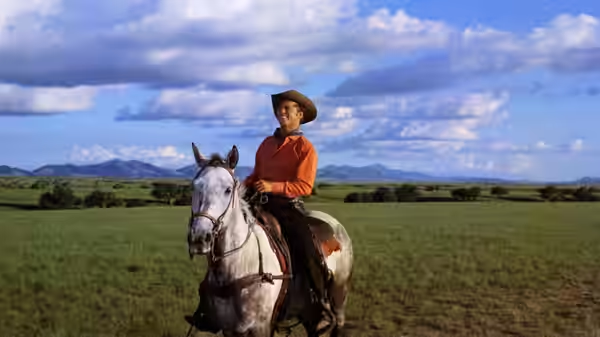
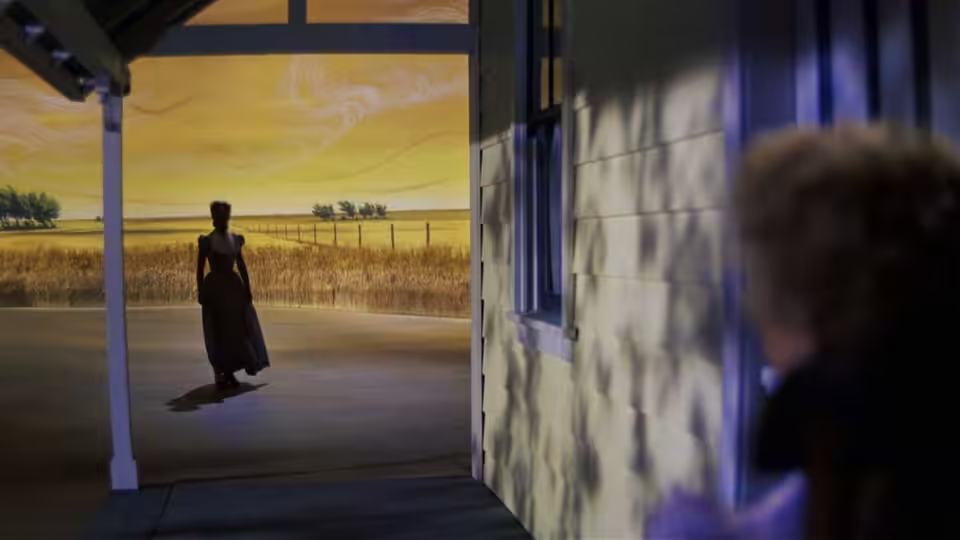
A lone man stands in a doorway, looking across a fenced prairie
Film review

Oklahoma!

1955 · Directed by Fred Zinnemann · 2h 28m

In a sentenceThe singing makes courtship look easy; the conversation explains why everyone keeps singing

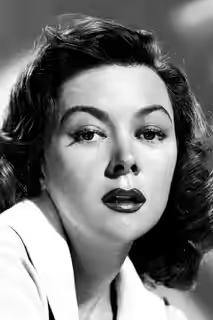
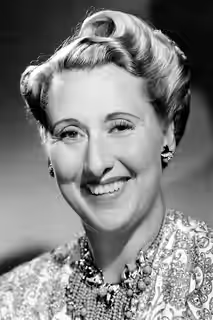
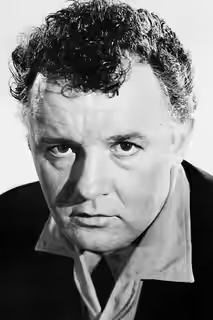
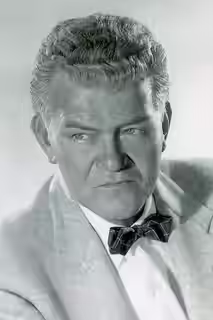
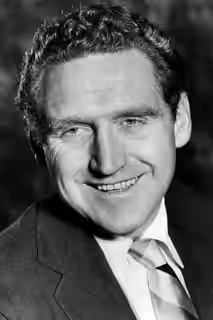
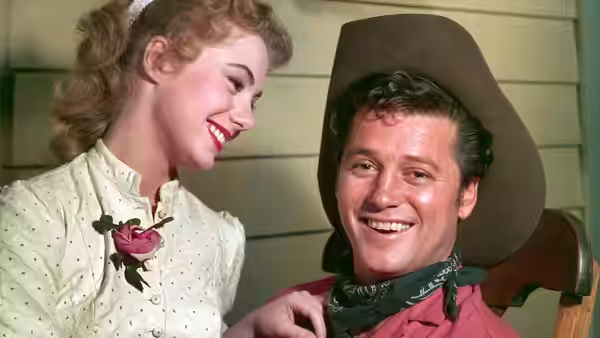
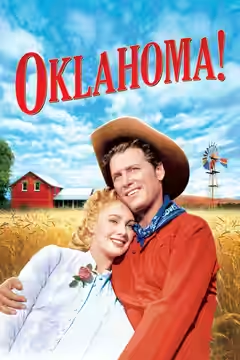
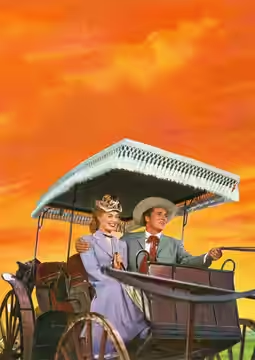
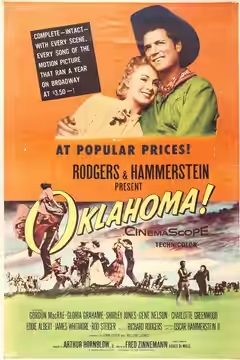
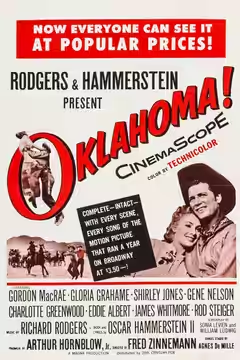
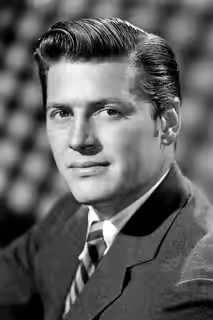
Curly McLain (Gordon MacRae), Laurey Williams (Shirley Jones) and Jud Fry (Rod Steiger) are caught in a romantic triangle. Curly McLain wants Laurey Williams, while Jud Fry’s presence complicates their courtship. Ado Annie Carnes (Gloria Grahame) and Aunt Eller (Charlotte Greenwood) are among the people around them. Pride gets in the way of admitting desire, and the songs give voice to feelings that conversation keeps under cover. This Western romance unfolds through singing and dancing as the characters try to work out what they want and what they can bring themselves to say.

Plays from YouTube when you press play; nothing loads from them until then.

Fi1m review

Richard Rodgers’s songs and the opening’s location photography make the film worth an evening for musical lovers. The courtship is less convincing when the singing stops, and 148 minutes allows the stiff patches time to settle.

Fred Zinnemann’s film is worth an evening for anyone who likes a musical to give its songs plenty of room. It is less reliable at keeping the courtship interesting between them. The romantic triangle supplies a straightforward reason for people to sing: longing and pride are difficult enough to express without having to make polite conversation. At 148 minutes, though, the film leaves time to notice which performers can hold our attention without a melody.

We were cheered by the opening, because Robert L. Surtees lets us enjoy the locations as well as the singing. The space around the performers makes their expansive feelings seem reasonable, and there is time to look beyond the faces. The photography establishes a scale that the more intimate scenes do not always need. Some close-ups feel too large for the small changes of expression they ask us to study.

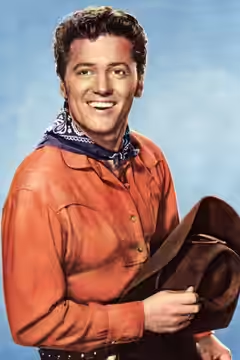
Gordon MacRae, playing Curly McLain, and Shirley Jones, playing Laurey Williams, make a more persuasive couple in song than in speech. Their musical exchanges have a directness that the surrounding scenes struggle to find, and both can seem stiff when the tune stops helping. Rod Steiger brings a heavier presence to Jud Fry, making the differences within the triangle clear enough. The direction does too little to make these contrasting performers seem at ease with one another.

Gloria Grahame is livelier as Ado Annie Carnes. Her comedy has an appealing lack of embarrassment, and she gives the impression of wanting things without first arranging her face into an acceptable expression. Charlotte Greenwood brings a welcome firmness to Aunt Eller, keeping the warmth from becoming too soft. These performances help us enjoy the company rather than simply wait for another number, which is a considerable service in a film this leisurely.

Oliver Smith’s production design is pleasingly orderly, keeping the performers easy to follow without making every corner demand attention. It suits the dancing, which remains one of the film’s strongest pleasures. Editors Gene Ruggiero and George Boemler give movement time to develop rather than continually interrupting it, but the same patience is less rewarding in the dialogue. Several scenes could end sooner without losing anything we need to understand about the courtship.

Richard Rodgers’s music does the most convincing dramatic work. The songs let desire come forward, then allow pride to complicate it, so a number can advance the courtship instead of merely decorating it. That is what we want from this kind of musical, and it explains why the film retains its charm despite the uneven acting. The melodies are generous enough to enjoy without studying how they work, but their usefulness to the story matters: when the characters sing, we have a clearer sense of what they want.

A taste for musical romance is the deciding factor here. Anyone impatient with prolonged courtship will have stretches when the next song feels a long way off. It is a comfortable choice for an unhurried musical evening, provided nobody is expecting brisk romantic comedy.
Critical consensus AI synthesised

65
Positive
4
Mixed
3
Negative
1

The reviews lean favourable, with praise clustering around the songs and Agnes de Mille’s choreography rather than the performances as a whole. Admirers value the film’s preservation of the stage musical’s appeal, while the opening location photography also draws praise. The songs earn credit for expressing sexual yearning and pride naturally, and for belonging to the drama rather than merely interrupting it.

Reservations range from a soft-centred story and uneven acting to objections to the scale of the presentation, making this a fairly wide spread of opinion. Empire finds most performances underwhelming but singles out Gloria Grahame’s Ado Annie as an exception. The New Yorker is the clearest dissenter, finding the film pompous and objecting to oversized close-ups and deafening sound, though it praises Charlotte Greenwood. Even that negative review finds some charm in the songs and dances, the elements on which the consensus is strongest.

Variety
31 December 1954 · Variety Staff
85*

Variety finds the film a lively, successful capture of the stage musical’s magic. It singles out Agnes De Mille’s choreography as the production’s greatest strength.

Read the full review →
Radio Times
★★★★ · Tony Sloman
80

Sloman praises this rousing adaptation for preserving the musical’s songs and Agnes de Mille’s choreography. He especially singles out the striking location photography in the opening sequence.

Read the full review →
Empire
28 July 2006 · Patrick Peters
70*

The review finds the film flawed but ultimately a classic, praising its outstanding score and nostalgic appeal. It singles out Gloria Grahame’s Ado Annie as the exception to otherwise underwhelming performances.

Read the full review →
The AV Club
16 November 2005 · Noel Murray
70*

Murray regards Oklahoma! as a classic with an enduring, primal love triangle, though he calls it a soft-centered trifle. He praises its songs for making sexual yearning and pride feel natural.

Read the full review →
Time Out
22 August 2006 · Wally Hammond
65*

The available text does not reveal the critic's overall verdict. It notes that the songs were already treasured standards and had been integrated into the dramatic narrative.

Read the full review →
RogerEbert.com
64*

The page is blocked, so the critic’s verdict cannot be verified. Any praise or complaint is unavailable from the provided text.

Read the full review →

Straight answers AI written, from our review

How long is Oklahoma!, and what is it rated?
Oklahoma! runs 2h 28m. It is a western and music film.
Where can I watch Oklahoma! in Denmark?
Oklahoma! is not on any streaming or rental service in Denmark at the moment. It is available in 13 other countries; change your country at the top of the page to see where. Availability is checked daily.
What should I watch after Oklahoma!?
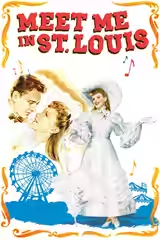
After Oklahoma!, try Meet Me in St. Louis (1944, Fi1m 87): Another musical where courtship and community matter, with more ease between the songs. Then The Band Wagon (1953, Fi1m 84): A backstage musical whose dancing supplies the assurance its characters keep losing.

Cast

Awards

Academy Awards, 1956

Nominated
Best Cinematography, Color
Nominated
Best Film Editing
Won
Best Original Musical Score
Won
Best Sound

If you liked this, try…

  1. Meet Me in St. Louis (1944, Fi1m 87)Another musical where courtship and community matter, with more ease between the songs.

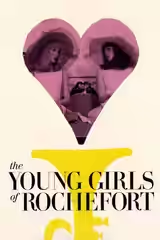
  2. The Young Girls of Rochefort (1967) · not on Fi1m yetFor dancing, romantic hesitation and a town arranged around musical pleasure.

  3. Lagaan (2001) · not on Fi1m yetVillage loyalties and romance unfold through songs, with cricket supplying the conflict.

  4. The Band Wagon (1953, Fi1m 84)A backstage musical whose dancing supplies the assurance its characters keep losing.

  5. The Singing Detective (1986) · not on Fi1m yetFamiliar songs expose private desires in a television drama with considerably sharper edges.