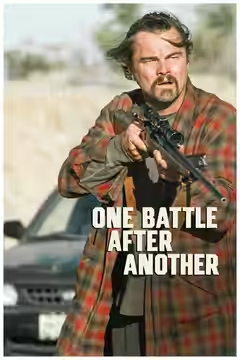
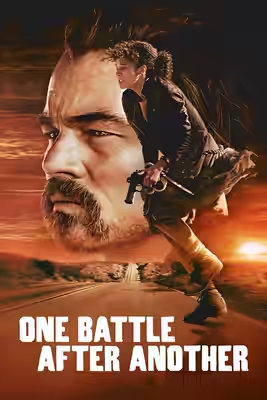
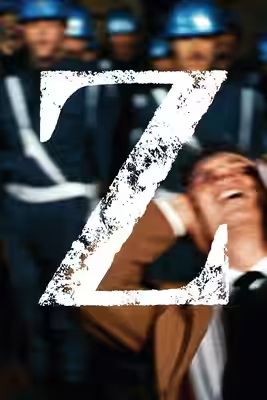
Paul Thomas Anderson turns Thomas Pynchon into a chase film, and it is the fastest, funniest thing he has made. It runs 162 minutes and earns most of them; the villains are cartoons.
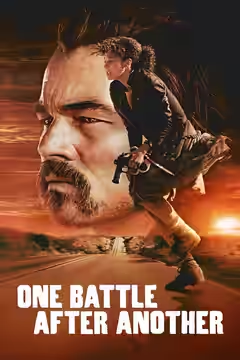
Paul Thomas Anderson has taken Thomas Pynchon’s Vineland, thrown away most of it, and made a chase film. It is the fastest thing he has directed, the funniest since Boogie Nights, and at 162 minutes about half an hour longer than it needs to be. We recommend it, with that caveat and one other: the men it is angry at are drawn so broad that the anger lands softer than it should.
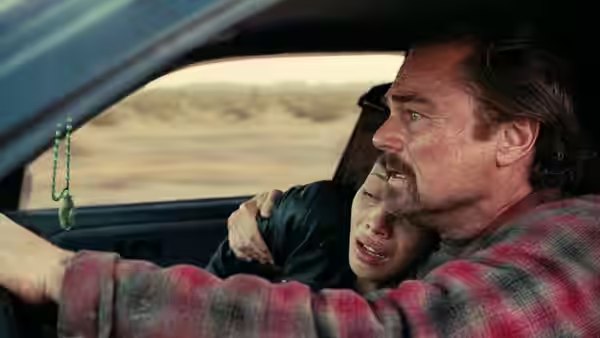
It opens at full speed. Perfidia (Teyana Taylor) leads a cell of armed radicals through a raid on a detention centre, and Bob (Leonardo DiCaprio), the group’s explosives man, trails after her half a step behind. The officer they humiliate, Colonel Lockjaw (Sean Penn), comes out of it fixated on her, and Anderson spends the first act on the three of them: Perfidia’s appetite for the fight, Bob’s for Perfidia, and Lockjaw’s for something he cannot say aloud. Taylor is ferocious and the film is hers for as long as she is in it. Then she is gone, and years later Bob is a paranoid drunk in a dressing gown, raising their teenage daughter Willa (Chase Infiniti) in a small town and jumping at passing cars.
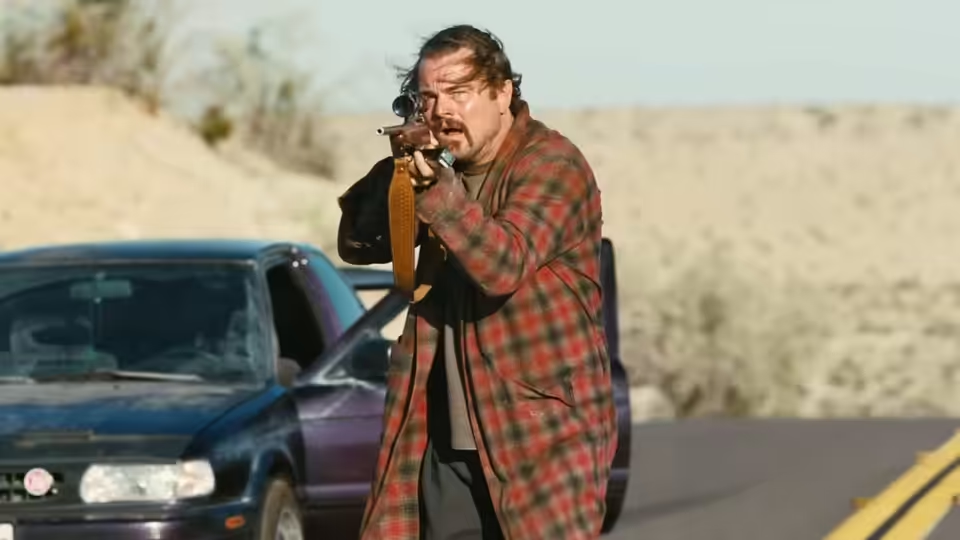
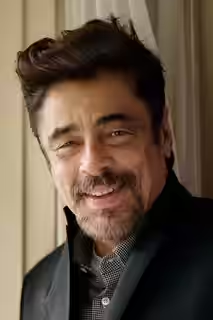
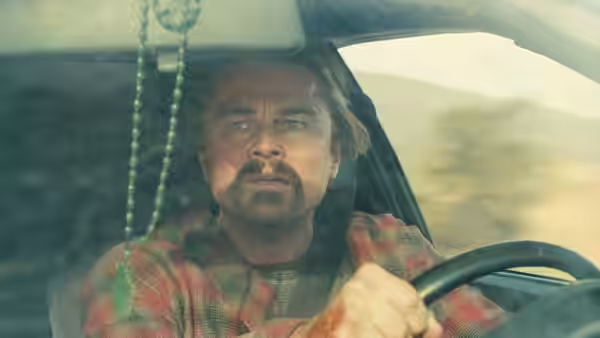
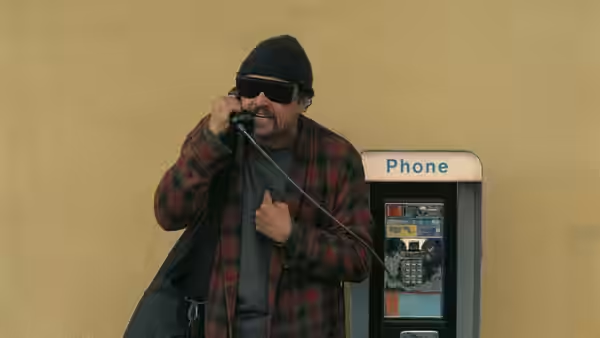
DiCaprio has never been this loose. Bob is stoned for most of the film, cannot find his glasses, cannot work a telephone, and when the old network calls with a coded challenge he cannot remember the answer. We laughed out loud, more than once, at a man who once blew up buildings failing a security question, and then felt for him, because his daughter is out there and he is the only one looking. Benicio del Toro, as Willa’s karate teacher Sergio, plays the calmest man in a burning town and gets the biggest laughs by doing the least. Regina Hall, as Bob’s old comrade Deandra, has one hard, quiet scene that reminds you what the group cost the people in it.
Michael Bauman shoots it in VistaVision, wide and grainy, and the width matters most on the open road, where he keeps the camera low so that the horizon hides what is coming. Andy Jurgensen cuts the chases slowly, letting whole stretches of road play out; the tension is in what the frame does not show yet. We held our breath through one of them for what felt like minutes and only noticed when it was over. Jonny Greenwood’s score is mostly piano, struck hard and left to ring, with drums that come in under the chases and stop dead when the cars do. Florencia Martin gives Bob a house full of dead plants and Lockjaw an office with nothing in it, and Colleen Atwood keeps Penn in a uniform starched to the point of parody.
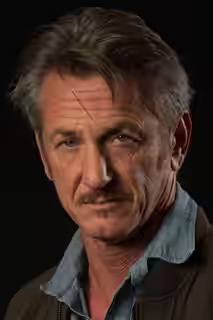
The parody is the trouble. Penn plays Lockjaw with a jaw like a shovel and a walk that suggests something has been surgically removed, and it is a good comic turn, but the film also wants him to be frightening, and it cannot have both. The wealthy men he answers to are sketched as a club of elderly bigots, and every scene with them plays as a cartoon. Anderson is furious about the country he is describing, and the fury would land harder if the people he was furious at looked like people. Willa also drops out of the middle hour, which is a pity, because Infiniti is good and the film is nominally about her.
Against Anderson’s own work it sits high. Inherent Vice, his other Pynchon, was baggy and pleased with itself; this is a plot with a clock on it, and he has never run one before. Most critics have put it near the top of his career and several have reached for words we do not use. We are a little cooler. It is a fine film with a great half hour in it, and a big studio thriller with real jokes and real ideas, which is rarer than it should be.
See it on the biggest screen you can find, for the road if nothing else. If you know the novel, leave it at home; Anderson has kept the mood and little else, which is the right way to treat Pynchon and probably the only one.